

New yuan fix 'encourages capital flight' from China: ex PBOC policymaker
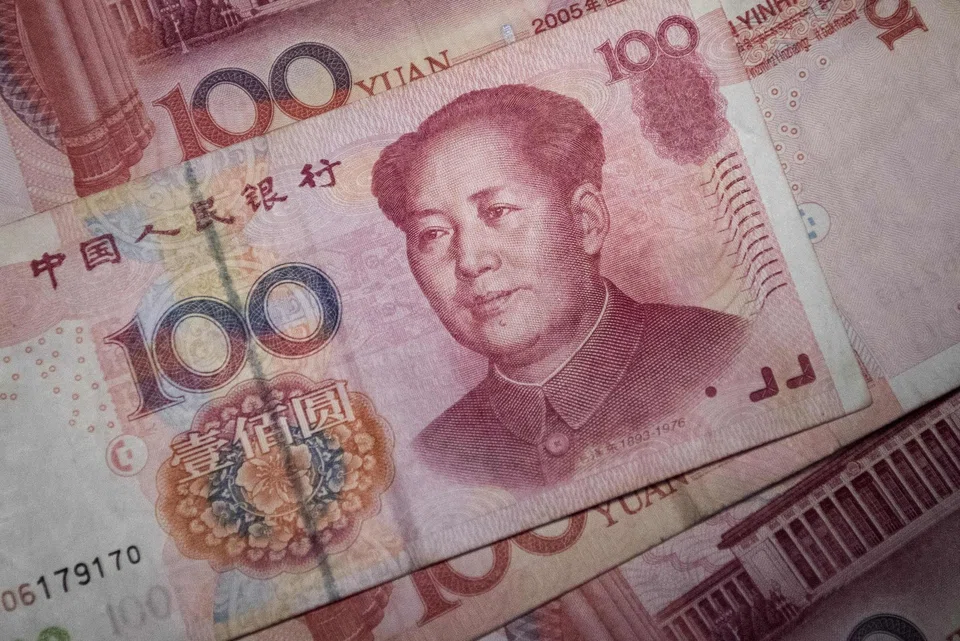
[SHANGHAI] The new way China fixes the yuan exchange rate "encourages" capital flight and has led to a gradual depreciation of the currency, a former member of the central bank's Monetary Policy Committee said on Tuesday.
Yu Yongding wrote in the Shanghai Securities News that the new mechanism adopted by the People's Bank of China to set the yuan's midpoint rate did not allow for "true two-way volatility" in the exchange rate, and had hurt foreign exchange reserves as a result.
"Preventing the yuan from reaching market equilibrium is objectively a rejection of raising the cost of capital flight," wrote Mr Yu, a former advisor to the PBOC and one-time member of its monetary policy committee. "It even encourages capital flight."
Before the changes adopted in August, the PBOC set the daily fix by asking currency market makers for price quotations. The new mechanism to fix the yuan midpoint is based on the closing price from a day earlier and by reference to a basket of currencies.
The yuan has fallen 6.1 per cent against the US dollar so far this year, and hovered near an 8-1/2 year low on Tuesday. So far this month it has lost around 1.6 per cent against the greenback.
Reuters reported last week that Chinese policymakers were prepared to slow the yuan's decline because they feared rapid capital flight if the currency fell too quickly, and especially if it fell through the psychologically important 7-per-US dollar level.

It was trading around 6.89 per US dollar on Tuesday.
Mr Yu, an academic at the Chinese Academy of Social Sciences state think tank, wrote on Tuesday that the independence of monetary policy had been affected by the new yuan fixing mechanism and it had worsened the market distortions caused by capital controls.
However, Mr Yu also noted that Chinese economic fundamentals did not support a sharp depreciation in the yuan.
"We have capital controls as the last line of defense. It is not necessary for us to worry too much about the short-term and volatile depreciation in the yuan," Mr Yu said.
REUTERS
Share with us your feedback on BT's products and services
TRENDING NOW

Indonesia’s coal tycoon Low Tuck Kwong replaced as Bayan Resources president-director

Nvidia reinstates Jensen Huang as CEO; Trump says move poses no national security risk

Six workers file employment claims against Crystal Jade Food Manufacturing

AI agents and stablecoins a ‘perfect match’ for payments, says MetaComp’s Tin Pei Ling

