New Zealand flags gradual policy tightening after hiking rates
The central bank raises its official cash rate by 25 basis points to 2.75%; kiwi falls
 Add BT as a preferred source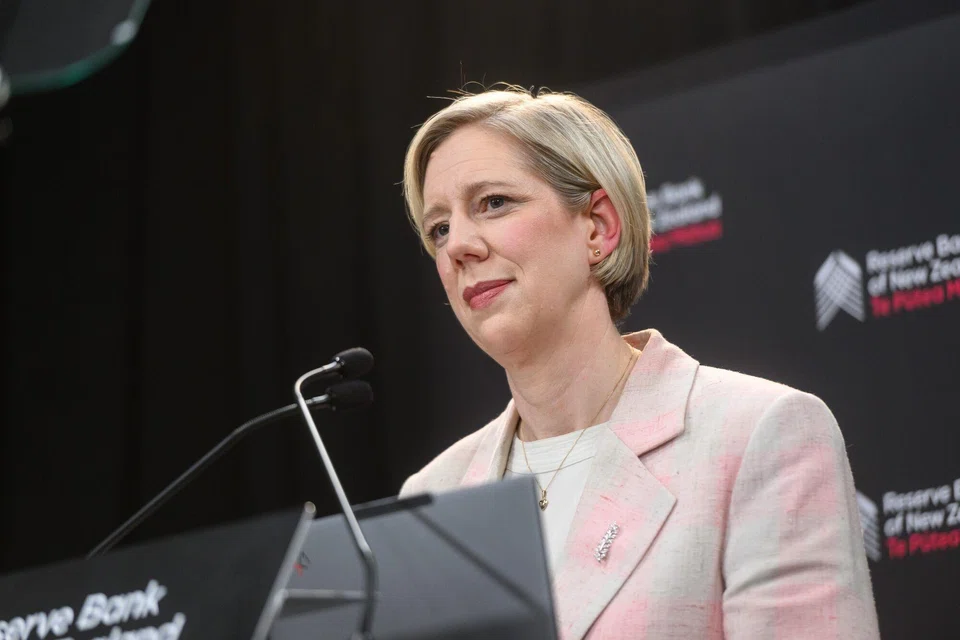
[WELLINGTON] New Zealand’s central bank lifted interest rates for a second straight meeting on Wednesday (Sep 2) and signalled more tightening ahead, but stressed any further moves would be measured as it warned of mounting risks to the economic outlook.
The Reserve Bank of New Zealand (RBNZ) raised its official cash rate (OCR) by 25 basis points to 2.75 per cent, a move widely anticipated by markets and economists, while reiterating that a gradual withdrawal of monetary stimulus remains appropriate.
Having started raising rates in July for the first time in more than three years, the RBNZ is now seeking to steer inflation back to target without choking off an economy that is only just beginning to regain momentum.
“We do think that it’s likely there may be a future OCR increase, but the timing is highly uncertain,” governor Anna Breman told a press conference following the policy decision.
Her remarks reinforced the central bank’s message that while the domestic recovery is expected to strengthen, risks to the outlook are mounting. The RBNZ warned that weaker commodity prices, softer export demand and an uncertain global economy could weigh on growth, while noting activity could ultimately prove either stronger or weaker than forecast.
“Future policy decisions will depend on the Committee’s judgement of the balance of risks to medium-term inflation,” the RBNZ statement noted.
The central bank’s cash rate track was little changed with future rates projected to be at 2.81 per cent in December and 3.15 per cent by the end of 2027. Markets had priced in a faster pace of moves and a top around 3.5 per cent.
That nudged the swap market’s two-year rates down 5 basis points to 3.6775 per cent, while the kiwi dollar slid 1 per cent to US$0.5829, on top of a 0.4 per cent drop overnight.
Wednesday’s quarter-point increase still leaves the cash rate well below the 5.50 per cent peak reached in August 2024, before policymakers embarked on an aggressive easing cycle as economic growth faltered and inflation pressures faded.


The latest rate hike will put pressure on New Zealand’s government, which was elected on promises to revive the economy and ease cost-of-living strains on middle-income households. The opposition Labour Party was quick to argue that higher rates would translate into bigger mortgage repayments for homeowners.
Finance Minister Nicola Willis highlighted in her own statement the Reserve Bank’s assessment of a broadening economic recovery.
The central bank’s next decision in October comes less than 10 days before New Zealand’s general election, a contest that remains too close to call. Economists said that the RBNZ would be wary of becoming a focal point in the campaign.
ANZ chief economist Sharon Zollner noted that the central bank’s track now implied that a December hike was likelier than October. “The RBNZ very deliberately declined the opportunity to set up an October hike....and the market reaction is therefore entirely reasonable,” she added. “But given the highly conditional tone of the discussion of the outlook, we are wary of putting too much weight on the precise OCR track.”
The central bank’s latest economic forecasts showed annual inflation peaking at 4.1 per cent in June 2026, compared with 4.3 per cent in the September quarter in its previous projection. The projections also showed the economy expanding by 0.5 per cent in each of the final two quarters of 2026, compared with a previous forecast of a 0.2 per cent rise in the third quarter and a 0.5 per cent increase in the fourth quarter.
“After lacklustre growth in the June quarter, New Zealand’s economic recovery has most likely resumed but remains uneven,” the RBNZ statement said.
New Zealand’s recovery gathered momentum in the second half of 2025 but was knocked off course by the Middle East conflict and higher fuel prices in the first half of 2026. More recent high-frequency data, however, suggest activity rebounded in the third quarter.
New Zealand’s move reflects a broader hawkish shift among major central banks, as higher energy costs threaten to keep inflation elevated. Still, “there is considerable uncertainty over the medium-term inflation outlook” in New Zealand, ASB senior economist Mark Smith said, adding that the bank sees “both upside and downside risks to the policy path”. REUTERS
Decoding Asia newsletter: your guide to navigating Asia in a new global order. Sign up here to get Decoding Asia newsletter. Delivered to your inbox. Free.
Share with us your feedback on BT's products and services