

No one should count on rate cuts this year, warns ECB’s Holzmann
 Add BT as a preferred source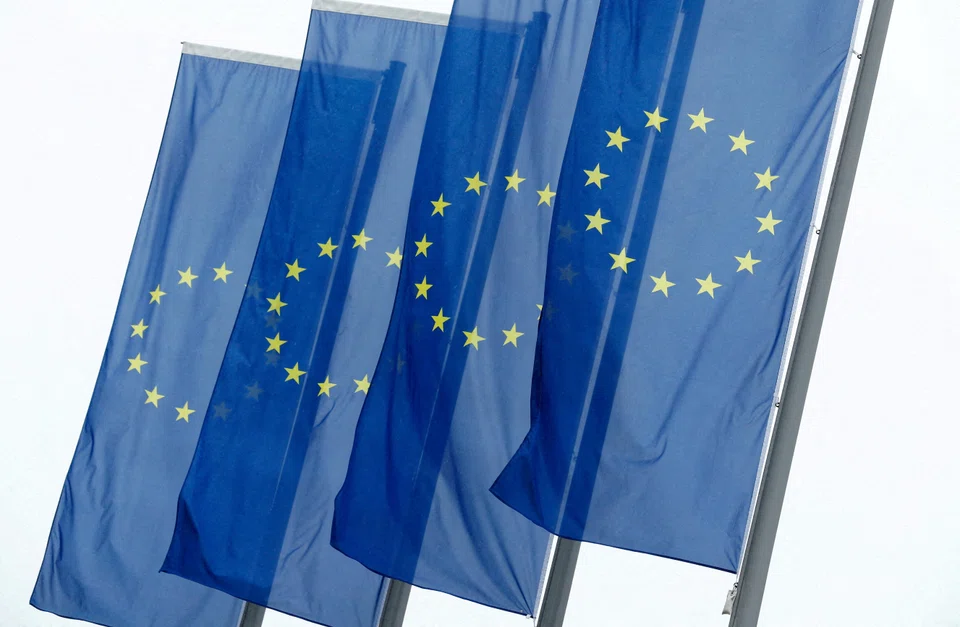
THREATS stemming from lingering inflation will prevent the European Central Bank (ECB) from lowering interest rates this year – even as a recession can no longer be ruled out, said Governing Council member Robert Holzmann.
The eurozone economy has disappointed recently and will probably prove officials too optimistic once fourth-quarter results are released, Holzmann said in an interview in Davos, Switzerland, where he is attending the World Economic Forum. At the same time, geopolitical conflicts – such as the one in the Middle East – risk disrupting supply chains and energy markets, keeping pressure on prices that the ECB cannot ignore.
“The geopolitical threat has increased because what we saw until now by the Houthis – I think it’s not the end, it might be the overture to something much more broad based, which will impact the Suez Canal and increase the prices there,” Holzmann said on Monday (Jan 15). “We should not bank on the rate cut at all for 2024.”
Inflation came within touching distance of the ECB’s 2 per cent target late last year, inviting speculation about when policymakers would reverse the biggest monetary-tightening campaign since the introduction of the euro 25 years ago. Traders are betting on six quarter-point cuts, starting in April, while economists anticipate a first of four moves in June.
Holzmann reiterated a point made by colleagues – including ECB president Christine Lagarde and chief economist Philip Lane – that it is “much too early” to talk about trimming borrowing costs.
“Once such a date would be set, it would trigger immediately a dynamics which we cannot control,” said Holzmann, who also heads Austria’s central bank. “And with all the knowledge we currently have, it would not be honest to do it because we don’t know how inflation will develop.”
The ECB currently sees the headline rate hitting 2 per cent in the second half of 2025, while underlying price pressures are expected to remain above that threshold till end-2026.
Holzmann described the latest trend as a “sideways movement” and warned that it may continue. Wage demands have not yet come down and some of the latest bargaining agreements in Germany, Austria and the Netherlands point to “quite high” increases.
That is despite the weakening economy. Germany on Monday reported a contraction of 0.3 per cent in the fourth quarter and a decline in output of the same magnitude for the whole of 2023.
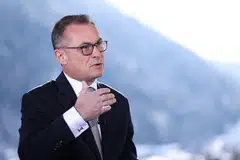

The Governing Council’s assessment has become “mildly more sceptical” over the past months, Holzmann said. Fourth-quarter data for the eurozone will be published on Jan 30, and he said he fears “we’ll also be slightly less optimistic” afterward.
While he does not anticipate the region to fall into a “real recession”, it could succumb to one “triggered by external effects easily”.
“If geopolitical risks lead oil prices going up, gas prices would shoot up, this would also hit a number of industries which are already hit. Perhaps even the services industry,” he said. “Then, a recession is not improbable.” BLOOMBERG
Decoding Asia newsletter: your guide to navigating Asia in a new global order. Sign up here to get Decoding Asia newsletter. Delivered to your inbox. Free.
Share with us your feedback on BT's products and services
TRENDING NOW

Shanda co-founder sells Tanglin Hill bungalow for S$76 million

Nearly half of Apac’s wealthy expect market crash or correction, plan to rotate to cash: study

Yeo’s, Tiger Beer and now Gardenia – flight of food manufacturing from Singapore might be just as planned

Jumbo Seafood to close flagship East Coast Seafood Centre outlet on Sep 30

