

On the obscured ESG flows in Asia
Asia soaks up more ESG capital than reported, as West books activity by funding base: Deutsche Bank's Kamran Khan

Singapore
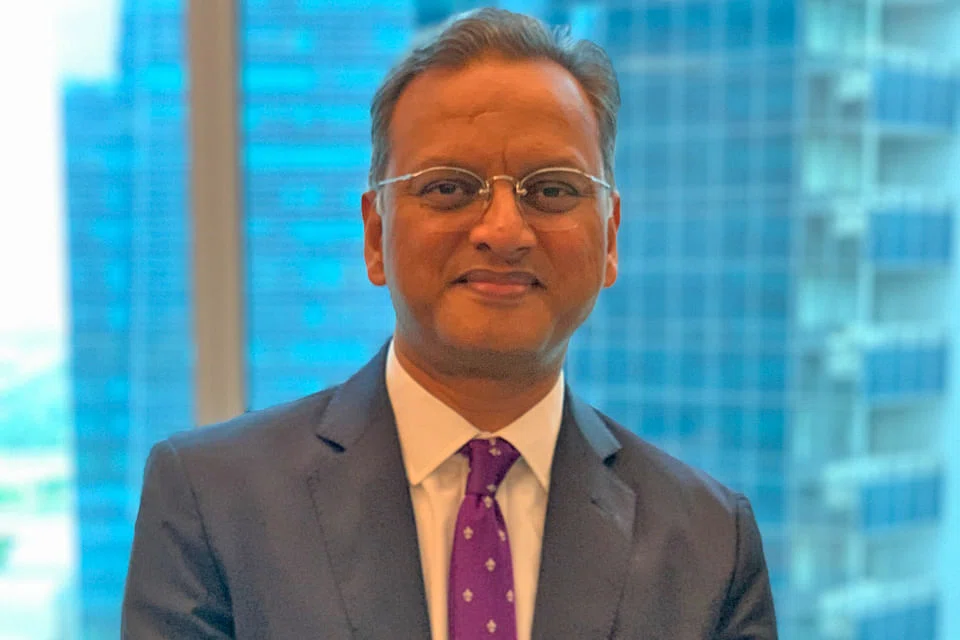
NUMBERS still don't tell everything, when it comes to ESG (environmental, social and governance) investing - and that means the amount of ESG capital flowing into Asia could be underreported.
This was a word of caution sounded by Kamran Khan, Deutsche Bank's new head of ESG for Asia-Pacific. For one thing, investments may originate in one side of the world, with the actual funds being eventually deployed in another continent, but the reported numbers may only account where the money was raised, not where it flows to.
"When you hear these numbers depicting how much ESG is happening in this region versus that region, it may not always be comparing apples to apples, and oranges to oranges," Mr Khan said.
He cited his bank's 46 billion euros (S$73 billion) of sustainable financing and ESG investment last year, more than twice its original target of 20 billion euros. On closer scrutiny, however, investments attributed to Asia appeared too low, he said. "More detailed review indicated that many of the deals were booked in Europe and North America because the headquarters of the companies are based there. So even though the capital will be deployed here (in Asia), the data does not capture that," he pointed out.
Mr Kamran declined to go on the record on the share of his bank's ESG capital flows into Asia, for this reason. He would only say the region is likely one of the top recipients of ESG capital, especially with multinational companies increasingly sourcing from and selling to the region.
"If you are a company that has publicly made pronouncements about your commitment to ESG, and you're putting together a new facility in Asia, it is virtually impossible for you to not think about sustainability, right? Because this is a long-term asset you're putting in place. You may have the bond issued in Europe, or elsewhere, but you're going to deploy (the funds) where your business is growing. And that, for many companies today, is Asia," Mr Khan said.
Multinationals are also increasingly offering incentives for suppliers to make their practices more sustainable, he noted. And that can spur significant behavioural changes among Asian suppliers, even if these are not associated with big dollar amounts.
To add, financial intelligence database EPFR Global showed that about 75 cents out of each dollar of capital invested in 2020 across emerging-market stocks compliant with ESG norms, went into Asia.
What's more important in the current state of Asia's ESG market is establishing high standards of ESG transactions and setting benchmarks, rather than fixating on numerical volumes, said Mr Khan, who had previously worked with the World Bank, JPMorgan and the Obama administration, before taking this inaugural post at Deutsche Bank in May last year.
He cited as an example the first Sustainable Development Goals (SDGs) bond that Deutsche Bank helped the multilateral New Development Bank raise. The funds are meant to finance sustainable activities and deliver solutions supporting the 17 United Nations' SDGs. With a coupon rate of 3.22 per cent, the bond raised five billion renminbi (S$1 billion) in China's onshore bond market.
"The capital raised and benchmarks established by this bond will have a very material impact on the standards under which public and private entities raise capital to support the achievement of SDGs in New Development Bank's member countries," said Mr Khan. These countries include Brazil, Russia, India, China and South Africa.
Mr Khan also pointed to the governments in the Asia-Pacific placing more priority on ESG and sustainability. Hong Kong and Singapore have introduced sustainability reporting guidelines for listed companies, and are developing their cities as regional hubs for sustainable banking and green finance. China, Japan, and South Korea pledged last year, amid the Covid-19 pandemic, to be carbon neutral by the middle of the century.
"There's a little bit of competition... a little bit of country positioning beyond just raising capital."
In setting benchmarks and standards, hurdles remain. For instance, there are operational complications on what those guidelines set by regulators should be. "If you're too lenient, then you're seen as not being serious about sustainability. If you're too strict, people can walk away and go to another jurisdiction. It's a tough balance to arrive at," he said.
The "social" impact in ESG also tends to be difficult to measure, he added. Still, in October, Principles for Responsible Investment - a United Nations-supported international network of investors - published a framework detailing how institutional investors should respect human rights in investment activities. It noted that the financial industry must play a critical role in "facilitating sustainable development and growth, and in ensuring that people's fundamental dignity and rights are upheld".
Over at Deutsche Bank, it builds in-house expertise to understand sustainability issues, which includes the ability to structure ESG transactions with S, G as well as E components. Such expertise will include understanding microfinance, and how to apply guidance provided by global standard setting bodies to transactions. The bank has plans to pump 200 billion euros into sustainable financing and investments by 2025.
Mr Khan, who was most recently chief executive and managing partner at sustainable investment firm Infra-Tech, said he is "reasonably hopeful" that more companies in Asia are looking not just to "do no harm", but to "do more good".
"I think most people would agree that the market has made up its mind that we as a financial services industry and as an economy have to find a way to get growth and get competitiveness that do not come at a cost to sustainability, at the least," he said. "That's a 'do no harm' thing that has been around for a long time. We're now very squarely into the realm of 'do more good'."
TRENDING NOW
MAS allocates S$1.45 billion to five asset managers in third EQDP batch: Chee Hong Tat
‘My grandfather’s legacy’: Sherman Kwek lays out three-year plan for CDL to drive returns

He built the Vingroup empire. Now South-east Asia’s richest man is handing some key roles to his sons

‘How many will survive?’: Bubble fears arise as China’s humanoid robotics face reality check

