PBOC chief warns of ‘long and difficult’ economic transformation
 Add BT as a preferred source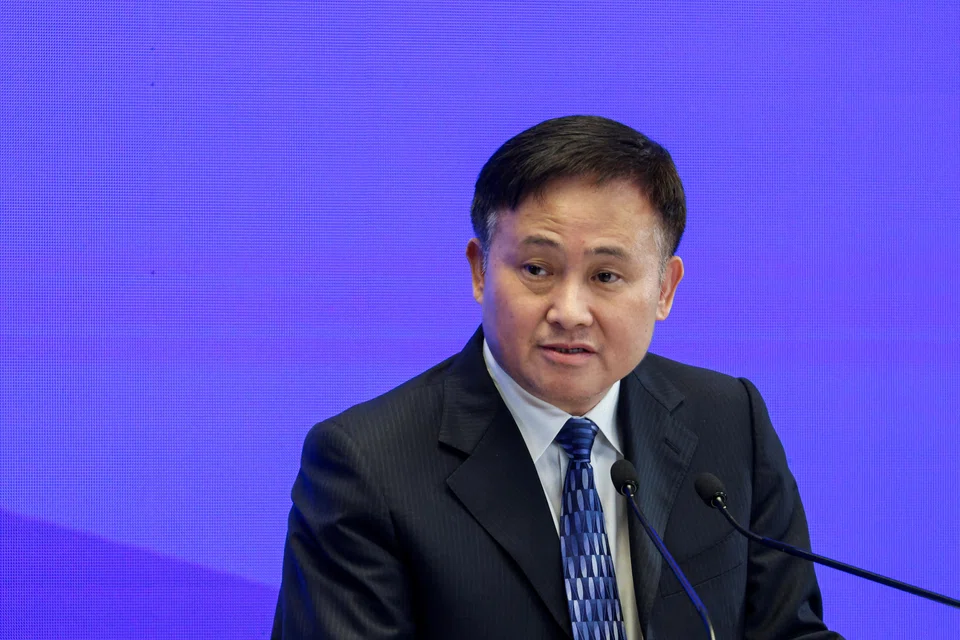
DeeperDive is a beta AI feature. Refer to full articles for the facts.
CHINA’S central bank governor stressed tolerance for slowing growth in the short term as the world’s second-largest economy transitions away from property and infrastructure towards new drivers of activity.
In an address to bankers in Hong Kong, People’s Bank of China (PBOC) governor Pan Gongsheng said he was confident that the economy will enjoy “healthy and sustainable growth” in 2024 and beyond, citing rising sectors such as renewable energy. He also downplayed concerns over risks related to property and local government debt issues, after earlier meeting with top executives from banks including HSBC Holdings and Goldman Sachs Group.
“The traditional model of relying heavily on infrastructure and real estate might generate higher growth, but it would also delay structural adjustment and undermine growth sustainability,” Pan said at the conference, organised by the Hong Kong Monetary Authority and the Bank for International Settlements.
“The ongoing economic transformation will be a long and difficult journey. But it’s a journey we must take.”
Turmoil in the property sector underpinned worries about the strength of China’s economy this year, with data going into the fourth quarter suggesting a mixed outlook. While consumption is recovering, real estate is continuing to shrink.
Still, the economy is on track to hit an official growth target of around 5 per cent for the year, meaning that markets are shifting their focus to 2024. Structural challenges from housing, an ageing population and low business confidence remain concerns.
Navigate Asia in
a new global order
Get the insights delivered to your inbox.
In a sign of how urgent it has become to stop the property sector’s downward spiral, authorities are considering unprecedented support for the sector. That includes allowing banks to offer unsecured short-term loans to qualified developers, Bloomberg News reported earlier.
“China’s real estate sector is searching for a new equilibrium,” said Pan, adding that the property market’s adjustment is beneficial for the economy in the long run. He also reaffirmed that spillover effects from the sector to the financial system are “quite limited”.
Pan also reiterated that China’s overall government debt is relatively low compared with other economies, and stressed that debt was borrowed for infrastructure investment and backed by “tangible assets”.
The debt is also unevenly distributed within the country, he pointed out, saying that economically more advanced regions in central and eastern China will not have a problem repaying their debt.
Pan said it would be difficult for China’s annual growth to hit the 8 per cent to 10 per cent pace seen in the past as the economy has expanded in size.
He cited a range of positive signals, though, from improving retail sales to a pick-up in private investment when excluding real estate. He reiterated that the central bank will keep monetary policy accommodative.
Economists expect the PBOC to step up liquidity support for the economy via a cut to banks’ required reserves in the coming month, as the central government issues additional sovereign bonds to fund infrastructure spending.
Any reduction of policy interest rate is seen as to be postponed to early next year, however, with depreciation pressure on the yuan alleviating only recently while banks are still faced with narrowing profit margin.
Pan told the conference that the PBOC will continue to step up cooperation with Hong Kong. He referred to Hong Kong as an important connector to the international markets, without referencing its status as a special administrative region.
His earlier meeting with bankers in the city was to exchange views on financial cooperation between mainland China and Hong Kong as well as the city’s status as a financial centre, the PBOC said. BLOOMBERG
Decoding Asia newsletter: your guide to navigating Asia in a new global order. Sign up here to get Decoding Asia newsletter. Delivered to your inbox. Free.
Share with us your feedback on BT's products and services