

PBOC tells Chinese banks to boost May lending as credit weakness persists
Household and corporate loan demand has remained weak this month
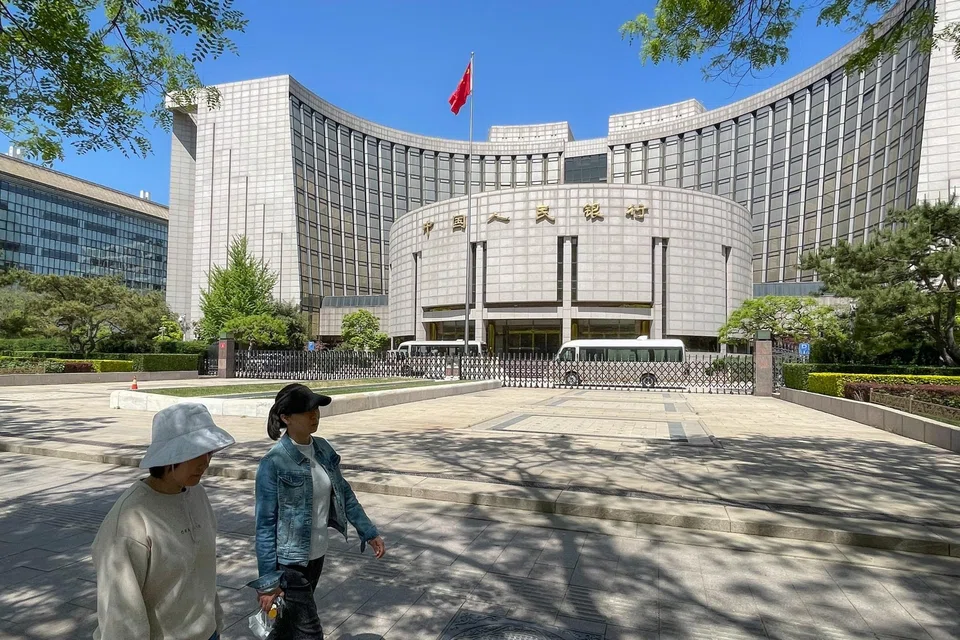
[BEIJING] China’s central bank has instructed banks to boost lending this month, people with knowledge of the matter said, underscoring Beijing’s continued efforts to support an economy squeezed by higher energy costs and stubbornly weak domestic demand.
The People’s Bank of China issued the informal guidance to some major state-owned banks last week as household and corporate loan demand has remained weak this month after lending unexpectedly fell in April, the sources said.
The sources asked not to be named as they were not authorised to speak to the media on the subject. China’s monthly credit data is closely watched as a barometer of activity in the world’s second-largest economy.
The PBOC did not immediately respond to a request for comment.
The PBOC’s May “window guidance” has not been reported previously and is not a routine procedure. The bank issued similar instructions last month, Reuters reported at the time.
Despite those instructions, new yuan loans contracted in April for the first time in nine months, sharply undershooting forecasts as seasonal factors and weak household demand for credit dragged on lending.
China’s economy expanded 5.0% in the first quarter, the upper end of Beijing’s full-year target range of 4.5% to 5.0%. However, growth is showing signs of losing momentum early in the second quarter.
While a protracted downturn in the property market remains a drag on growth, the three-month-old US-Israeli war on Iran has driven energy costs higher and exposed China’s economy to external risks at a time of fragile consumption at home.
The housing downturn has eroded household confidence, while fragile private-sector investment appetite has further dampened credit demand across the economy.
SEE ALSO

As policymakers shift support to technology and green energy from traditional infrastructure and property, credit demand in the new areas remains insufficient to support overall lending volumes, one source said.
Complicating the picture, banks have been tightening loan issuance to small and midsize private firms, given rising loan defaults, the sources said, further constraining credit flow to parts of the economy.
Banks have also responded to rising household defaults by tightening lending standards, reducing the credit supply to people who have not defaulted, Xiaoxi Zhang at Gavekal Dragonomics wrote in a research note on Wednesday.
“While regulators may want banks to expand consumer credit, they also want banks to maintain risk controls, and that still seems more important,” she said.
Due to weak credit demand from the real economy, banks have had to purchase short-term commercial bills to hit their lending targets, the source said.
Still, analysts do not expect the PBOC to rush into policy easing as inflation pressures build. In January, the PBOC cut sector-specific interest rates by 25 basis points, targeting areas such as small firms, tech innovation and green development.
Financial News, a publication run by the PBOC, said after the weak April data that the market should view the credit-growth slowdown “with a mature and rational mindset”.
It said direct financing has accelerated in recent years, with total social financing maintaining reasonable growth even as loans’ share in new financing has steadily declined. REUTERS
Decoding Asia newsletter: your guide to navigating Asia in a new global order. Sign up here to get Decoding Asia newsletter. Delivered to your inbox. Free.
Share with us your feedback on BT's products and services
TRENDING NOW

DBS, OCBC, UOB rout lops billions off STI as inflation, rate concerns spook investors

Grab CEO’s wife Chloe Tong on life with Anthony Tan and finding her purpose

OCBC sheds S$8 billion in value as shares close nearly 6% down; analysts cautious on banks

Deal between tycoon friends sparks scrutiny of Philippine power sector

