

PBOC’s leanest year for easing since 2021 defies Wall Street
During a year defined by trade chaos unleashed by Trump, it lowers policy rate only once, by 10 bps
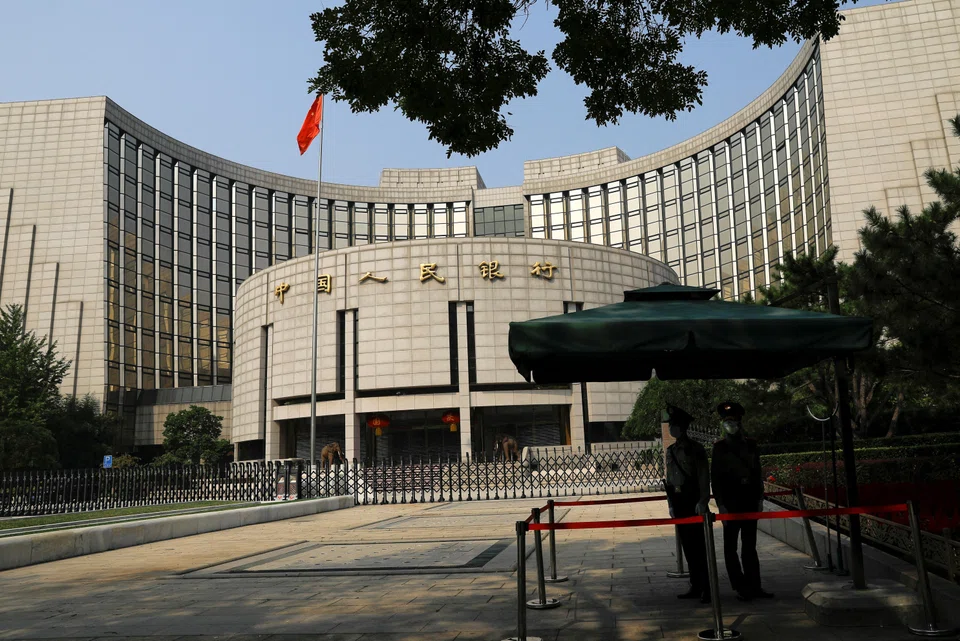
CHINA has kept its central bank on the sidelines of managing an economy hampered by weak demand and deep-seated imbalances, defying Wall Street forecasts for the biggest interest rate cuts in a decade.
During a year defined by the trade chaos unleashed by US President Donald Trump, the People’s Bank of China (PBOC) lowered its policy rate only once, by 10 basis points (bps). That is the least it has delivered annually since a pause in 2021. It is also a far cry from predictions for up to 40 bps of easing from the likes of Goldman Sachs and Morgan Stanley.
Bolstering expectations a year ago was the decision by China to switch to a “moderately loose” monetary stance for the first time in 14 years, as the country braced for a bruising tariff war with the US.
What economists underestimated, however, was the strength of Chinese exports and concerns among officials about the health of the banking system. A massive stock rally was also a factor in delaying monetary support.
By opting for moderate stimulus, Chinese authorities are charting a unique path that sets them apart from other major central banks, as well as their own recent past. Instead, Beijing is now seeking to tackle challenges such as deflation and weak consumer confidence via greater government spending.
“Basically, it is beyond the capacity of the central bank to turn things around,” said Hui Feng, co-author of the book The Rise of the People’s Bank of China and a senior lecturer at Griffith University in Australia. “It should be up to fiscal stimulus and structural reforms that boost labour’s share in national income.”
When looking at the global picture, the PBOC’s hamstrung position comes into clear focus.
While average policy rates for advanced economies fell by 1.6 percentage points over the past two years, according to a Bloomberg Economics gauge, the PBOC has reduced its benchmark by a quarter of that amount over the same period. Adjusted for prices, Chinese rates are into positive territory.
By contrast, the US Federal Reserve, European Central Bank and Bank of Japan all adopted ultra-loose monetary policy, including zero or negative rates and quantitative easing (QE), in times of economic downturn or severe deflationary pressures.
SEE ALSO

When China itself suffered a growth slowdown in 2015, it unleashed a programme akin to QE that shored up the property sector. Since Covid-19, however, Beijing has resisted drastic measures.
While policy rates barely budged, the PBOC’s focus has shifted to less conventional steps, according to Lu Ting, chief China economist at Nomura Holdings.
They include programmes designed to support the stock market, government bond trading that extends liquidity to the economy, and relending tools used to provide low-cost funds to targeted areas.
Instead of broad monetary easing, China has been active with short and medium-term renminbi injections. The PBOC added liquidity on a net basis on most days over the past year, and resumed its purchases of government bonds in October to boost cash supply.
As a consequence, liquidity sloshing around the interbank market has pushed the seven-day repurchase rate, a gauge of short-term funding costs, to the lowest level since January 2023 this month.
Investors are also smarting after a year of dashed hopes for more aggressive monetary easing. Partly as a result, China’s government bonds had a poor second half of the year, with their yields climbing across the curve.
Officials see limited room for further rate cuts, with the policy rate, a benchmark for seven-day market borrowing costs, currently at 1.4 per cent. Still, in the view of many analysts, the PBOC will likely keep policy supportive in 2026.
Economists polled by Bloomberg forecast a total of 20 bps of rate reductions in 2026, along with 50 bps of decreases in banks’ reserve requirement ratio.
Some, like Bloomberg Economics and Citigroup, say the window for easing could open as early as in January. Outliers such as Deutsche Bank see the key policy rate staying unchanged to 2026.
Recent signals from the PBOC “suggest a lack of urgency” to cut rates, said Hui Shan, chief China economist at Goldman Sachs.
The PBOC “may think once the interest rate goes below 1 per cent, then the narrative of zero interest rates, Japanification and all that could become an issue”, said Shan. “If the economy slows significantly or external risk increases significantly, we could see interest rate cuts.”
In a sign that pessimism is already rife in the market, Japan’s benchmark 10-year yield climbed past its Chinese counterpart for the first time on record in November.
“Monetary policy turned out to be relatively conservative this year, focusing on providing more liquidity to markets rather than on cutting interest rates,” said Chris Kushlis, chief emerging markets macro strategist at T Rowe Price. “Bond yields should be modestly lower, particularly if the PBOC follows through with more liquidity easing and opts to cut rates one or two times.”
The PBOC did not immediately respond to a faxed request for comments.
Policymakers still worry about the banking sector’s stability, after lenders’ profit margins fell to a record low. Further rate cuts could diminish them further, leaving banks vulnerable to rising bad debt and slowing loan growth.
At times, the currency acts as a constraint. The central bank wants to prevent any rapid depreciation, as was the case when downward pressure on the renminbi was strong in early 2025.
Cutting interest rates by a little might prove ineffective in a scenario where households and businesses are reluctant to take on debt. The PBOC has hinted at its inability to push up inflation earlier this year, saying increasing money supply under an economic model driven by investment and production risks worsening an imbalance between supply and demand.
What is clear is that fiscal measures will play a dominant role in 2026, leaving monetary policy to ensure government borrowing costs stay low, according to Ding Shuang, chief economist for Greater China and North Asia at Standard Chartered.
“Whether China’s approach will succeed is a different matter,” said Ding. “But it decided not to solve structural problems with just macro easing.” BLOOMBERG
Decoding Asia newsletter: your guide to navigating Asia in a new global order. Sign up here to get Decoding Asia newsletter. Delivered to your inbox. Free.
Share with us your feedback on BT's products and services
TRENDING NOW

Once staunchly pro-China, Malaysian Chinese businesses are now distancing themselves from Beijing

Looking beyond looming CEO succession, should UOB potentially pursue a transformative merger?

Could stablecoins be the future of money?

Grab CEO’s wife Chloe Tong on life with Anthony Tan and finding her purpose

