Philippines’ digital banks chase profits as regulator ups the stakes
Both GoTyme and Tonik have said they aim to become net profitable in the next year

THE first bank account that Isabel Bautista personally signed up for was with GoTyme.
“When I saw they were offering interest rates worth 5 per cent, and that cash-ins were free of charge, signing up was as easy as ABC,” she told Tech in Asia. She did not stop there. She currently has three accounts with three different digital banks, all of which are holding upwards of six-figures of her savings.
Ever since the country’s central bank – Bangko Sentral ng Pilipinas (BSP) – issued digital bank licences in late 2020, Filipinos have been spoiled for savings account choices.
Today, the six digital bank licence holders in the Philippines each offer savings account interest rates that are higher than 3 per cent. Traditional banks in the country offer an average of 1.8 per cent.
While Filipinos are cashing in on these offers, this has not yet translated into profits for all digital banks. Only two of the digital bank licence holders, Maya Bank and OFBank (Overseas Filipino Bank), are net profitable as at September 2025.
Yet, the BSP is expected to issue three more digital bank licences by March. As early as 2023, the regulator has floated the idea of opening up the industry to new entrants.
Daniel Broby, the programme director of the Master of Science in Financial Technology department at the Asian Institute of Management (AIM), said the three new entrants could likely be those that failed to make the cut the first time around.
Other industry watchers believe that the regulator is hoping to bring in a wave of new players who can potentially outperform the first six, which have not done as well as expected.
Slow loan book growth
BSP said the decision to accept new players can spur more healthy competition in the industry.
“We want to provide more choices for the market,” said Melchor Pablasan, senior director of the Technology Risk and Innovation Supervision Department of BSP. “There are still products that the incumbents have not yet offered.”
Current digital banks, however, fear the added competition may be coming too soon.
Tonik CEO Greg Krasnov said that adding new digital banks into the mix now could erode the margins of existing players. His firm was among the six digital banks granted a licence in 2021.
“You need to give early players more time to establish both customer base penetration and establish the fundamentals before bringing in more competition,” he said.
Unlike Maya Bank that benefitted from a wealth of customer data from its e-wallet business, Tonik had to start its underwriting efforts from scratch, tapping into alternative credit-scoring platforms such as Credolab.
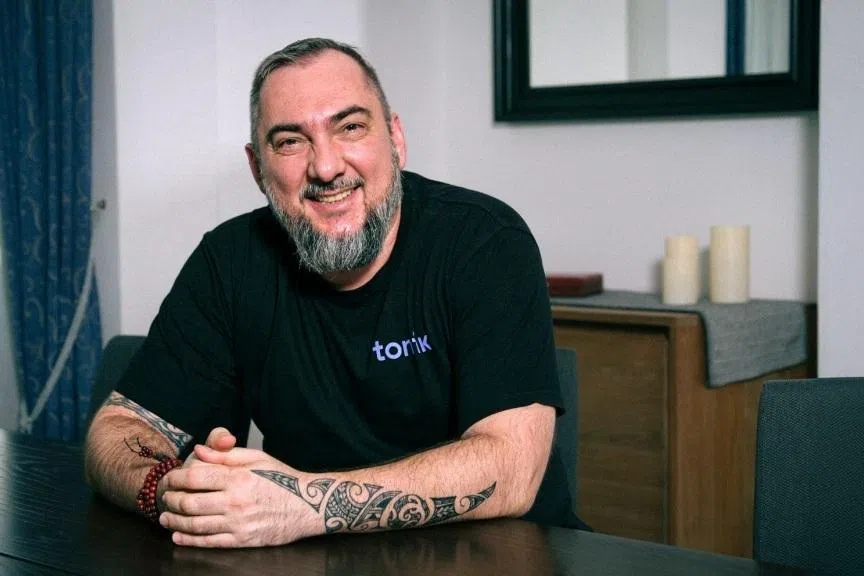
“Fraud risk for digital banks remains very, very high,” Krasnov said. He cited how the lack of a proper national ID system has kept verification of identities a challenge.
Despite launching a year after Tonik, Maya’s loan book stands at US$489.8 million as at September 2025, exceeding Tonik’s.
“It takes time to learn how to lend profitably to the unbanked market,” Krasnov said.
Angelo Madrid, president of the Digital Bank Association of the Philippines, notes that the incumbents’ non-performing loan ratios (NPLs) have “meaningfully improved” in the past year, as loan portfolios mature and credit models improve.
“The industry is still young, with most digital banks operating for only around three years, so improvement over time is expected,” he said.
GoTyme, meanwhile, took more than two years after its launch in October 2022 before introducing its first lending product, a buy now, pay later service.
Lack of access to credible customer data is a major challenge for digital banks in growing their loan books, Pablasan of BSP acknowledges.
He believes Maya Bank’s ties to a digital wallet and its access to bigger partners such as its key backer, telco giant PLDT, gave it access to crucial “ecosystem” data – information of their customers’ habits in other digital platforms.
As at September 2025, Maya Bank already has more than eight million depositors – the most among digital banks in the country. At 5.8 per cent, its NPL is the second-best among its peers.
Bad news for existing players?
Pablasan of BSP is not worried about new players denting the performance of the incumbents. He adds that the BSP expects three more digital banks to turn net profitable by 2027.
Both GoTyme and Tonik have said they aim to become net profitable in the next year. That would be five and six years, respectively, since they first rolled out their operations in the country.
UnionDigital Bank, which was granted a digital bank licence in 2022, has said it is taking a more prudent approach and is seeking to become “pickier” when choosing whom to lend to as it aims to break even before the year ends.
Pablasan of BSP notes that the business plans forwarded by the new digital bank applicants forecast a much shorter time frame to reach net profitability, though he did not share further specifics.
One wild card could be the participation of the industry as a whole into the BSP’s open finance framework, which could open access to customer banking and financial data to all fintech companies under the regulation of the BSP, including digital banks.
Done right, this could level the playing field for all digital banks, new and old.
While the regulator has been encouraging financial institutions to share with one another permissioned access to their customers’ data, the effort has so far not made much concrete progress beyond paperwork and statements.
The elusive unbanked Filipinos
To be fair, even the best-run digital banks can take years to turn profitable. Brazil-based Nubank turned a profit in 2021, eight years after its launch. Bank Jago, an Indonesia-based digital bank backed by Gojek, took seven years.
For digital banks in the Philippines, however, growing a profitable loan book in a market where half of the adults are not even making formal savings accounts presents an even bigger challenge.
“There’s a deposit base that remains untapped. That’s why BSP still wants new players,” said Jovi Clemente Dacanay, a professor at the UA&P School of Economics.
Pablasan of BSP hopes that the new digital banks set to enter the market can increase the adoption of financial services in the Philippines through more “innovative” banking and lending products.
UK-based Revolut is widely rumoured to be one of the players that will claim a new licence. On LinkedIn, the fintech giant has been hiring a number of roles in the Philippines.
One of its most popular products is a multicurrency savings account that allows users to save and exchange multiple currencies for a small fee. Such a product could be especially useful for families with relatives living overseas, as opening a US dollar account with traditional banks usually requires a maintaining balance of US$500.
Experts believe the entry of new players could ultimately lead to consolidation. “Ten digital banks are plenty for any market,” said Broby of AIM.
Existing digital banks will likely have to innovate to stay competitive and build new revenue streams. Maya Bank and UnionDigital Bank, for instance, have both signed loan channelling partnerships in the past year, allowing them to distribute loans through partner platforms.
Veteran banker Dennis Valdes expects more digital banks to offer financing services in both online and offline platforms, similar to how buy now, pay later players do it.
“All these new products ultimately will drive further convenience to customers,” he said. “Filipinos will truly be spoiled for choices.” TECH IN ASIA