Poor management of biodiversity also a risk to financial stability of economies: MAS
It has backed a biodiversity accelerator to manage risks and fill a gap in investible solutions in this space

Michelle Quah
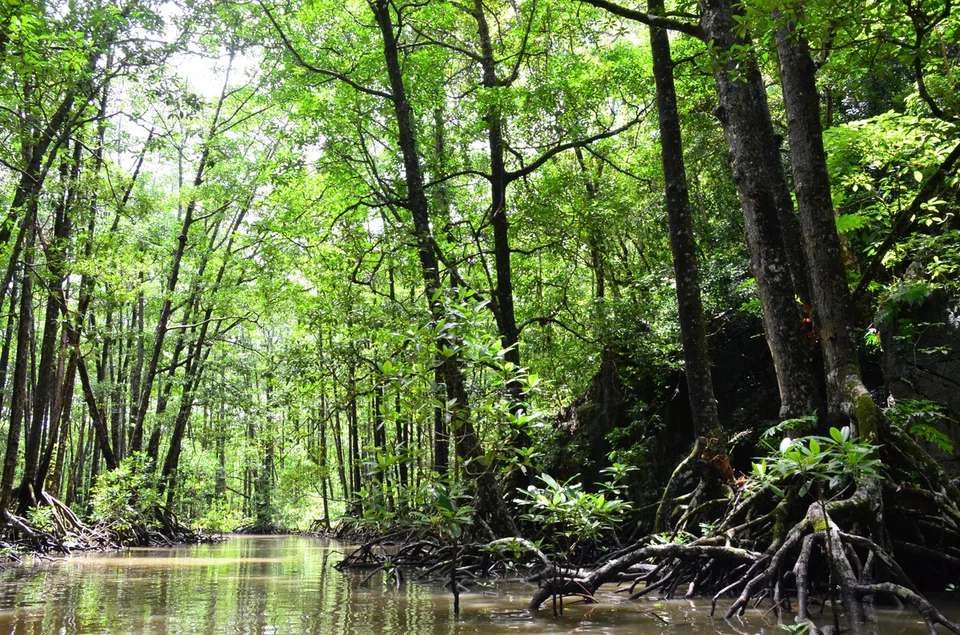
AS the world’s knowledge of climate change deepens, few would now argue over the devastating effects it has on biodiversity and health. Less obvious but just as deadly is the damage to the financial stability of economies.
The Network for Greening the Financial System (NGFS) — a network of over 100 central banks, currently chaired by the Monetary Authority of Singapore (MAS)‘s managing director, Ravi Menon — has recognised climate-related risks as a source of financial risk.
Observing that financial flows can direct positive change in environmental action, while “nature-blind” financial flows can potentially aggravate environmental degradation, the NGFS has exhorted governments to ensure that their policies and regulations influence the right outcomes.
Singapore is among the countries that have recognised the interconnectedness of climate change, biodiversity loss and financial stability — as well as the pivotal role that the financial sector can, in turn, play in turning the tide of climate change.
“Nature-related risks, including biodiversity loss, can pose significant macroeconomic risks and implications for financial stability if left unaddressed,” said Dr Darian McBain, chief sustainability officer at MAS.
“The financial sector plays an important role in tackling nature- and biodiversity-related risks, by channelling capital towards activities that can benefit nature and the environment.”
MAS has launched a host of sustainable finance efforts over the years — among them, grant schemes such as the Green and Sustainability-Linked Loan Grant Scheme, to further promote the issuance and origination of new sustainability-focused finance products; and the setting aside of S$50 million out of the S$250 million from its Financial Sector Technology and Innovation scheme to support the development of innovative green fintech solutions and projects.
Its active catalysing of sustainable finance flows in Singapore has contributed to the significant growth seen in sustainability-themed instruments here in recent years. For example, green, social, sustainable, and sustainability-linked and transition bond issuance volumes have grown from S$1.0 billion in 2018 to S$14.4 billion in 2021; while green and sustainability-linked loans issued in Singapore have grown from S$2.9 billion in 2018 to S$17.0 billion in 2021.
Amongst the MAS’s latest efforts is its support of The Biodiversity Accelerator+, which Dr McBain said exemplifies “how financial institutions can take the lead in bringing together entities from across the sustainability ecosystem to tackle pressing biodiversity-related risks, to restore our planet’s natural capital and assets”.
Tipped to be one of Asia’s first biodiversity accelerator programmes, it was launched by Silverstrand Capital in late May. The project aims to find 8 high-impact, early stage companies to address the biodiversity crisis in South-east Asia. Selected companies will undergo a 3-month programme with experienced coaches who will help them with not only traditional accelerator aspects, such as fundraising, financial modelling and branding, but also impact aspects, such as understanding the science of biodiversity and how to work with local communities.
The programme is aimed at 2 types of companies: those addressing executional barriers to conservation through hardware and software solutions, and those protecting vulnerable landscapes or restoring degraded ones directly via on-the-ground operations. It is hoped the programme will improve their business and financial planning, and their approach to the ecosystems and communities in which they operate.
The programme is also supported by Temasek Foundation, a non-profit organisation under Temasek’s philanthropic arm; Mandai Nature; the National University of Singapore’s Centre for Nature-Based Solutions; and UBS Optimus Foundation, as a knowledge partner.
Lim Hock Chuan, head of programmes at Temasek Foundation, told The Business Times: “Efforts like The Biodiversity Accelerator+ programme support the strengthening of market infrastructure and demonstrate how private-sector partners can play a role in the sustainability ecosystem.
“We need innovative deep-technology solutions and nature-based solutions to solve some of the environmental challenges we are facing.”
He added that the bringing together of like-minded communities of investors, innovators, researchers, non-profit organisations, and philanthropy organisations, among others will allow innovative solutions to be further developed and scaled.
Dr McBain said the programme’s focus on nature technology also resonates with the ethos of MAS’s Project Greenprint, which aims to harness data and technology to power the green finance agenda and engender real world impacts.
Kelvin Chiu, principal at Silverstrand Capital, said The Biodiversity Accelerator+ was also born out of a perceived gap in investible solutions in the biodiversity space, particularly in South-east Asia.
“We want to build the stack of biodiversity-positive investible opportunities, for ourselves and other investors. We have met with many passionate and talented entrepreneurs, whom we feel could benefit from a holistic and comprehensive programme that covers financial as well as social and environmental aspects of their businesses. We want to help these founders upskill and help their early-stage companies become more investment-ready.”
Biodiversity was chosen as the theme of the programme because Chiu and his team are of the view that the climate challenge is housed within a wider ecological crisis.
“Investors have to do more to combat biodiversity loss. Among the SDGs (Sustainable Development Goals developed by the United Nations), ‘Life Below Water’ (SDG14) receives the least attention, and ‘Life On Land’ (SDG15) is not much further ahead. We want to play a part in changing this, as the business case for protecting biodiversity is stronger than ever.”
Chiu believes this is particularly pertinent in this region — a point also recognised by Temasek Foundation.
Lim said: “South-east Asia contains large areas of coastal and terrestrial ecosystems such as mangroves, seagrass meadows and tropical forests. These play an important role in acting as carbon sinks that can store and remove carbon from the atmosphere, as well as protecting biodiversity. These ecosystems are, however, facing increasing habitat loss.”
He believes nature-based solutions and technological innovations — like The Biodiversity Accelerator+ — are part of a strategy to address this, through the sustainable management and rejuvenation of these ecosystems. “With the global urgency to decarbonise our economies, there is a need for nature-based solutions and innovations to reach their greatest possible impact through public and private sector cooperation and support.”
TRENDING NOW
Grab CEO’s wife Chloe Tong on life with Anthony Tan and finding her purpose
He built the Vingroup empire. Now South-east Asia’s richest man is handing some key roles to his sons
HDB reviewing ‘jumbo’ flat scheme after Telok Blangah unit listed for sale at S$2.18m
What role can Japan play in Asean’s future?