Razer mulls digibank retail licence but notes tight Dec 31 deadline
Firm has been approached to form consortium to apply for licence: chief strategy officer
Singapore
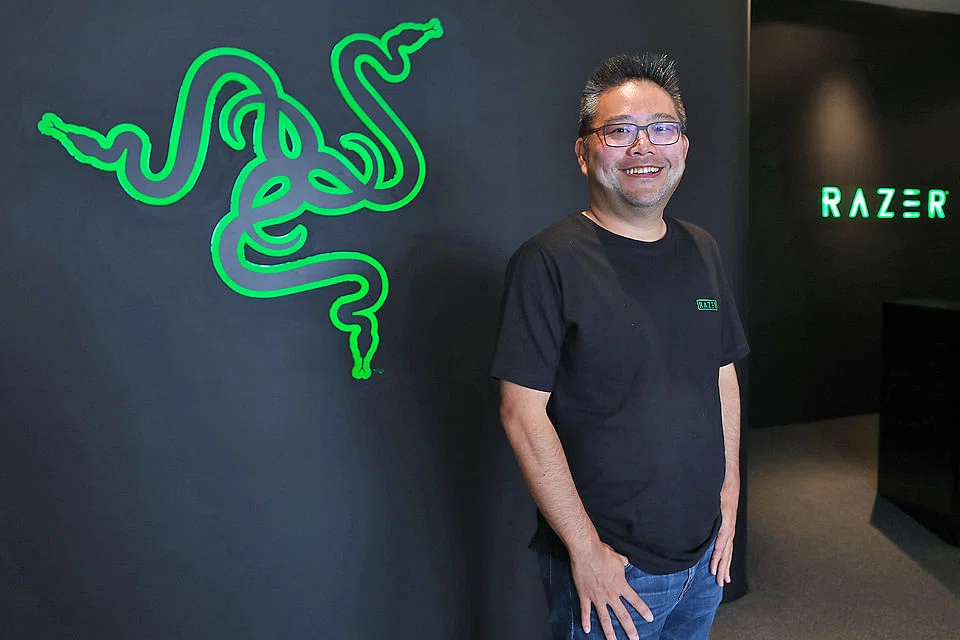
RAZER is still mulling over applying for a Singapore digital banking licence but if it proceeds to meet the Dec 31 deadline, the gaming lifestyle brand will be gunning for one of two retail licences on offer.
Speaking to The Business Times, Razer chief strategy officer Lee Li Meng noted that as a consumer brand with strong reach among millennials and youth, "it would not make as much sense for us to apply for a wholesale licence".
The Monetary Authority of Singapore (MAS) is looking to issue up to three digital wholesale bank licences, which are focused on lending to SMEs (small and medium-sized enterprises) and non-retail customers.
In end-August, the Singapore regulator opened applications for both digital banking licences together with eligibility requirements and assessment guidelines.
Market talk has since swirled as to who the interested parties might be, with the formation of a consortium emerging as a common strategy employed by digibank aspirants here.
In November, The Business Times reported that Ron Sim's V3 Group is considering a Singapore digibank bid with Far East Organization, Temasek's Heliconia and EZ-Link.
Meanwhile, banking stalwart OCBC Bank is believed to be in talks with conglomerate Keppel Corporation, peer-to-peer lender Validus Capital, and venture-capital fund Vertex Ventures to form a digital-bank.
Mr Lee acknowledged that Razer has been approached by prospective partners including some regional and global names to form a consortium and apply for a licence in Singapore.
While Razer remains open to such joint efforts, Mr Lee noted the four-month timeframe to submit an application is "tight", especially for consortiums. "There is an awful lot that needs to be done, especially if the parties involved are listed companies with a regional or global presence."
This may be the case as members of a consortium often have to tie down agreements with each together before getting approval from their respective boards, the result of which can be a lengthy process.
"So, the question is if four months is sufficient time to get everyone on the same page," Mr Lee noted.
As one of the main considerations for being handed a digibank licence is the ability to meet the needs of underserved segments, Razer believes its competitive advantage with millennial consumers will be one of its strengths. Mr Lee said: "Through our platforms and products, we basically interact with millennials and youth on a daily basis and understand their painpoints."
While its roots lay in designing and making gaming peripherals, Razer has been building its profile as a provider of services. Mr Lee noted it is one of the key focuses for Razer, which has been listed in Hong Kong since November 2017.
To build on its digital payments capabilities, Razer acquired Malaysian e-payments platform MOL in May 2018. Razer Pay, an e-wallet targeting millennials, was rolled out in Malaysia in July of that year.
Razer Pay received 600,000 downloads and handled 300,000 transactions were made in the first eight days of its launch across the Causeway. In 2018, the value of its fintech-related transactions was US$1.41 billion. In the first half of 2019, the figure was US$828 million.
In June 2019, Razer struck a partnership with Visa to introduce a prepaid Visa solution through the Razer Pay app.
As a sign of its ambitions, Razer Fintech, the financial technology arm launched in March 2019, has taken on high profile names as advisers. They include former GIC president Lim Siong Guan, veteran corporate leader and venture capitalist Koh Boon Hwee in October and, more recently, former DBS chief innovation officer Neal Cross.