

RBA to deliver back-to-back hikes as Iran war refuels inflation
Money markets are pricing a three-in-four chance of a rate rise in March and see more tightening to come
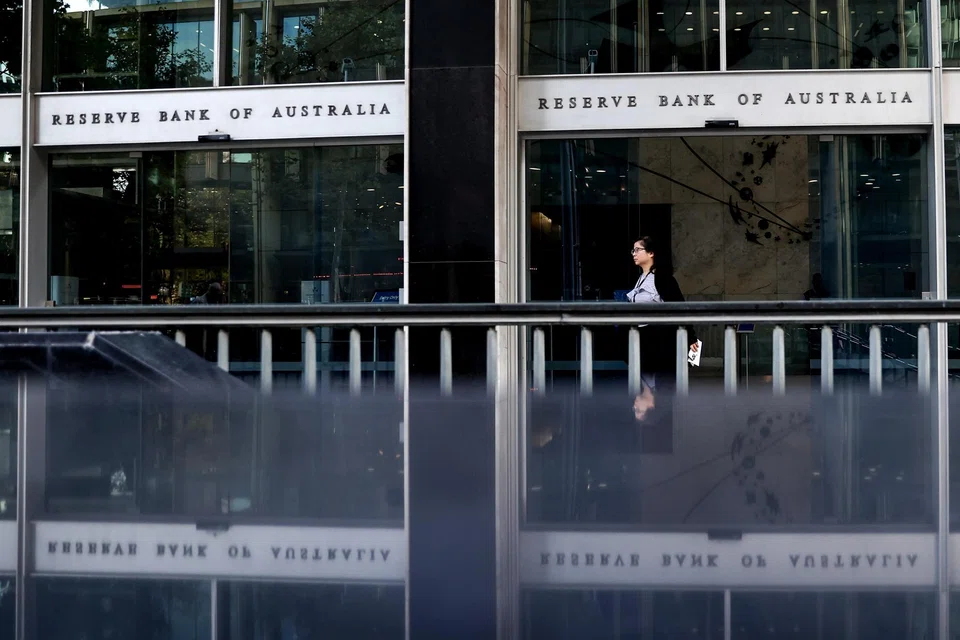
[SYDNEY] When Australia’s central bank convenes this week for its second interest-rate decision of the year, the board will find its current inflation problem further exacerbated by an energy price shockwave rippling out from the Middle East driven by war.
The Reserve Bank of Australia (RBA) will deliver back-to-back hikes at 2.30 pm on Tuesday (Mar 17) in Sydney to take the cash rate to 4.1 per cent, economists predict, on fears the surge in oil will drive consumer prices even higher. Money markets are pricing a three-in-four chance of a rate rise in March and see more tightening to come.
“The Iran conflict introduces a material upside inflation risk, and our current estimates suggest headline inflation will approach 5 per cent,” said Nick Stenner, economist at Bank of America. The central bank targets consumer-price gains at the midpoint of a 2 to 3 per cent target.
Stenner said that the RBA has “limited room” to look through the shock, given the existing trajectory of price pressures and a tight labour market. Not hiking in March, he said, “increases the risk of a more disruptive tightening later as higher-for-longer inflation becomes embedded in people’s expectations”.
Hike expectations have been driven by the spiralling Middle East conflict that has seen Iran strike energy-rich Gulf states in response to a US-Israeli air attack. Oil has surged and the fighting has disrupted air travel and flows of fertiliser and other goods at a time when the RBA was already fretting over inflation.
Most economists expect a follow-up hike in May to lift the cash rate to 4.35 per cent. The last time the RBA delivered three consecutive rate rises was April to June 2023 and governor Michele Bullock’s press conference an hour after Tuesday’s announcement will be closely watched for clues on the outlook.
Last month, the RBA became the first major monetary authority in the developed world to tighten policy this year, reflecting concerns that inflation could become entrenched if settings are not sufficiently restrictive.
Since that meeting, the deepening Iran war has threatened to further de-anchor inflation expectations. In February, the RBA forecast CPI would peak at 4.2 per cent this year on a technical assumption that crude would remain at US$63.8 per barrel through mid-2028 and the cash rate would sit at 4.2 per cent in December.
Yet the decision is not completely straightforward, as a minority of economists holding out for a May move, when the RBA will have quarterly inflation data and updated staff forecasts, will attest. Last week, deputy governor Andrew Hauser framed the challenges for Australia’s policymakers.
SEE ALSO



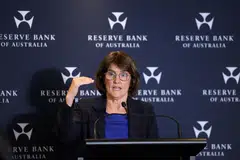
Pre-war, the RBA had inflation returning to near the midpoint of its target band in a couple of years’ time. The key question, Hauser said, is how incoming data – both domestic and global – alters that picture.
Recent readings point to upside risks:
- Inflation in January was in line with forecasts but well above target
- A private gauge of consumer inflation expectations rose to 5.2 per cent in March, a level not seen since July 2023
- Annual GDP growth of 2.6 per cent last quarter exceeded the RBA’s estimate of the economy’s sustainable pace of around 2 per cent
- The capacity utilisation rate remains elevated, suggesting demand is outpacing the economy’s capacity to supply
- Unemployment is hovering near a very low level of 4.1 per cent
- Job advertisements and other measures of labour demand have strengthened
Against that backdrop, any additional price pressure flowing from higher energy costs “is not a helpful development” for policymakers, Hauser said.
Yet, the debate is not one-sided and some economists, including Westpac Banking’s Luci Ellis, a former senior RBA official, expect a split vote on Tuesday after a recent run of unanimous decisions.
The uncertainty surrounding the Middle East is still high and if the conflict drags out it could weigh on global activity in a clear downside risk. Bloomberg Economics reckons a three-month closure of the Strait of Hormuz, which links the Persian Gulf to world markets and typically carries about one-fifth of global oil flows, would push oil to US$164 a barrel.
While higher oil prices lift headline inflation in the short term, they also squeeze household incomes and restrain consumption. Global financial conditions could tighten if the conflict widens, hitting business confidence and export demand in a cascading effect.
Domestic data, too, present a mixed picture, with softer-than-expected consumption growth and wages remaining contained.
The board will, therefore, weigh two competing dangers: doing too little and allowing inflation expectations to shift higher, or hiking into a fragile global environment that slams the brakes on local economic growth and drives up unemployment.
These uncertainties create a difficult reaction function for the RBA, said Diana Mousina, deputy chief economist at AMP, who reckons a better decision for policymakers would be to wait, even though she too is predicting a hike this week.
“I don’t accept central banks should be quick to move in the current environment: It’s a supply hit and we risk driving down growth,” Mousina said. “I’m curious to know if the RBA would have hiked in March if the Middle East war hadn’t erupted and the answer to that is probably no.”
Her view is reflected by other major central banks meeting this week, including the European Central Bank, US Federal Reserve and Bank of Japan, none of which is expected to raise borrowing costs.
Hauser summed up the conundrum: “If ever there was a time when board members will earn their meagre salary, it will be this month.” BLOOMBERG
Decoding Asia newsletter: your guide to navigating Asia in a new global order. Sign up here to get Decoding Asia newsletter. Delivered to your inbox. Free.
Share with us your feedback on BT's products and services
TRENDING NOW

ComfortDelGro appoints two new independent directors

Once staunchly pro-China, Malaysian Chinese businesses are now distancing themselves from Beijing

NoonTalk needs continued financial support from CEO Dasmond Koh, auditors warn

DP Architects sets the benchmark for sustainability disclosure and design

