Australian central bank chief says economy cooling, unsure rates high enough
The key goal is to prevent elevated cost pressures from entrenching inflation, adds Michele Bullock
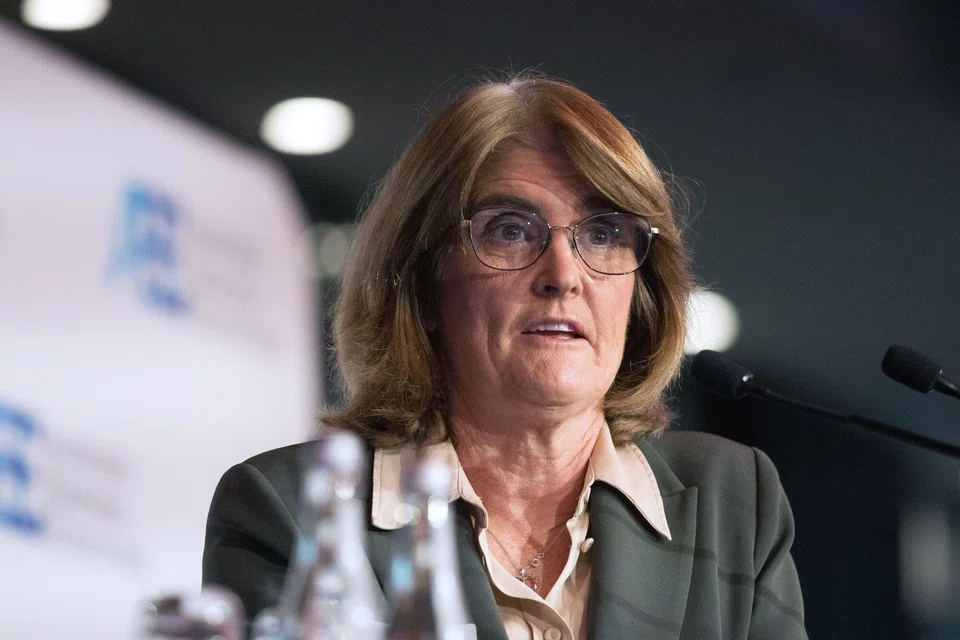
[SYDNEY] Australia’s central bank chief said that there are signs the economy is cooling as anticipated, though it’s still unclear if this year’s interest-rate hikes are enough to return inflation to target or whether additional tightening will be needed.
In a balanced and wide-ranging speech at the annual Anika Foundation lunch in Sydney on Tuesday (Jul 28), Reserve Bank of Australia (RBA) governor Michele Bullock highlighted that while the world has become more shock-prone, the economy is more resilient than in the past. She said that the key goal is to prevent elevated cost pressures from entrenching inflation.
“This does mean that some further easing in the growth of demand is likely to be required if we’re to bring inflation back down sustainably to target,” Bullock said in her speech, referring to the RBA’s 2-3 per cent goal. “A key question in the period ahead is whether the tightening in monetary policy earlier in the year is sufficient to achieve this.”
The RBA raised rates at its first three meetings of the year, trying to restrain resurgent inflation that was accelerating even before the impact of the energy shock triggered by the Middle East conflict. The central bank’s board stood pat at 4.35 per cent at its last meeting and is expected to do so again when the next decision is announced on Aug 11.
Money markets trimmed bets after the speech and Q&A to price a one-in-four chance of a rate hike in two weeks’ time, while wagering better than 90 per cent odds of an increase by December.
“While conditions vary across sectors, the economy overall has adjusted gradually and broadly as expected,” Bullock noted. “The board is prepared to act as required to achieve its mandate, including by increasing the cash rate further if needed.”
The outlook has been clouded by the inability of the United States and Iran to find a way out of their conflict. While oil prices fell steadily after an interim agreement to begin peace talks, a resumption in fighting over the Strait of Hormuz sent them surging again. Global benchmark Brent has since fallen after US President Donald Trump said that his country and Iran were engaged in talks to end the war.
“Even if the renewed disruption to oil supply abates quickly, underlying inflation is still expected to be higher as fuel price rises flow through to other prices,” Bullock explained.
The governor highlighted a notable quickening in new dwelling inflation in the May monthly CPI, partly reflecting higher fuel and construction costs. She said that the RBA’s liaison programme showed non-labour cost pressures have continued to pick up, and more firms are looking to pass these costs on.

“It’s also important to remember that inflation and capacity pressures in the domestic economy were already too high prior to the recent shock,” she added. “There’s evidence that domestic demand and labour market conditions have been easing as required to bring the economy back towards balance.”
Australia’s closely watched trimmed-mean gauge of core inflation has been at or above the midpoint of the RBA’s target for more than four years. Bullock was asked about the risk of a prolonged period of elevated consumer-price growth.
“The longer it is out of target, the more concerned that the board becomes,” she replied. “I think it is quite at the front of their minds that, at the moment, in the May forecast we had it back under 3 per cent towards the end of 2027. That’s a long time to be above target. Let’s just hope there’s no more shocks.”
The governor said that one sector that had been weaker than anticipated at the time of the May forecasts is housing. She noted that the rate rises were expected to cool prices, but the government’s removal of tax breaks and softer sentiment in general had further weighed on them.
Still, she described the fall in prices for existing homes so far as “modest” after a period of strong gains. The declines have been concentrated in Sydney and Melbourne, Bullock said, while pointing out that they still remain around the level seen before rate hikes resumed in February this year.
“Notwithstanding the price falls, negative equity remains very limited, affecting less than 1 per cent of borrowers,” Bullock said. “This is not to downplay that this would be stressful for those affected. But it does indicate that financial stability risks are contained.”
The governor also looked at the status of various sectors of the economy:
- The labour market has eased a bit more than expected over recent months, moving a little closer to balance relative to its tight starting point, she said. Still, the RBA continues to assess that some further easing in the labour market conditions will likely be required to bring inflation back to target.
- There’s limited evidence of a large effect of the spike in oil prices on household spending, she said, noting the government’s temporary fuel tax reduction helped. Timely indicators point to moderate growth in consumption last quarter, broadly as expected.
- Business investment has been stronger than expected, largely driven by investment in data centres.
Bullock again pointed out the difficulties created by weak productivity growth that can’t be influenced by monetary policy. “While this persists, the ability of the economy to grow without generating inflation is constrained, and Australians will continue to experience limited growth in real wages,” she said. “In these circumstances, the best contribution monetary policy can make is to maintain low and stable inflation and support sustainable full employment.” BLOOMBERG
Decoding Asia newsletter: your guide to navigating Asia in a new global order. Sign up here to get Decoding Asia newsletter. Delivered to your inbox. Free.
Share with us your feedback on BT's products and services