

RBNZ says economy will slow as rising rates curb consumption
 Add BT as a preferred source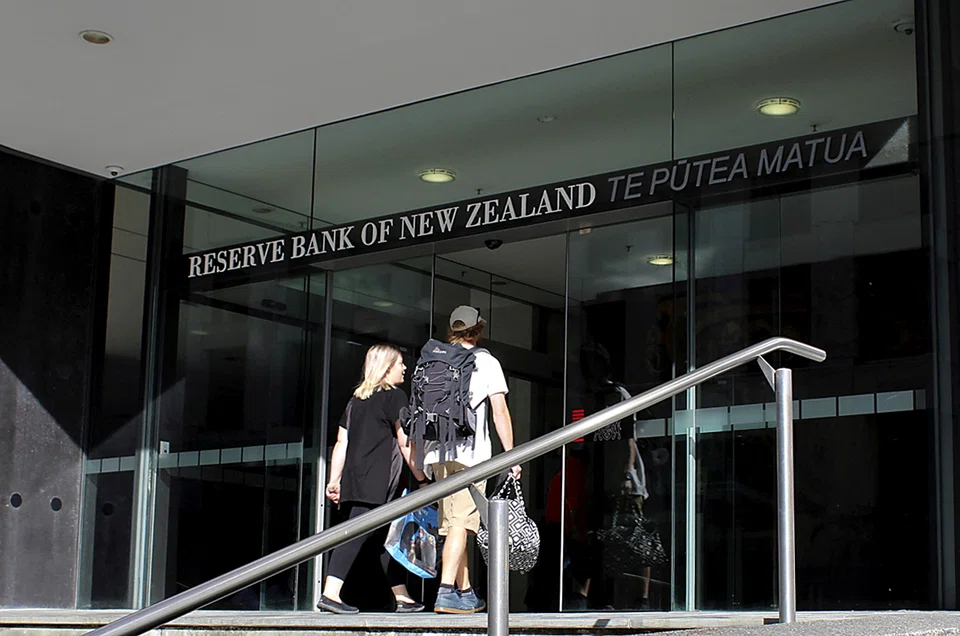
NEW ZEALAND’S central bank said rising debt servicing costs and falling house prices will hit household spending and contribute to slower economic growth in the year ahead.
Based on current mortgage rates, debt servicing is expected to rise to 20 per cent of average household disposable income from 9 per cent currently, the Reserve Bank (RBNZ) said in its semi-annual Financial Stability Report released on Wednesday (Nov 2) in Wellington. Negative equity and mortgage servicing arrears are not widespread at present but will grow if house prices continue to fall and as mortgages reprice to higher interest rates, it said.
“The downturn in the housing market will weigh on economic activity,” the RBNZ said. “Rising household debt servicing costs and declining household wealth will limit consumption growth over the next year.”
New Zealand house prices posted their first annual decline in 11 years in October, CoreLogic data published today show. Home-loan interest rates are climbing as the RBNZ combats soaring inflation, with the Official Cash Rate at a seven-year high and policymakers tipped to increase it another 75 basis points to 4.25 per cent later this month.
The RBNZ said the number of households in financial difficulty will grow as fixed-rate mortgages agreed two or more years ago when interest rates were at historic lows start to reprice at significantly higher levels.
There is also a risk to household incomes if unemployment rises, it said.
“Significantly higher unemployment would lead to further stresses among households, and is the biggest risk to financial stability at present,” the central bank said.
Despite these challenges, New Zealand’s financial system is well placed to support the economy, with bank capital and liquidity positions strong and profitability and asset quality high, it said.
However, the RBNZ expects a decline in new residential construction once existing development projects are completed, which would contribute to slowing economic activity.

“The outlook for residential development has deteriorated in recent months, due to declining prices for existing houses, ongoing construction cost inflation, negative net migration, and rising interest rates,” the bank said. “A slowing in residential construction would weigh on broader economic activity and employment.” BLOOMBERG
Decoding Asia newsletter: your guide to navigating Asia in a new global order. Sign up here to get Decoding Asia newsletter. Delivered to your inbox. Free.
Share with us your feedback on BT's products and services
TRENDING NOW

Why China is tightening controls on overseas stock trading

Xi Jinping has just rewritten the rules of US-China rivalry

‘Even a CEO’s job can be replaced by AI’: DBS CEO Tan Su Shan bets big on agentic AI

‘Whole deck of cards just toppled’: FoodXervices’ Nichol Ng on how a 92-year-old family business unravelled – and what’s next

