

Retail investors pump money into South Korean stocks like never before
Seoul
WHILE the pros are shunning South Korean stocks, the nation's mom-and-pops are diving right in.
The benchmark Kospi index has rebounded almost 20 per cent from a low in March, even as foreign and local funds kept fleeing the market, offloading some 24 trillion won (S$28 billion) net of the gauge's shares this year.
That is because retail investors - known as "patriotic ants" for their herd behaviour that is propping up the market - have been buying at a record pace. They have added 22 trillion won net of the equities, including the biggest quarterly additions since Bloomberg began compiling the data in 1997.
Known for their appetite for products ranging from complex structured notes to risky hedge funds, South Korea's individual traders usually favour short-term, speculative bets and account for nearly 60 per cent of Kospi volume, according to NH Investment & Securities Co. The recent Bank of Korea rate cut is now also drawing wealthy investors with a long-term view to the nation's US$1 trillion stock market, Samsung Securities said.
"Most retail investors were speculative traders, but recently I saw many wealthy people coming to the stock market," said You Seung-min, chief strategist at Samsung Securities.
"Bank of Korea's 50 basis-point cut seems to have shocked them. The government's stronger regulations on real estate are pushing them to seek a return from stocks."
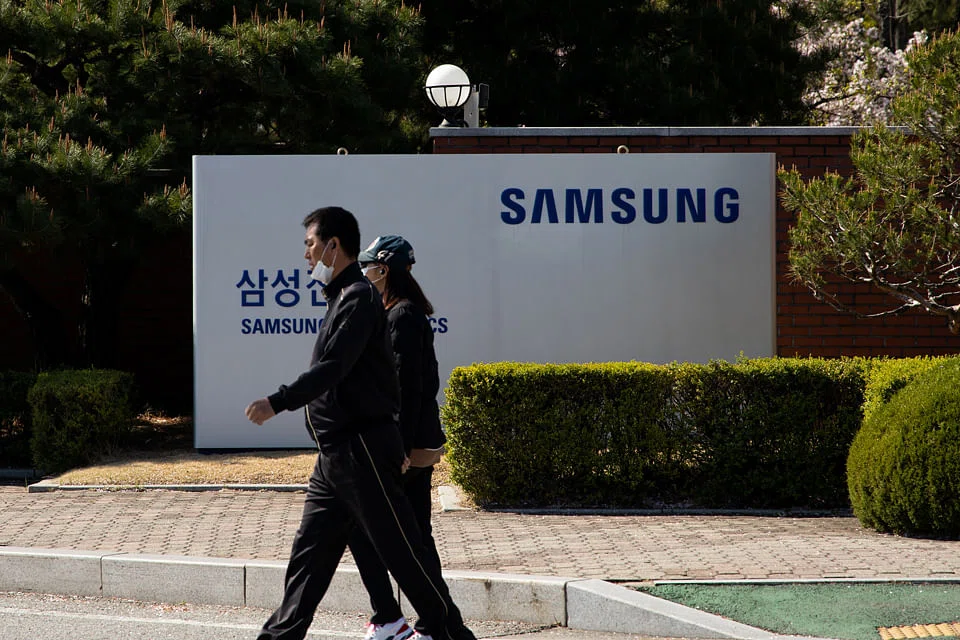
Their favourite pick has been Samsung Electronics, the nation's biggest stock, followed by peer SK Hynix. Both have tumbled 16 per cent this year. On Naver, the nation's biggest portal website, at least 80 community posts read: "Do you think it's the right time to buy Samsung Electronics?" or "Samsung will never fail, it's like a bond."
"Samsung's stock is probably a good investment for retail investors, as it is planning to offer about a 3 per cent dividend yield for this year, higher than the interest rate in Korea," said Chung Chang-won, an analyst at Nomura Financial Investment (Korea), who noted it has become easier to invest in the shares since a split in 2018.
South Korean regulators said in a statement last Thursday that retail investors should refrain from "reckless buying" of the nation's equities, especially with borrowed money. Leveraged investments in the market hit 10.5 trillion won on Feb 25, the highest since June 2019, according to the latest data from the Korea Financial Investment Association.
"There is at least 1,000 trillion won of floating money in Korea," Mr Chung said. "They really have nowhere to invest." BLOOMBERG
Decoding Asia newsletter: your guide to navigating Asia in a new global order. Sign up here to get Decoding Asia newsletter. Delivered to your inbox. Free.
Share with us your feedback on BT's products and services
TRENDING NOW

He built the Vingroup empire. Now South-east Asia’s richest man is handing some key roles to his sons

US dollar falters after Iran’s offer to reopen Hormuz sends oil lower

Temasek’s Wan Chee Foong to helm PIL, Lars Kastrup to be board adviser

Despite the de-dollarisation debate, demand for dollar liquidity in Asia is growing

