

Russia cuts rates below pre-war level in surprise jumbo move
RUSSIA’S central bank brought interest rates below their level before the invasion of Ukraine, easing monetary policy more than forecast as it navigates risks to inflation and the economy from sanctions.
Policy makers lowered their benchmark to 8 per cent from 9.5 per cent on Friday and signalled they will consider further reductions in the second half of the year.
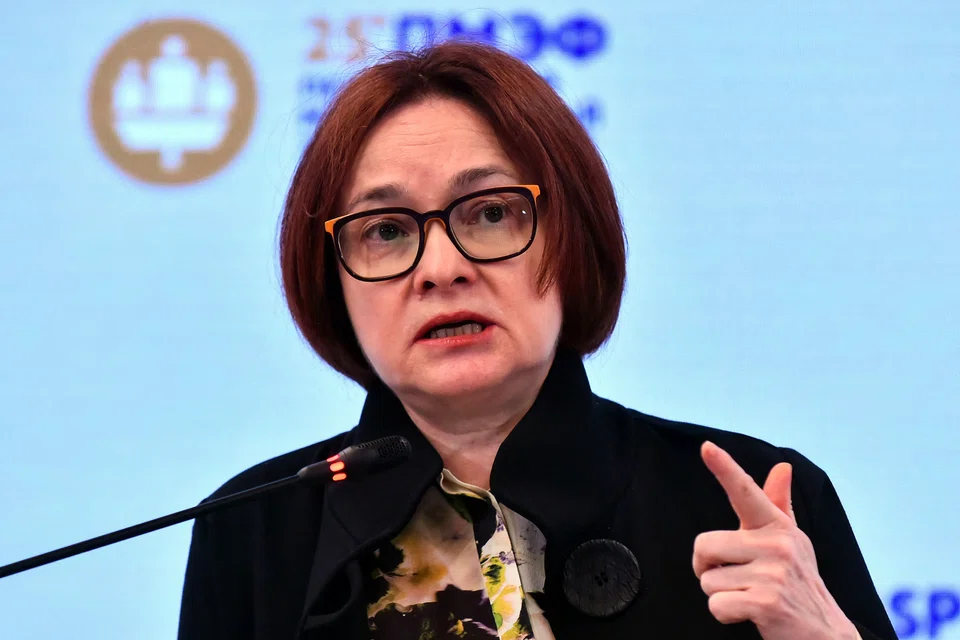
Russian Central Bank Governor Elvira Nabiullina said “our position here is unchanged. We believe that the exchange rate should be floating and we should not switch to a regime of exchange rate targeting.”
“At the same time, we are not rejecting the possibility of currency interventions. They are possible for a floating exchange rate, but within the framework of the budget rule,” she added at a news conference.
The rouble extended its drop against the dollar after the announcement and weakened as much as 2.6 per cent.
“The external environment for the Russian economy remains challenging,” the central bank said in a statement. Its decisions “ in April-July to reduce the key rate will increase the availability of credit resources in the economy and limit the decline in economic activity.”
The easing cycle that started in April has taken advantage of a slowdown in inflation after rapid gains in the ruble and a steep cooling of the economy. Although central bankers from Europe to South Africa are unleashing the most aggressive tightening of monetary policy in decades, Russia’s isolation from global markets makes it more immune to the narrowing in the rate differential.
“The central bank decided to be pro-active - no one expected it to such an extent,” said Dmitry Polevoy, economist at Locko-Invest. Now it “take a break, monitoring further trends.”
The economy appears on track for a much shallower recession than first feared, boosted by fiscal stimulus and rising oil production that has blunted the impact of US and European sanctions over the Kremlin’s war in Ukraine.
The Bank of Russia released new projections on Friday, showing it expects the economy to contract 4 per cent-6 per cent this year, down from its earlier prediction for a drop of 8 per cent-10 per cent.
Driven by the sanctions imposed by the US and its allies, imports into Russia have all but collapsed, contributing to a record surplus in the current account. With trade imbalances growing worse, lower interest rates may bring some relief for consumers and help revive domestic demand.
“ Persistent ruble strength, declining inflation expectations and faltering bank lending likely drove the decision. The central bank is likely to further cut the policy rate to 7.5 per cent by the year-end, in a series of shrinking cuts,” said Alex Isakov, Russia economist.
The central bank upped its forecast for the current-account surplus this year to a record US$243 billion from the US$145 billion it expected in the spring, thanks to higher exports and lower imports. It predicts exports will reach US$593 billion in 2022, which would be the most in modern Russian history.
The Bank of Russia also improved its inflation outlook and now anticipates price growth will end the year at 12 per cent-15 per cent.
Annual price growth eased to 15.4 per cent as of July 15, down from nearly 18 per cent in April. Inflation expectations for a year ahead have also declined to levels last seen in March 2021.
“It was a notable surprise,” said Sofya Donets, economist at Renaissance Capital. “The bigger-than-forecast easing was supported by lower inflation expectations in July - data that the market didn’t get to see before the week of silence.” BLOOMBERG, REUTERS
Decoding Asia newsletter: your guide to navigating Asia in a new global order. Sign up here to get Decoding Asia newsletter. Delivered to your inbox. Free.
Share with us your feedback on BT's products and services
TRENDING NOW

Britain’s mansion tax shows the difficulty of targeting wealth

Once staunchly pro-China, Malaysian Chinese businesses are now distancing themselves from Beijing

The only common thing in S-E Asia is that we all eat rice: Cisco’s Asean president

Singapore data centre operator DayOne opts for US IPO at likely US$20 billion valuation

