S-E Asian currencies hammered in wobbly quarter, woes persist
Ringgit is the worst performer among peers, Sing$ sinks to new six-year low

Anita Gabriel
Singapore
AS battered regional currencies bid adieu to one rough quarter, another rocky one awaits with fear factors such as China's slowdown and a commodity slump showing no signs of going away.
And if one agrees with economists' view that the softening global growth is less tied to cycles and more to do with structural forces (read: debt or credit which powered much of Asia's growth), it appears that the gloomy picture amid a looming US rate hike could outlast the coming quarter.
"Asia has been hurt hard by a turn in sentiments," said Jameel Ahmad, chief market analyst at ForexTime (FXTM). He does not reckon that the new quarter is going to contain these pressures.
Recently released poor Chinese industrial data has re-ignited worries that the sluggish economy, the world's second largest, will prolong the commodity slump and crimp growth in other countries. The International Monetary Fund (IMF) said in a recent report that falling commodity prices could shave off one percentage point of growth annually from commodity exporters and 2.25 percentage points off energy-exporting nations over the next three years.
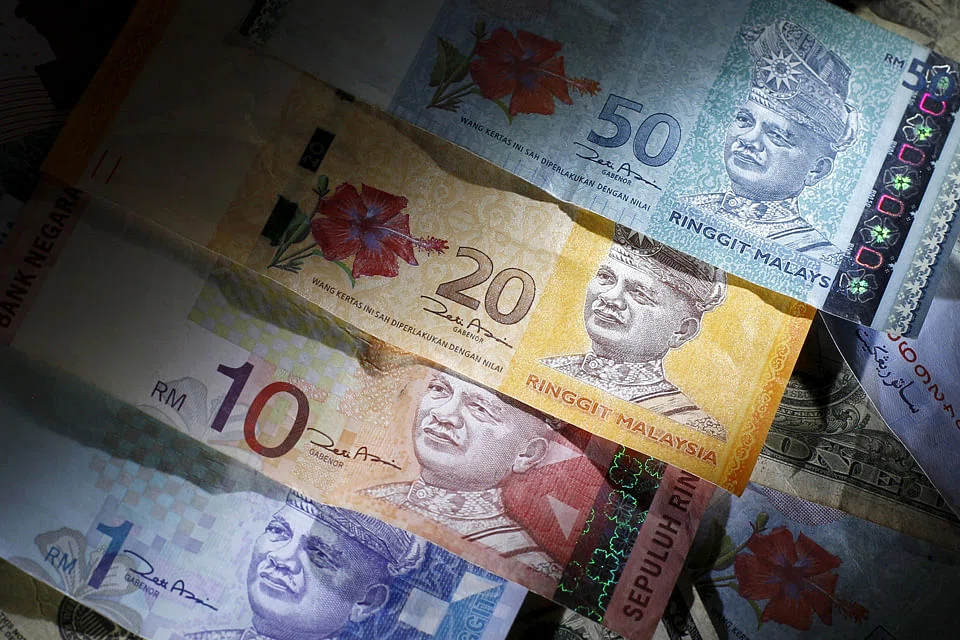
Malaysia's ringgit suffered the biggest losses on the currency front on Tuesday, plumbing to yet another fresh 17-year low of RM4.48/US$ at 11.37am.
Clearly the worst performer among its peers, the ringgit has lost 16 per cent over the past three months, followed by the Indonesian rupiah which has sunk 10 per cent over the period and has hit fresh lows not seen since the Asian financial crisis.
The currency slump has prompted Indonesian policymakers to roll out a stimulus package on Tuesday to revive growth in South-east Asia's largest economy.
The Thai baht has lost 7 per cent against the greenback in three months and latest export data out of there has been far from encouraging; in August, a pre-holiday season (August-October) which typically sees a pick-up, exports shrank nearly 7 per cent, no thanks to low commodity prices and weak external demand.
Concerns over global growth also pushed the Singapore dollar to S$1.43/US$ on Tuesday, a fresh six-year low following seven days of straight losses.
"Next Stop 1.44?," said Maybank in a research note after it broke through the 1.43 handle in the morning with the house predicting the next key barrier at 1.4460 last recorded in August 2009.
None of the concerns roiling the currency markets is new; anticipation of a US rate hike (a December liftoff looks more likely now), a slowing China that could crimp exports and falling commodity prices continue to spook global markets, while some countries like Malaysia have also been hit by domestic woes such as the unfolding political controversy.
"Emerging markets have been hit by a range of external factors that has exposed their weakness. Also, a declining currency will lead to less purchasing powers for consumers and an increase in inflation risks," said Mr Jameel.
Regional equities have also suffered enormous losses with Indonesian stocks topping the list with a 20 per cent dip this year, followed by the Straits Times Index which has nosedived 17 per cent.
A glimpse of the unpleasant visage of fear came from London-listed Glencore, a Swiss mining and trading giant which shares suffered a whiplash on Monday amid concerns over commodity prices and was attributed by some as the culprit for the rout in stock markets in Japan, Australia, and Hong Kong on Tuesday.
With little signs of things getting better for now, the consensus is that Asian currencies have more room to slip and slide amid rising anxiety.
This week will see the release of plenty of macro data, chiefly PMIs and export numbers. "Don't expect anything too cheery. In fact, by week's end, things should feel soggier still," said Frederic Neumann, co-head of HSBC's Asian Economics Research.
"Of course, one might simply shrug it all off as a fitting end to a pretty rough quarter. Truth is, however, that the cherished 'inflection point' still seems far off ... because what ails Asia is structural, not a mere cyclical dip," he added.