

Savings hacks for millennials and more
Banks are sprucing up their saving programmes to lock in tighter relationships
Singapore
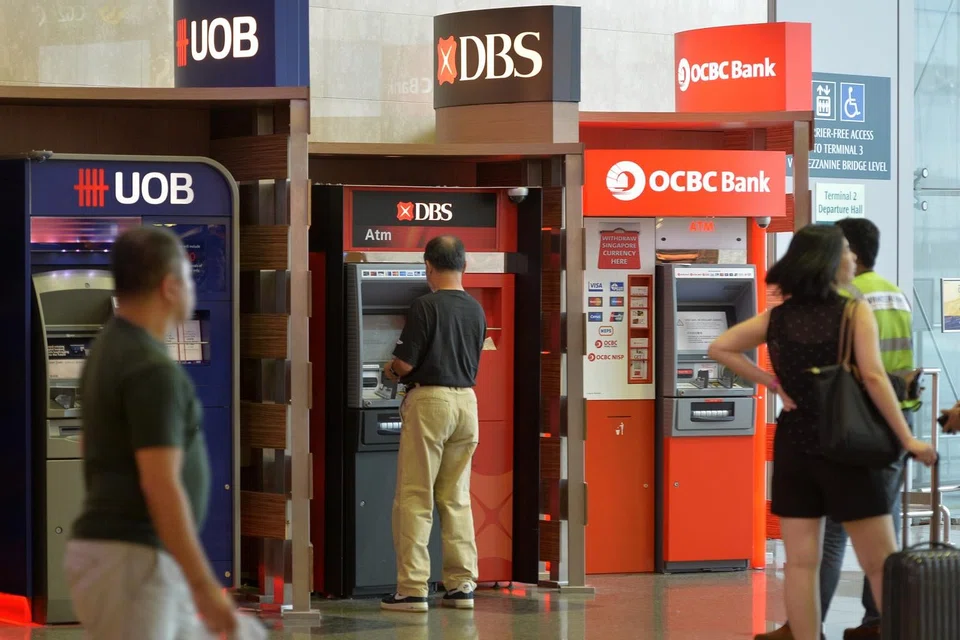
SINGAPORE banks have jazzed up their savings plans to find favour from maturing millennials, locking in a tighter banking relationship with customers amid the rising ease in switching banks today, as well as tapping the rising affluence in the city-state.
The latest round of changes should again spark hacking tips from the savviest among savers here. These do not just cater to millennials, though the aim of these programmes is for banks and customers to try to stick together for longer.
Singapore's largest bank DBS on Wednesday doubled to S$100,000 the cap in its DBS Multiplier programme that's eligible for bonus interest, offering a new step-up in rates for savings that exceed S$50,000.
DBS' Multiplier product, like similar packages from its competitors, ties savings rates to the extent of the saver's banking transactions with the bank. They reward more favourably big savers who deposit a higher salary into any DBS account, as well as transact more with the bank. Its rates are thus tiered according to the value of banking transactions, and the savings held by customers.
For a well-heeled customer with a rough S$20,000 monthly salary and an outflow in expenses such as housing loan payments, credit card spending, and payments for insurance and investments to total S$30,000 in transactions, he or she can earn an effective interest rate of 3.65 per cent per annum on an account balance of more than S$50,000. If the customer's balance is S$100,000, that means S$3,650 in annual interest.
Dual-income millennial couples can also hack their way into gathering more annual interest this way by holding the DBS Multiplier account and capturing their salaries and transactions in total in a joint account, to squeeze out a higher payoff from banks. Similar savings plans by OCBC and UOB - namely OCBC 360 and UOB One Account - also allow for such arrangements.
On April 1, OCBC further upped the salary bonus interest for balances between S$35,000 and S$70,000 to 2 per cent per year. This applies once the customer credits a monthly salary of at least S$2,000. OCBC offers more interest when a customer spends at least S$500 on OCBC credit cards, raises his or her account balance by at least S$500 each month, and buys certain insurance or investment products from OCBC. Assuming a customer has S$70,000 in his or her account, and meet all these criteria, the effective interest rate would be 3.45 per cent.
Over at UOB, customers who credit their salaries and spend at least S$500 on their UOB cards monthly, can get an annual effective interest rate of about 2.44 per cent for an account balance of S$75,000.
UOB in 2018 upped the maximum balance that UOB One Account holders can earn the highest bonus interest to S$75,000.
DBS told BT that millennials are a major customer segment for the Multiplier programme. Data from DBS showed that some 40 per cent of DBS Multiplier customers have grown their assets to more than S$50,000.
Jeremy Soo, head of consumer banking group (Singapore) at DBS, said: "The latest enhancements aim to build DBS Multiplier for longevity, so we can grow with our customers and remain relevant even as their financial needs evolve."
UOB said that between mid-2015 to mid-2018, the average account balance of the UOB One Account for millennial customers grew by more than two times over the three years.
Jacquelyn Tan, head of personal financial services at UOB, said: "Contrary to conventional wisdom, millennials are not focused solely on living in the moment and are, in fact, very conscious of the need to save for the future."
OCBC's head of deposits Gregory Cher said most of the OCBC 360 Account balances have more than S$50,000, with account balances growing by a double-digit percentage from a year ago.
To be sure, foreign banks including Bank of China, Maybank and Standard Chartered also have similar savings programmes to offer a higher interest for customers that credit salary and take up a credit card with the bank.
How will the average salaryman fare with these savings programmes? Take an employee earning the median take-home salary of S$3,550, who also spends on a DBS card and has dividend payments coming through a DBS account. Let's assume this employee maintains six-months worth of his take-home salary, or S$21,300.
He or she will likely earn a 2 per cent per annum interest on his savings of up to S$50,000 in his DBS Multiplier account.
With the UOB One Account, he will earn about 1.9 per cent, once he meets the spending requirement.
He can earn roughly 1.85 per cent per annum on his OCBC 360 account, by meeting spending requirements and increasing his account balance by S$500 each month. To be clear, the rate here is a rough one, as the monthly interest will fluctuate with the monthly incremental savings by a customer.
By comparison, for a S$20,000 fixed deposit, most banks offer a promotion rate of just under 2 per cent to hold the funds for a year, comparison site MoneySmart's data showed.
Looking at coupon rates for Singapore Savings Bonds, the May tranche is offering a 1.95 per cent return for one year. Assuming the investor holds the bond to maturity in ten years, the average return is 2.16 per cent.
DBS said that in late 2017, it did away with a minimum threshold for salary credit or credit card spending. Since then, both DBS Multiplier customers and DBS Multiplier account balances have more than doubled.
Rohith Murthy, founder of financial comparison site SingSaver, told BT: "It's very important for (banks) to target millennials because they know they can own that first relationship. Once they own that, they can start selling you more products, understand you better and tailor more offerings to you." - Additional reporting by Lynette Tan
Amendment Note: The following article has been clarified to say that a customer earning the median take-home salary of S$3,550 will earn 1.85 per cent per annum on his OCBC 360 account, by meeting spending requirements and increasing his account balance by S$500 each month. It has also been clarified to say that the DBS Multiplier is held as a single account, but the account can capture couples' combined salaries that they credit into their joint accounts.
TRENDING NOW

Fed hike throws Singapore banks a margin lifeline; UOB most likely to feel impact

He built the Vingroup empire. Now South-east Asia’s richest man is handing some key roles to his sons

Real-estate veteran Desmond Sim quits from CEO roles at Realion, ETC

Chagee, Mixue and Luckin won the market. Sustaining their edge is the harder part

