Singapore to tackle greenwashing, carbon trading, to boost sustainable finance: MAS
Singapore
SINGAPORE plans to take a slice of the carbon trading market, while targeting the greenwashing that threatens the surprisingly unabated demand for sustainable finance.
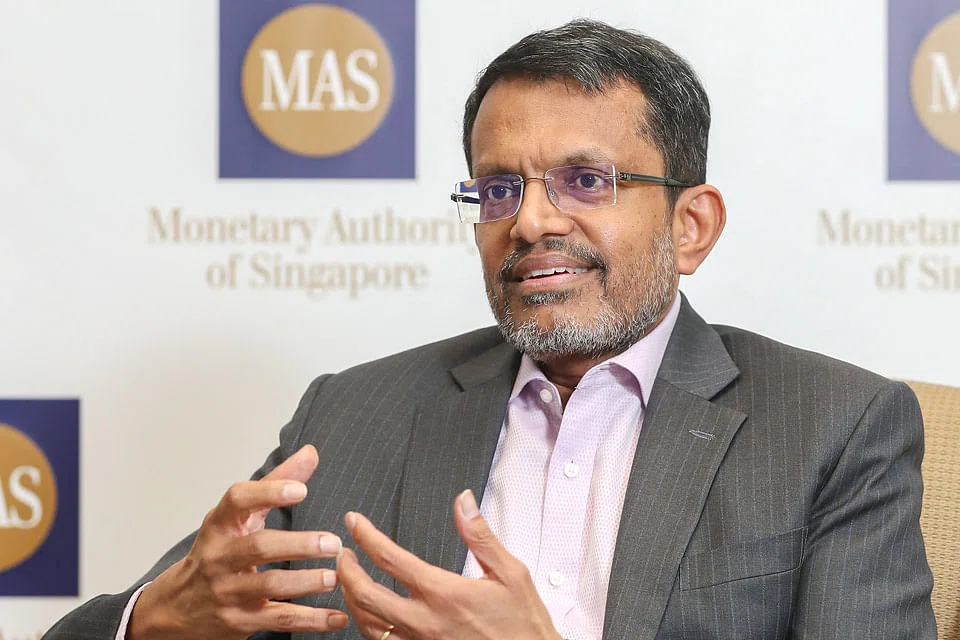
The Monetary Authority of Singapore (MAS) is looking at ways to fix the fragmented, inefficient market of carbon-credit trading, said its managing director Ravi Menon.
It is also looking at ways to curb the sale of financial products that may be labelled as "green", but on closer inspection, do not meet the right standards. The greenwashing comes in part as there are many differing standards in the market, including disclosure templates and standards out of Europe and China that define what makes a product "green".
Singapore does not need to invent these standards, but can pull them together and provide a trusted regulatory environment for these to be implemented, he said.
"Part of our plan is to attract rating agencies and other service providers who can do high-quality certification of carbon footprints, and other verifications of green standards," Mr Menon added. "Based out of Singapore and under our regime, I think that will be trusted."
Some verification solutions can emerge from the fintech space, said Mr Menon in a wide-ranging interview with BT ahead of the SFFxSwitch event. For example, blockchain technology and satellite images can be used to check if suppliers are obtaining raw materials via deforestation.
As for carbon trading, there have been some inroads in Singapore. In 2019, a carbon exchange was launched in Singapore, allowing airlines and other corporate buyers to trade securitised carbon emissions.
There is global demand, as companies set targets to reduce their carbon emissions to net-zero. This is so to align themselves with the climate agreements, the most current being the Paris Agreement.
Under the Kyoto Protocol - to be replaced by the Paris Agreement by 2020 - countries with an emission-reduction or emission-limitation commitment under the Kyoto Protocol can implement an emission-reduction project in developing countries, such as installing solar panels in rural homes. This is done under the Clean Development Mechanism (CDM).
Such projects can earn saleable certified emission reduction credits, each equivalent to one tonne of carbon dioxide, which can be counted towards meeting Kyoto targets.
Asia is a key supplier of carbon credits, with more than 82 per cent of registered CDM projects originating in the Asia-Pacific region, data from the Singapore government showed.
Still, a S&P Global report in July said an ongoing challenge for carbon offsets markets is the issue of "double claiming", where a country selling an emissions reduction credit claims the underlying reduction for itself, while the country buying the credit also claims the same emissions reduction.
The heightened attention from MAS on sustainable finance in recent years comes as there is, to Mr Menon's surprise, greater priority now on sustainability despite the economic pain unleashed by Covid-19.
"The pandemic, I think, has affected our psyche in a certain way. We've suddenly become a lot more conscious of our vulnerability to the forces of nature. Many of us feel that if you don't take care of the planet, the planet will not take care of you," he said.
Mr Menon pointed out, too, that the number of commitments to reach net zero emissions no later than 2050 from countries and corporations has doubled from a year ago, despite a global recession.
"We believe that climate change is real, we have a lot at stake if we don't do it right, and we need to do our part as part of a global collective action," he said. "The other thing that a pandemic has taught us is that countries acting on their own are quite powerless against a virus that does not respect borders. The need for collaboration has really struck home, and to deal with climate change, you need a similar approach."
Singapore is Asean's largest green finance market, accounting for close to 50 per cent of the region's cumulative green bond and loan issuances. More than S$8 billion in green, social and sustainability bonds have been issued in Singapore since it introduced a scheme in 2017 to defray the cost of such issuances. Just last month, MAS launched the Green and Sustainability-Linked Loan Grant Scheme, which will take effect from Jan 1, 2021.