

Signs of stress jolt Japan’s bond market as buyers disappear
 Add BT as a preferred source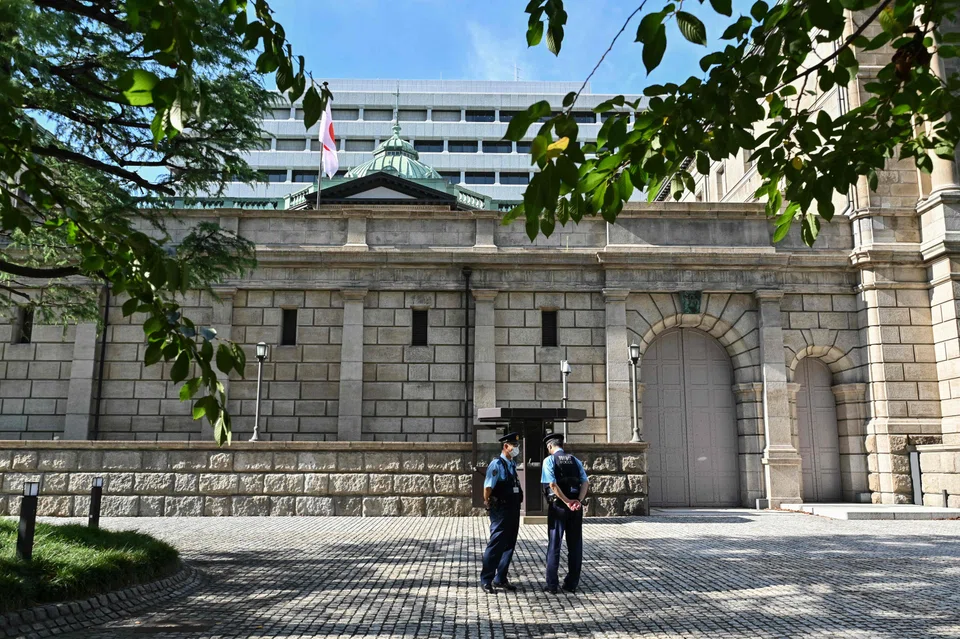
DeeperDive is a beta AI feature. Refer to full articles for the facts.
JAPANESE authorities barely had time to catch their breath after calming currency markets before they were faced with a flare-up of stress in the nation’s government bond market.
Amid a global rise in yields and a weakening yen, a gauge of demand at Japan’s sale of 20-year government bonds fell to the lowest in a decade on Thursday (Sep 15), leading to a slump in longer-dated debt.
And data showed overseas funds offloaded almost 2.6 trillion yen (S$25.5 billion) of mostly government bonds in the week to Sep 9, the most since the speculative attack on the market in mid-June.
Japan’s 10-year yield climbed to 0.25 per cent, the upper end of the central bank’s trading range on Wednesday, triggering an increase in its purchases to cap the move. The yield of a former benchmark which now has a 9-year maturity rose to 0.26 per cent in a further sign of market stress, prompting an inversion.
The bond market tension creates a fresh headache for Japan’s embattled officials, already locked in a struggle with traders over the weakening yen.
At the heart of both issues is the Bank of Japan’s (BOJ) easy monetary policy, which stands in stark contrast to the global wave of tightening to rein in sky-high inflation.
Navigate Asia in
a new global order
Get the insights delivered to your inbox.
“The foreign selling basically is in line with investors shedding debt allocations amid the rise in global yields that included Japanese government bonds,” said Tsuyoshi Ueno, a senior economist at NLI Research Institute in Tokyo.
“As the yen weakened to 140 per US dollar, that may also have fuelled speculation the BOJ would have to reduce stimulus if cost-push inflation pressure mounts.”
Japanese government bonds last came under pressure in June when foreign funds shorted them in the expectation the BOJ would be forced to tweak policy. The heavy selling pressure eased only when unprecedented central bank buying dragged benchmark yields back below the 0.25 per cent ceiling.

Now with the yen under attack – a fall to a fresh 24-year low this week prompted Japan’s strongest warning yet that it would act to halt the currency’s slide – the pressure on the BOJ is rising again. The central bank has emphasised its determination to stick with rock-bottom interest rates even as global peers hike to tackle accelerating inflation.
The BOJ ends its 2-day meeting on Sep 22, the day after the Federal Reserve, from whom markets expect at least a 75 basis-point rate hike.
“This time it’s more a lingering speculation that the weak yen might push BOJ into the corner, rather than challenge to the BOJ,” Ueno said. BLOOMBERG
Decoding Asia newsletter: your guide to navigating Asia in a new global order. Sign up here to get Decoding Asia newsletter. Delivered to your inbox. Free.
Share with us your feedback on BT's products and services
TRENDING NOW

Shelving S$5 billion office redevelopment plan proved ‘wise’ as geopolitical risks mount: OCBC chairman

Why where you park your joint venture matters: Lessons from a US$689 million shareholder dispute

China pips the US if Asean is forced to choose, but analysts warn against reading it like a sports result
Singaporeans can now buy record amount of yen per Singdollar

