Singapore banks look to wealth segment, interest margins growth after strong Q2 results


Tan Nai Lun &
Yong Hui Ting
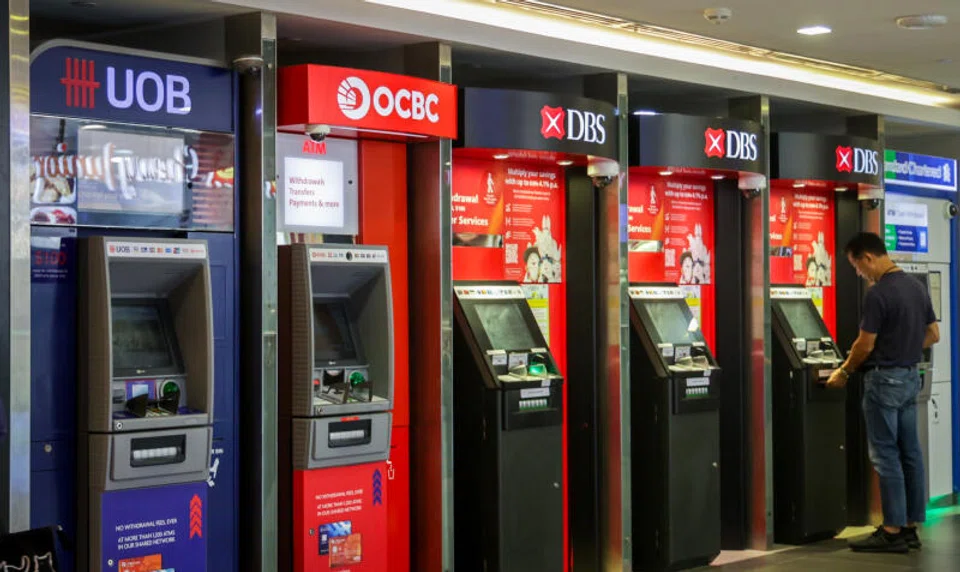
SINGAPORE’S local banks retained resilient results for the second quarter of 2023 as they continued to benefit from higher net interest income due to high interest rates.
The market had previously expected net interest margins (NIMs) to be past their peak. But additional rate hikes by the US Federal Reserve, and current expectations that rates will stay higher for longer, renewed the positive outlook on the banks’ NIMs for the rest of 2023.
The three banks all warned of slowing economic growth. But they also named their wealth management segments as bright spots, which they expect can drive growth in the future.
UOB said its net profit for the second quarter rose 27 per cent to S$1.4 billion on higher net interest income, and trading and investment income.
For the second quarter ended Jun 30, DBS posted a net profit of S$2.6 billion, up 45 per cent year on year, driven by higher interest rates and broad-based growth in non-interest income activities.
Meanwhile, OCBC reported a 34 per cent rise in net profit to S$1.7 billion, driven by growth in net interest income, while slightly offset by a spike in general allowances.
Citi analyst Tay Yong Hong said he remains “cautious but opportunistic” on the Singapore banking sector, noting a softer outlook even as asset quality remains robust for now.
DBS analysts also said that the bulk of banks’ share price re-rating is over, as Fed rates are close to a peak in this cycle.
Market watchers are expecting positives from UOB’s net interest income (NII) growth of 31 per cent year on year and other non-interest income surging by 113 per cent in the same period.
NII growth could, however, be offset by a loan growth decline of 1 per cent year on year, said Phillip Securities Group analyst Glenn Thum.
Analysts from DBS said they also saw “limited catalysts” ahead for UOB’s share price, given more downside risks from loan growth, a more uncertain macroeconomic environment for non-interest income growth, as well as rising asset quality risks.
“Nonetheless, we believe the downside to UOB’s share price will be supported by its strong provisions buffer of 99 per cent.”
Amid additional rate hikes and higher-for-longer interest rates, UOB expects that its NIM for the full year will stabilise in the short term, with upside potential, while OCBC expects NIM for 2023 will be above its earlier guidance of 2.2 per cent.
DBS also reflected similar sentiments as it expects some upside to spill over from the second quarter in the remaining half of the year – on the back of further interest rate rises and re-pricing of its commercial book.
However, analysts were mixed on the impact of the sustained increases in interest rates, given its impact on asset quality.
“Asset quality in a slowing growth environment is a key risk,” said Maybank analyst Thilan Wickramasinghe.
But the research team at RHB believes DBS has “significant leverage” against the turn in interest rate cycles, and so raised its earnings expectations on the bank by between 3 per cent and 6 per cent, factoring in higher NIMs and lower credit costs.
“While quarterly data is not available, H1 loan yields increased 106bps half on half, while deposit costs expanded just 88bps,” said the RHB analysts. “This points to the strength of DBS’ deposit franchise giving it the ability to manage funding costs reasonably.”
Other tailwinds could also come from wealth management growth, which DBS said could increase during the later half of the year.
Strong wealth management inflows are poised to deliver additional growth as market conditions turn, said Wickramasinghe, noting that DBS attracted S$12 billion in net new money in its wealth segment in H1 2023.
Analysts are also expecting further upsides to DBS dividends.
DBS announced it would pay out a dividend of S$0.48 per share, up S$0.06 from the previous payout – bringing this year’s H1 dividends to S$0.90.
It also reiterated earlier calls to distribute excess capital of S$3 billion to shareholders, although plans to do so were still in discussion among board members.
The CGS-CIMB research team also expects that the elevated dividend trajectory will sustain investor interest in the stock.
Noting the “highly compelling results”, a Jefferies equity research team said the bank delivered more than the “stronger NIM trends than peers” it had earlier forecasted. “Expect positive share price reaction,” it added.
As for OCBC, a research team at Jefferies noted that the lender’s key operating trends were marginally stronger than expected, with the cons largely from higher general provisions due to global macro uncertainties.
Looking ahead, Citi analyst Tay expects that any general provisions will be more measured, given that its general provisions reserve as a percentage of its loans is now in line with its peers’.