

Singapore banks on watch over Chinese SOE exposure, say analysts
Heightened attention comes with DBS singled out in recent China SOE default at Huachen Automotive
Singapore
SINGAPORE banks may move to review or even cut their exposure to Chinese state-owned enterprise (SOE) customers, as a recent wave of high-profile SOE bond defaults become a wake-up call for lenders counting on government bailouts, say analysts.
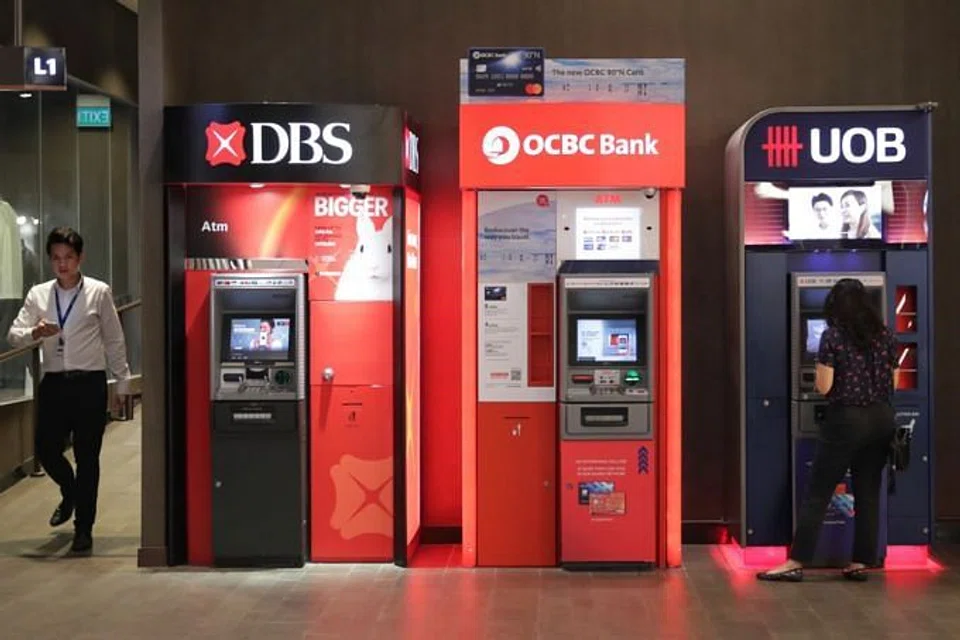
This comes as DBS is reportedly the largest foreign creditor to SOE Huachen Automotive Group, which defaulted on a one billion yuan (S$204.3 million) bond in October and has since entered bankruptcy restructuring.
DBS is owed 779 million yuan out of total borrowings of about 33.51 billion yuan by almost 70 Chinese and foreign banks, according to a report by Financial Times, citing figures from September 2019. Five Chinese banks are reportedly owed more than two billion yuan each, with China Everbright Bank the biggest creditor at 3.31 billion yuan.
Huachen, whose subsidiaries include BMW's partner in its China manufacturing joint venture, is the largest state-backed auto company in Liaoning and is owned by the Liaoning provincial government.
In response to queries by The Business Times, a DBS spokesperson said: "A failure to deal with debt issue will shake the confidence of foreign institutions and global investors, including DBS, in the business environment and economic prospects of Liaoning and northeastern China."
OCBC and UOB both declined to comment on any potential changes to their China portfolio.
The spate of defaults and downgrades of SOEs has shaken investors and lenders' belief that SOEs are "too big to fail" and that they are a safe bet as local governments are expected to bail them out. Others include Peking University Founder Group, Qinghai Provincial Investment Group and Tewoo Group.
Nancy Duan, an analyst at S&P Global Ratings, said: "Recent events have demonstrated that SOEs are not immune to default, and government bailouts are not guaranteed."
That being said, she noted that Chinese SOE defaults represent "sporadic instances", rather than widespread weaknesses in Singapore banks' Greater China portfolios.
She added that Singapore banks, including DBS, have adopted a measured approach to regional diversification with prudent risk management focusing on borrower fundamentals.
"Notably, they have exercised caution on their Chinese SOE exposure for a number of years as they re-evaluate the implicit government support of SOE borrowers, and have been rebalancing their portfolio mix accordingly," said Ms Duan.
In the case of DBS' exposure to Huachen, it represents less than one per cent of DBS China's loan book, she added.
She considers DBS's strong focus on Greater China, which is key to its regional strategy and status as the largest bank in South-east Asia, as a "double-edged sword".
"Regional diversification is crucial for the bank to broaden its revenue stream and unlock cross-border growth potential, which offsets saturation in its matured Singapore home market," she said. "On the other hand, the different macroeconomic dynamics of those economies also subject it to more types of idiosyncratic risk."
According to Phillip Securities analyst Tay Wee Kuang, the default of Huachen may see an impact of S$150-S$180 million in credit cost for DBS. For perspective, that is about half the exposure the bank had with collapsed oil trader Hin Leong in the earlier part of the year.
"As such, the impact will be less significant, but the bank will likely face short-term cost headwind," he said, adding that this comes alongside the fresh takeover of troubled Lakshmi Vilas Bank by DBS India. The group is injecting S$463 million into DBS India as part of the takeover that was triggered by the Reserve Bank of India.
Mr Tay estimated that about 15 per cent of DBS's loan book is from Greater China (excluding Hong Kong), while OCBC's exposure is slightly less at about 10 per cent. These include both banks and non-banks.
UOB has the least mainland China non-bank exposure at 4.2 per cent of its loan book.
This comes as UOB had previously stated its intention to focus more on Asean, while DBS and OCBC have consistently maintained that Greater China remains a long-term strategic focus.
Despite the string of defaults of late, Mr Tay believes that the Chinese government will step in to intervene should the integrity of the financial system be undermined. This could see a more muted impact on the deterioration of asset quality for Singapore's three banks, he said.
"However, depending on the extent of defaults, we may see Singapore banks moving to do a blanket-cover downgrade on the credit profile of Chinese SOEs," he said. "This may escalate credit costs for the Singapore banks in the short term."
He added that the banks may also use the opportunity to reduce their exposure to Chinese SOEs as confidence in the Chinese debt market wanes.
At the same time, analysts from Fitch Ratings pointed out that many of the financial challenges that Chinese SOEs face are "well-known in advance".
"Many investors and lenders have decided to look past certain credit fundamentals and instead rely on implicit government support when deciding to invest," said Willie Tanoto, director, Asia-Pacific banks, Fitch Ratings and associate director Priscilla Tjitra. But even with these assumptions of support now being challenged, the analysts noted that they do not expect banks to materially slash their exposure to China as a knee-jerk reaction, given the size of China's economy and its positive differential with the rest of the world.
"However, the prospect of default by state-linked entities or quasi-government entities is no longer as inconceivable as before and the banks may become more selective or impose stricter underwriting going forward," the Fitch analysts added.
Analysts concurred that Huachen will not be the last of defaults by Chinese SOEs.
Maybank-Kim Eng analyst Thilan Wickramasinghe said that a key risk to watch out for is the contagion impact, given that SOEs and state financial institutions make up a notable part of mainland China exposure for banks such as DBS.
Kevin Kwek, managing director, Asian financials, Alliance Bernstein noted: "I suspect there will be more coming, and I am of the opinion that this is part of China wanting the market - including SOEs - to learn discipline."
"It will certainly make the Singapore banks more careful on the safety assumption with SOEs, but this isn't the first time they had to consider possible SOE failures," he added.
TRENDING NOW

Grab CEO’s wife Chloe Tong on life with Anthony Tan and finding her purpose
Jacqueline Loh to step down as MAS deputy MD in senior leadership reshuffle
Why 1 in 2 young Singaporeans who said ‘no kids’ now say ‘yes please’: new study
Private home prices accelerate with 1.4% rise while HDB resale values dip further in Q3: flash data

