Singapore’s incumbent banks should work on customer engagement, say industry watchers
Their digital offerings compare well with those of digital-only banks, but customers will demand better experience

Tan Nai Lun
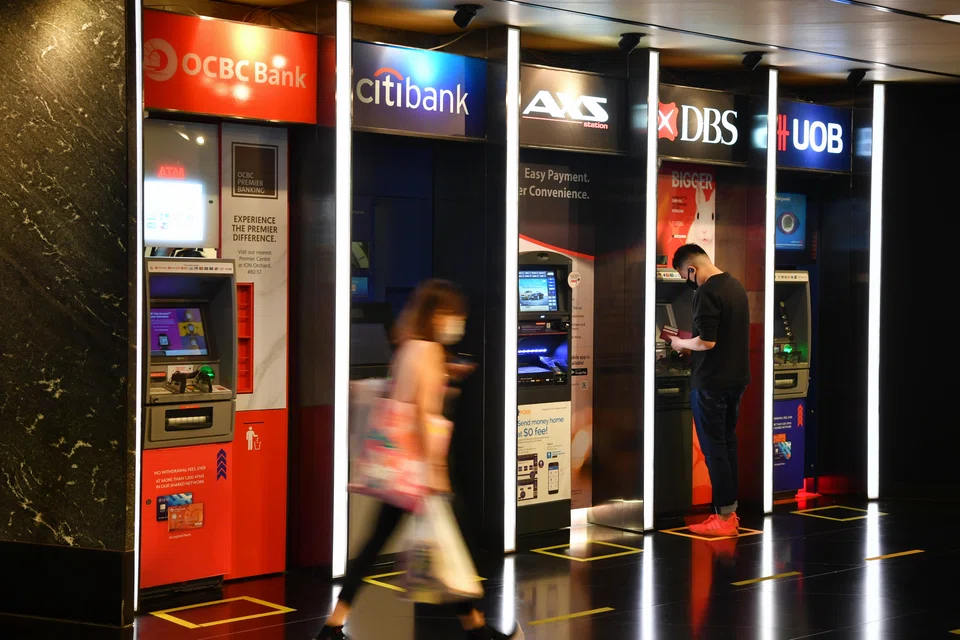
INCUMBENT banks in Singapore should focus on improving customer engagement as they begin to face competition from digital banks, industry watchers said.
They noted, however, that the newly launched digital banks are unlikely to pose strong competition to the incumbents in the near term.
Trust Bank and GXS Bank, both digital-only retail banks, announced their offerings on Sep 1 and Aug 31, respectively, although GXS Bank’s services are not yet available to the public.
In June, 2 wholesale digital banks also opened for business: Anext Bank and Green Link Digital Bank. Both intend to focus on micro, small and mid-sized businesses.
A third digital-only retail bank, Maribank Singapore, is due to launch this year. Its shareholder is tech conglomerate Sea.
These new entrants will add heat to an increasingly competitive space consisting not only of Singapore’s 3 local retail banks – DBS , OCBC and UOB – but also 10 other foreign banks with qualifying full bank licences: Bank of China, BNP Paribas, China Construction Bank, Citibank Singapore, HSBC Bank (Singapore), ICICI Bank, Industrial and Commercial Bank of China, Maybank Singapore, Standard Chartered Bank (Singapore) and State Bank of India.
Analysts, however, do not see the new digital banks as direct competitors to the incumbents.
The digital banks are expected to broaden the banking landscape in Singapore, said Thilan Wickramasinghe, head of research for Singapore at Maybank.
“The potential for new products, as well as addressing new under-banked segments, could be complementary to what is offered by the incumbents,” Wickramasinghe said.
Analysts also noted that Singapore’s local banks have significant digital capabilities.
In a report last month, RHB’s Singapore research team said: “Conventional banks are also able to offer customers the convenience of digital banking services.”
Digital bank advantages
Local banks should, nevertheless, work to improve the customer experience and meet customer demands.
“Digital banking to me is not a comparable defence for a digital bank,” said Dennis Khoo, programme director of the Digital Transformation Leaders Programme at the National University of Singapore.
Digital banking is one of many channels for a traditional bank. Efforts should therefore be put into building customer experience instead of just working on digital capabilities, said Khoo, who was also formerly global head of TMRW, UOB’s digital banking arm.
Khoo also noted that digital banks are able to produce very good customer experiences at low operating costs, and can leverage data to serve those that the traditional banks would not.
Besides using data to broaden their customer base, Maybank’s Wickramasinghe said Singapore’s digital banks could leverage data and analytics, with support from their parent platforms, to introduce products that are hyper-personalised and refresh quickly.
GXS Bank, in particular, is likely to benefit from the large combined customer bases of its shareholders: ride-hailing platform Grab and local telco Singtel. Zhi-Ying Barry, senior analyst at Forrester, said such data might include real-time locations as well as an understanding of what customers buy and what drivers make.
“If executed well, the bank is well-poised to provide contextualised experiences that deliver financial services in customers’ moments of need at scale,” Barry said.
Lim Rui Wen, analyst at DBS Group Research, noted that the NTUC FairPrice ecosystem has allowed Trust Bank to quickly acquire 100,000 customers within 10 days of launch.
Trust Bank’s shareholders are Standard Chartered, social enterprise grouping FairPrice Group, and the latter’s shareholder NTUC Enterprise. The FairPrice group includes a popular loyalty programme called NTUC Link, which has announced a tie-up with Trust Bank.
The incumbent banks will therefore need to watch out for complacency, Khoo said: “The banks have done quite a lot. But today, competitiveness is not something you can say I’m done with; it’s a continuous process.”
Safety in established banks
Given the current economic uncertainty, however, it may take more than personalised digital experiences and cross-platform partnerships to lure customers.
The established banks are likely to be more stable during a recession and should have greater resources to compete on pricing and digital innovation, said Meng Liu, senior analyst at Forrester.
Liu noted that digital giants such as Grab and Sea may be less likely to assign more resources to grow their digital banking businesses as their core businesses have been struggling in recent months.
Consumers may also hesitate to try out or switch to new digital banks in uncertain times, he added.
In other markets where digital banks have launched, Liu said many newcomers fared well in their early customer acquisition efforts. But they faced problems with customer retention, as users would revert to their original bank accounts if a digital bank did not continue offering better rates or rewards.
“In an economic downturn, consumers tend to be more price sensitive; and the high switching tendency could only be worse for digital banks,” he said.
Getting a well-banked population to switch banks would also be a slow process, said Khoo. Customers are unlikely to change banks overnight, and digital banks would need to provide a better user experience.
In Singapore at least, the under-banked segment is difficult to address. This segment of the population is small, Khoo said, and there are strict safeguards to protect them from indebtedness.
But if digital banks can keep their operating costs per customer low while delivering a better experience, they could be a greater source of competition in the long run.