

Singapore’s new family office framework will give clarity, but may not be enough to attract more super rich
Higher disclosure requirements may push wealthy families to lighter-touch jurisdictions


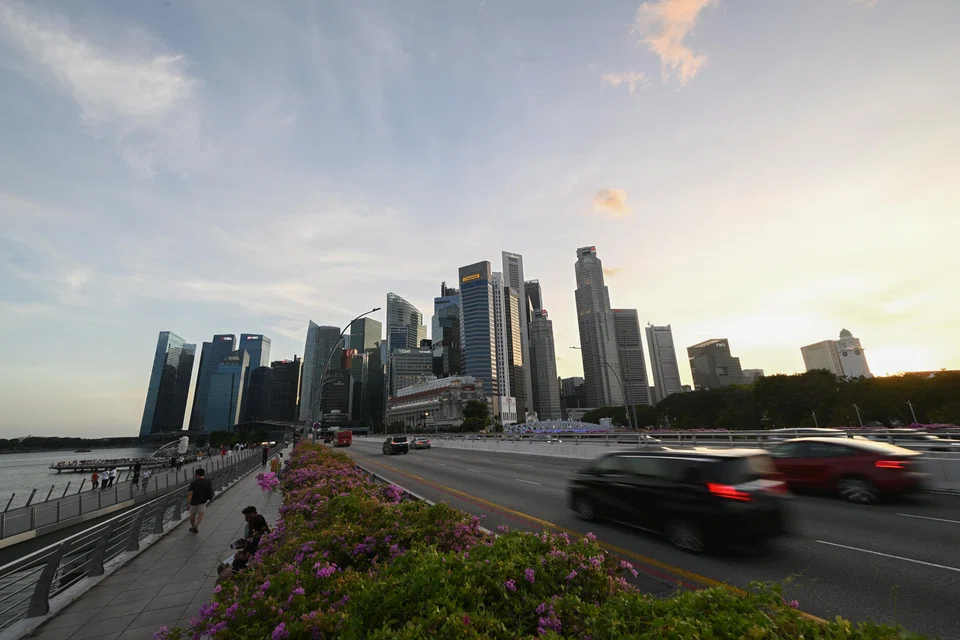
THE upcoming roll-out of Singapore’s single-family office (SFO) framework will likely provide ultra-wealthy families with greater clarity, and attract those seeking certainty and transparency, market observers said.
But the framework may not appeal to wealthy families who want simplicity and the best tax incentives, they noted.
On Nov 6, the Monetary Authority of Singapore (MAS) responded to feedback on its proposed framework for Singapore’s SFOs, with details on the roll-out likely to be announced in due course.
The new framework lays out the criteria for SFOs to qualify for licensing exemptions; introduces new notification and reporting requirements; and strengthens protections against potential money-laundering risks.
“(The framework) would probably streamline the application or approval timeline, and attract more families to Singapore that are looking for transparency and certainty in the application process,” said Gaven Koh, head of risk and compliance at Wrise Group.
For instance, Singapore’s SFO tax-incentive schemes are contingent on certain spending thresholds – an additional requirement compared with those of Hong Kong and Dubai, the two other prominent Asian wealth hubs, Koh said.
Hong Kong does not have targeted tax schemes akin to Singapore’s, which means fewer complex obligations. Dubai is also a nearly tax-free environment, and the simplicity in tax compliance will likely draw in families, he added.
A codified approach
Singapore will have the most comprehensive framework compared to Hong Kong and Dubai, noted Koh.
For one thing, Hong Kong still lacks a dedicated framework for SFOs, resulting in regulatory ambiguity. This means that families will need to carefully structure their vehicles to avoid breaching any licensing requirements there, Koh said.
If a company intends to provide asset-management services or manage a discretionary portfolio, for instance, it would need to obtain a capital licence from Hong Kong’s Securities and Futures Commission.
“This less-codified approach in Hong Kong today creates some ambiguities, discouraging families from setting up (there),” Koh said.
As for Dubai, it has comparatively lower operational-substance requirements for family offices and a greater focus on attracting capital, said PwC partner Lim Kexin, who specialises in tax and entrepreneurial and private business.
“Dubai may attract family offices that have just started on their journeys and are still testing the concepts of a single-family office, or global families seeking to diversify without overextending their resources,” she said.
Nevertheless, the incoming rules also level the playing field between Singapore and the Dubai International Financial Centre (DIFC), said Koh.
For example, MAS’ structure-agnostic approach will allow family offices to manage bonds and assets through different set-ups. This would make it comparable to the DIFC’s approach, which recognises different wealth infrastructures used by affluent families, he explained.
Higher disclosures, higher costs
However, the new framework will likely raise compliance costs given the increase in disclosure requirements, said Pearlyn Chew, partner for family office and private clients at KPMG in Singapore.
“This would potentially prompt some SFOs to explore jurisdictions with lighter-touch SFO regulatory and tax regimes,” she said.
She added that the number of SFOs in Singapore may decrease as ultra-wealthy families weigh the benefits and commitments against the new requirements.
The city-state’s application approval speed may have also discouraged some SFOs from setting up here.
Said Dominic Volek, group head of private clients at migration consultancy Henley & Partners: “I know some larger Indian families that got tired of waiting for MAS and (its) rigorous processes, so they’ve decided to set up their single-family offices in Dubai instead.”
Nevertheless, tighter regulations aim to balance the risks associated with illicit activities with fostering a secure investment environment, noted Lim of PwC.
Joel Seow, investment funds partner at global law firm Linklaters, added that Singapore wants to attract “the right type of capital”, especially in light of the billion-dollar money-laundering bust in 2023.
“We don’t want any more people like that, no matter how many millions they have, so there’s a sense that when you’re attracting people to come here, you want the right profile,” he said.
Furthermore, Singapore’s current strategy is more focused on attracting family offices committed to establishing substantial activities that align with its national objectives, said Lim.
For example, she noted that Singapore announced tax incentives for the philanthropic efforts of qualifying SFOs.
“This approach ensures that family offices contribute meaningfully to Singapore’s economy and adhere to principles of good governance and sustainable development,” she said.
Other incentives
Beyond tax incentives, Singapore has other schemes to attract global talent and investors.
The Global Investor Programme (GIP) and the Overseas Networks & Expertise (ONE) Pass also draw talented individuals and capital owners, even though they do not specifically target the ultra-wealthy.
As at December 2023, GIP investors have put S$950 million in Singapore-based companies through approved funds, and nearly 4,200 applications have been approved under the ONE Pass.
Said a spokesperson for the Singapore Economic Development Board (EDB): “The GIP and ONE Pass are ways to encourage these talented individuals and capital owners to be in Singapore, and for them to make significant economic contributions to key industry sectors.”
In general, though, Volek of Henley & Partners noted that employment passes or work permits are subject to renewal every two to three years, and it is “quite difficult” to get permanent residency in Singapore and Hong Kong.
A plus for Dubai is that its golden visa is easier to obtain for professionals, and offers a longer residency of 10 years, he said.
He added that thresholds on the GIP are also “very, very high”, and the 60 per cent stamp duty on properties in Singapore is a steep premium compared to requirements in Dubai.
PwC’s Lim noted that Hong Kong has been on a global publicity drive, having launched its current family office scheme and New Capital Investment Entrance Scheme in 2023 and 2024, respectively.
Ultimately, it boils down to what individuals value in a hub. For those who set up here, they find Singapore’s feedback mechanisms useful.
“We like the fact that the MAS and EDB, (which) brought us into the SFO framework, keep in touch with us,” said James Marshall, chief executive of Singapore-based family office Kibo Invest.
“Singapore has a good system of review and feedback through industry bodies, so there is a mechanism for catch-up.”
TRENDING NOW
Far East Organization’s The Serra Residences sells less than a quarter of units released at average S$3,460 psf

A bumpy road ahead for some of Singapore’s fresh graduates in their job search

Philippine power giant First Gen rebuffs foreign offers, plans up to US$2.6 billion in expansion

No chicken feed: How Malayan Flour Mills built an empire from flour to fowl

