

Singdollar bond market reduced to just bluechip issues in August
Soured sentiment partly due to recent defaults, cheaper G3 market
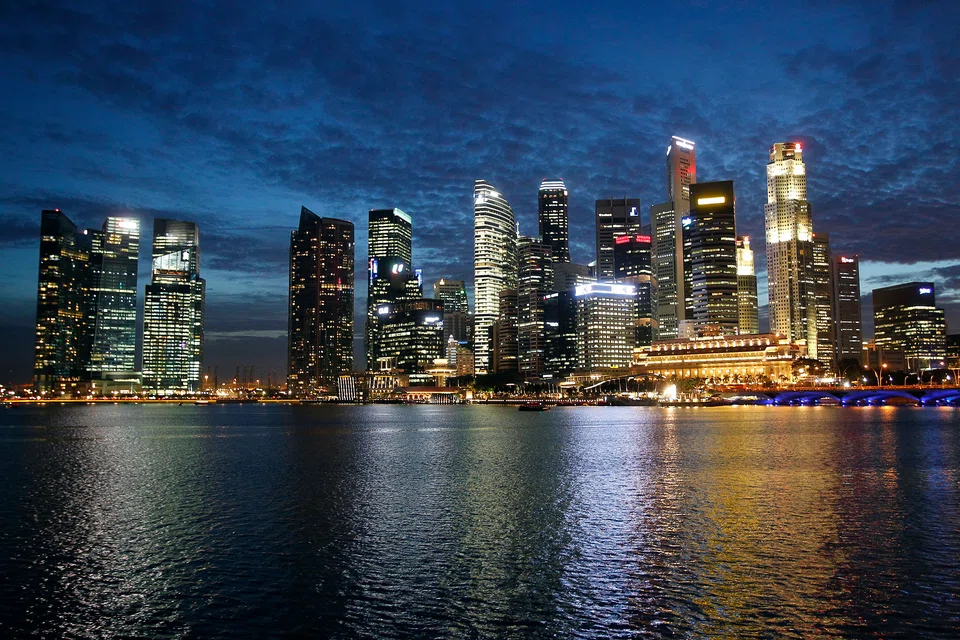
Singapore
IT seems that only bluechip issuers are able to sell Singapore dollar bonds as many investors stung by recent defaults have fled to the hills.
On Wednesday, triple-A rated National University of Singapore sold 5-year S$100 million 1.81 per cent notes, joining a select group that has managed to raise money in the local bond market.
So far in August, eight pedigree issuers have sold bonds worth S$1.1 billion. In August 2015, there were also eight deals but the amount raised was S$2.5 billion.
Besides NUS which has a Moody's Aaa rating, the other seven are either rated, state-linked or both .
They are Sumitomo Mitsui Banking Corp, Industrial & Commercial Bank of China, Commonwealth Bank of Australia, Mapletree Commercial Trust, FCOT and Housing & Development Board. "Investor sentiment is gravitating towards higher quality credits especially those with explicit AAA ratings like NUS," said Aaron Gwak, Standard Chartered Bank head of capital markets, Asean.
Since last month's high profile collapse of oil service provider Swiber Holdings, an unrated issuer, many private bank investors are painfully holding on to a slew of illiquid bonds issued by oil & gas companies back in the heydays of a few years ago when oil prices were above US$100 a barrel. Oil prices are now hovering under US$50.
Recent Singdollar deals have mainly attracted institutional investors that can stomach the low pricing or coupons, a function of the prevailing low interest rates - unlike private bank investors more used to high yield bonds where the coupon is at least 4 per cent.
Mr Gwak said: "Institutional investors are constantly looking for high quality investment opportunities and this is reflected on the final orderbook of just under S$150 million despite the limited amount of time given to investors."
This is a timely issuance taking full advantage of the current low-rate environment, he added.
Another reason for the rather thin local bond market is the cheaper G3 (US dollar, yen and euro) market where activity has been remarkably strong, and so "robbing SGD of some support", said Clifford Lee, DBS Bank head of fixed income.
"On our end, (SGD) market is choppy based on the recent news of stressed issues," he said.
In comparison, the G3 market is "extremely hungry" with new issues being snapped up, resulting in competitive pricing, he said.
It means that the more sophisticated Singapore blue chips which can tap G3 now find it cheaper even after swapping back the proceeds to their local currency.
Some of these offshore deals have been mega sized, and prices have risen as demand in the secondary market remains strong.
Singapore's PSA in April sold 10-year US$500 million 2.5 per cent bonds. They are quoted at 102.07 now. Bonds are sold at par 100.
Olam International's July perpetual US$500 million 5.35 per cent offering is quoted at 100.65.
DBS itself is planning to issue additional US dollar-denominated T1 capital securities, and is meeting investors in Hong Kong and Shanghai, starting Wednesday.
TRENDING NOW

Indonesia’s coal tycoon Low Tuck Kwong replaced as Bayan Resources president-director

OCBC names Ang Eng Siong as global corporate banking head in rejig of wholesale banking business

Consider lowering homeownership barriers for some non-resident foreigners

DBS opens flagship investment strategy to retail investors with new fund

