SocGen posts smaller than expected loss after costly Russia exit
 Add BT as a preferred source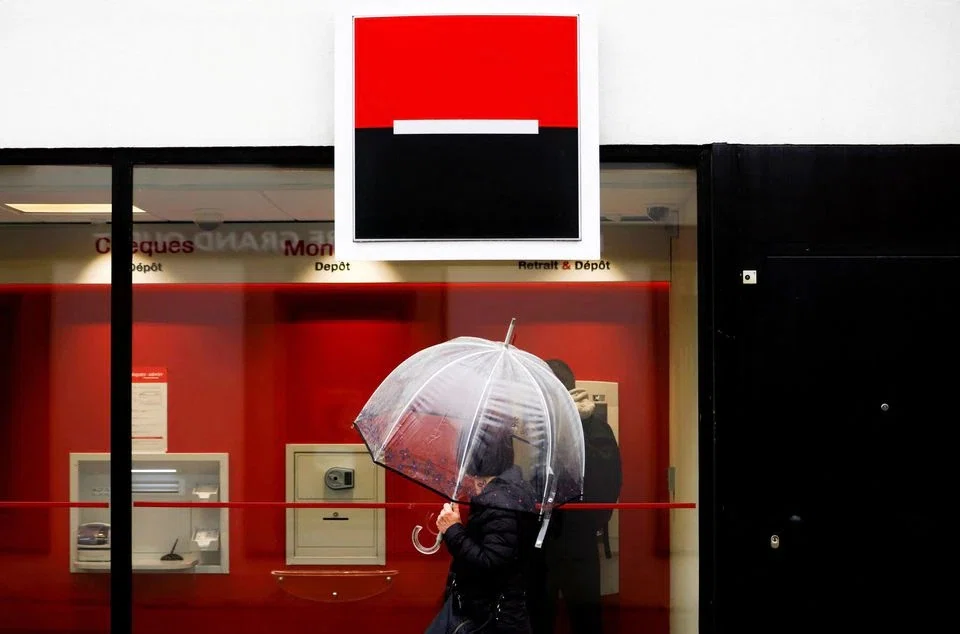
BUOYANT activity across retail and investment banking helped Societe Generale report a smaller-than-expected loss in the second quarter as it absorbed a 3.3-billion-euro hit following the sale of its Russia unit.
The French bank, which gave no update on its current efforts to find a new chief executive, said on Wednesday (Aug 3) it recorded a 1.48 billion euro loss (S$2.1 billion), while analysts on average had expected a loss of more than 2 billion euros.
Net banking income jumped just over 7 billion euros, about 600 million euros higher than expected while operating expenses came in lower at 4.46 billion euros, the bank said.
Revenue rose 23.3 per cent to 1.5 billion euros in the global markets unit, which saw equity trading grow by 7.5 per cent to 833 million euros, while fixed income and currency activities increased 50 per cent to 683 million euros.
French and international retail reported a rise in net banking income of 8.5 per cent to 2.26 billion euros and 12.7 per cent to 1.27 billion, respectively.
All in all, the group said its ROTE (Return On Tangible Equity) profitability ratio stood at 10.5 per cent, a level which it broadly intends to maintain at the 2025 horizon.
"We confirm our ability to deliver profitability of 10 per cent on the basis of a target core Tier 1 capital ratio of 12 per cent", CEO Frederic Oudea said in a statement, which also confirmed the launch of a 915 million euros share buyback programme.
Among other ambitions set for the next 3 years, the bank seeks to deliver a cost-to-income ratio of 62 or below and maintain a pay-out ratio of 50 per cent of its profits.
In note published ahead of the results, Jefferies analysts said they were expecting a similar level of profitability as a mid-term target.
"We think SocGen will announce a 9-10 per cent ROTE target for '25 and consider it credible thanks to the benefit of recent corporate actions like the LeasePlan acquisition, Boursorama profit swing and the merger of French retail networks", they wrote.
Looking for a new CEO
In May, Societe Generale closed the sale of its Russian business Rosbank to the Interros group, a firm linked to Russian oligarch Vladimir Potanin.
The same month, Frederic Oudea took investors by surprise when he announced he would step down next year as the CEO after running the lender for 15 years and that his successor would be announced sometime this fall.
While the choice of his successor is a matter for the board of directors to decide, the outgoing chief executive said he is in favour of selecting an internal candidate to lead the French banking group for the next 10 to 15 years after he leaves.
Speculation on the future leader of France's third-biggest listed bank has so far centred around Sebastien Proto, currently tasked with merging SocGen's retail networks in France as well as Slawomir Krupa, head of global banking and investor solutions activities.
Philippe Heim, the head of France's postal bank, Jean Pierre Mustier, former chief executive of Italy's Unicredit and Jacques Ripoll, who just left Credit Agricole, are among former SocGen executives mentioned as potential external suitors but no outside candidate has emerged as a clear front runner.
SocGen's results follow rival BNP Paribas, which reported a better-than-expected profit on Friday as business remained buoyant across business lines.
With a 28.3 per cent fall so far in 2022, SocGen's shares trail BNP Paribas, which lost 23.7 per cent, while the broader European banking sector was down 20.5 per cent. REUTERS
Decoding Asia newsletter: your guide to navigating Asia in a new global order. Sign up here to get Decoding Asia newsletter. Delivered to your inbox. Free.
Share with us your feedback on BT's products and services