South-east Asia to see more private equity deals this year; healthcare, data centres in the spotlight

Participants expect activity in the region’s PE markets to gather pace after the number of deals last year surged to the highest since at least 2018
Summarise
Published Fri, Jan 31, 2025 · 05:00 AM
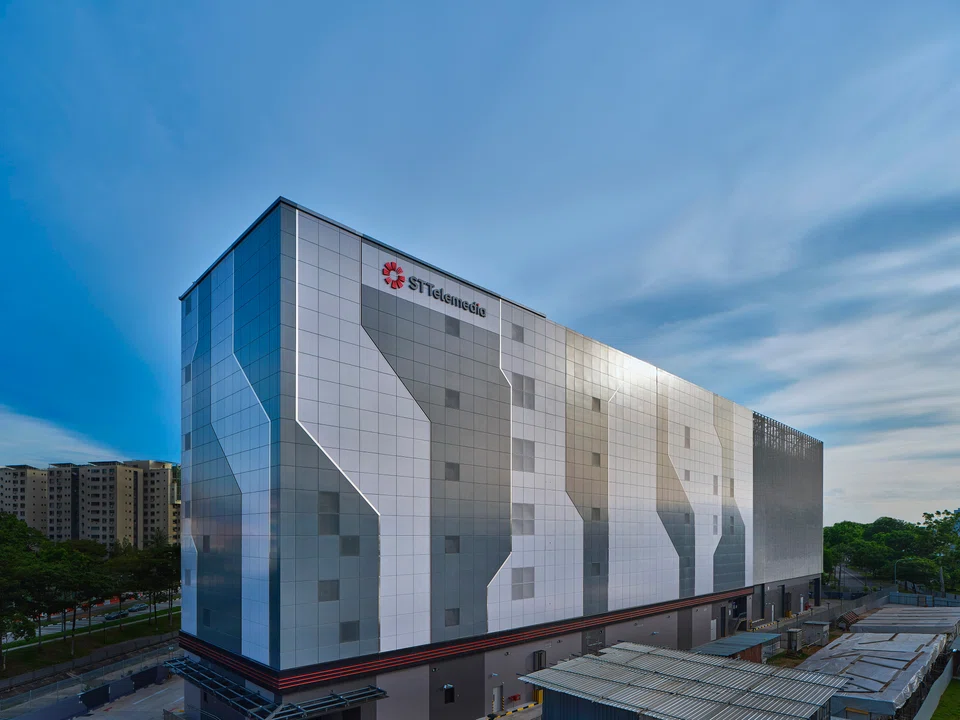
    • STT Singapore 6 is ST Telemedia Global Data Centres’ largest facility in Singapore. The company drew a S$1.75 billion investment by a KKR-Singtel consortium last June, in the largest infrastructure private equity deal in South-east Asia last year.
    • STT Singapore 6 is ST Telemedia Global Data Centres’ largest facility in Singapore. The company drew a S$1.75 billion investment by a KKR-Singtel consortium last June, in the largest infrastructure private equity deal in South-east Asia last year. PHOTO: KKR

    A RECOVERY in the region’s private equity (PE) market last year has spurred optimism among key players in 2025, as they expect investors that had held back previously to unleash their buying power in a lower interest-rate environment.

    In data provided to The Business Times ahead of its official announcement, EY shows the number of PE deals in South-east Asia soared 103 per cent to 67 in 2024, the highest since 2018 when it began tracking the numbers. The total US$15.8 billion in capital deployed last year – more than treble the US$4.9 billion in 2023 – was the highest since 2021.

    Singapore accounted for the lion’s share of the market, at 45 per cent by both deal value and volume. These include 2024’s largest infrastructure deal in the region – a S$1.75 billion investment by KKR and Singtel in data-centre provider ST Telemedia Global Data Centres in June.

    Of the three biggest PE transactions in South-east Asia last year, only the largest was not domiciled in Singapore. That was the US$3.1 billion takeover of Malaysia Airport Holdings by a consortium comprising the country’s sovereign wealth fund Khazanah Nasional and BlackRock announced in May.

    The transaction’s closure has been delayed until Feb 4, partly because of political resistance against the bid amid boycott campaigns against some US companies over the Gaza war.

    “There is a lot of momentum in the deal market and we expect 2025 will have more broad-based deal activity than 2024,” said Luke Pais, EY Asia-Pacific private equity leader. General partners (GPs) “have a lot of dry powder to deploy”, he added.

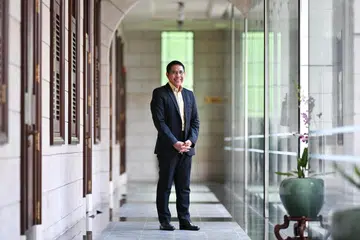
    EY Asia-Pacific private equity leader Luke Pais says PE investors have a lot of dry powder to deploy. PHOTO: EY

    GPs refer to the executives who are responsible for managing the investment funds in PE companies.

    PE activity declined markedly in 2022 and 2023, after the US Federal Reserve embarked on an aggressive tightening cycle to tame inflation. Higher borrowing costs typically squeeze cash flow and profitability at PE firms and their portfolio companies, hurting the potential for exits.

    The situation changed since the US central bank started cutting interest rates in September. The three reductions last year lobbed off a full percentage point off the Fed fund rate.

    The Fed has since signalled it would slice borrowing costs twice this year, with market watchers warning of a disappointment as inflationary concerns have flared with the new Donald Trump administration.

    Still, PE investors do not hinge their decisions solely on interest rate trajectories.

    One of the world’s largest alternatives investment firms managing US$190 billion in the PE asset class alone, New York-headquartered KKR, said it remains focused on medium to long-term trends in South-east Asia. These are consumption upgrades, digitalisation and urbanisation as the region’s middle class becomes increasingly affluent.

    Healthcare, education among key themes

    “We saw long-term trends such as greater demand for private healthcare, high-quality education... play out in markets like Singapore, Vietnam, Indonesia, Malaysia and the Philippines and driven by the region’s rising middle class,” said Prashant Kumar, KKR’s partner and head of South-east Asia private equity.

    “We also saw significant demand for enhanced digital infrastructure, including data centres, as the region continues to benefit from an increasingly digital economy. We expect these trends to continue into 2025.”

    Prashant Kumar, partner and head of South-east Asia Private Equity at KKR, says long-term trends such as healthcare and digitalisation will continue to spur activity this year. PHOTO: KKR

    Digitalisation is likely to spur a healthy level of PE activity this year, given the strong growth of artificial intelligence (AI) and other advanced technologies. As data centres require significant investment, EY’s Pais sees PE investment being “core to navigating this growth”.

    And with supply chain diversification staying on the top of mind for those in the manufacturing sector, KKR forecasts more of such deals in South-east Asia.

    “South-east Asia benefits from trends such as supply chain diversification as many MNCs are increasingly looking to reduce their supply chain dependency on one or two countries, and South-east Asia has emerged as a strong alternative in that regard,” said Kumar.

    Malaysia, Thailand and Indonesia set for more activity

    Apart from sectoral themes, PE investors are likely to view some of the biggest South-east Asian countries favourably.

    “Malaysia, Thailand and Indonesia are likely to be active this year due to government and policy changes that will drive increased business confidence,” said Chiam Tao Koon, head of mergers and acquisitions, South-east Asia at Ashurst Singapore.

    Chiam Tao Koon, head of M&A, South-east Asia, Ashurst Singapore, says the PE markets in Malaysia, Thailand and Indonesia are likely to be active this year amid increased business confidence. PHOTO: ASHURST

    In particular, Malaysia could see strong investor interest continuing from 2024, with the Johor-Singapore Special Economic Zone driving further activity, he added.

    EY’s data shows that Malaysia, together with Indonesia and the Philippines, accounted for about 55 per cent of the total PE value last year.

    Ashurst’s Chiam sees investors eyeing developments in Thailand, as Prime Minister Paetongtarn Shinawatra’s commitment to promoting technology and infrastructure investments fans interest.

    Apart from injecting capital, 2025 could also witness robust exits by PE investors, according to EY’s Pais.

    One of last year’s more prominent exits was by KKR and TPG of their combined 56 per cent stake in online real-estate portal PropertyGuru Group. In August, the Singapore-based property tech company said it would be bought out by investment firm EQT Capital Asia for US$1.1 billion and taken private.