

South Korea central bank chief says big-step rate hikes a possibility
 Add BT as a preferred source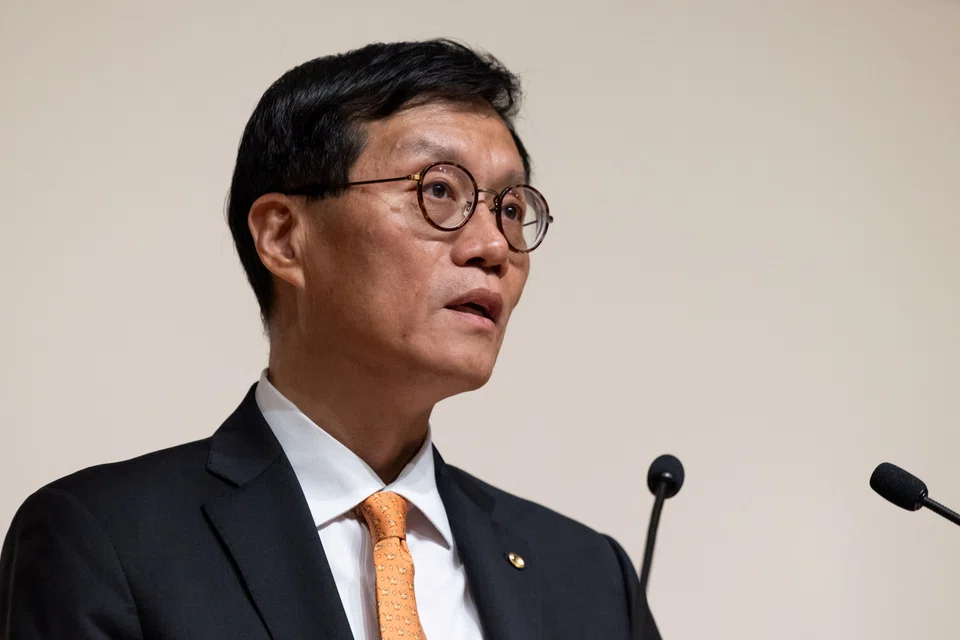
THE South Korean central bank chief’s comment that he could consider big-step interest rate raises in coming months shook the local bond market on Monday (May 16), as Asia’s fourth-largest economy also braced for fast slowing in growth.
Yields on government bonds rose as traders rushed to cut their bets on a slower pace of policy tightening ahead, while stock prices reversed early gains to fall modestly on weakening economic growth prospects.
Bank of Korea Governor Rhee Chang-yong, who took office last week and is due to chair his first policy meeting on May 26, said he could consider bigger interest rate increases, depending on data that will become available around July and August.
“(I may be able to say) after watching the May policy meeting and more data by around July and August,” Rhee said when asked by reporters whether the bank was considering a 50-basis-point interest rate rise at its May 26 meeting.
The Bank of Korea usually changes its benchmark rate in 25-basis point increments, but the US Federal Reserve’s big-step approach means South Korea’s interest rate premium over the United States will disappear and could soon become a discount.
Another senior Bank of Korea official later played down Rhee’s remark, saying it merely emphasised the principles of making policy decisions.
Still, analysts said Rhee’s comment made it clear that inflation still took the priority in the central bank’s policy.
“We are in a situation when hawkish comments are needed to contain inflation and in turn help stabilise the bond market,” said Moon Hong-cheol, economist at DB Financial Investment, adding Rhee’s comment may have been a well-calculated one.
The yield on the country’s benchmark 10-year treasury bonds, which had fallen nearly 30 basis points over the past week, shot up as much as 12.4 basis points to 3.340 per cent in early trade. It later cut gains to trade 3 basis points higher.

Meanwhile, the country’s most influential government research agency said in a report that policymakers needed to focus more on the domestic situation and may not have to raise local interest rates as much and fast as the United States does.
Despite inflation hovering around 13-year highs, South Korea’s economy also faces a growing risk to growth as cooling in China’s economy becomes increasingly clear. This is in addition to the effect of prolonged military conflict between Russia and Ukraine.
The Seoul stock market’s Kospi gave up early gains of nearly 1 per cent to trade 0.3 per cent lower in early afternoon after China released data showing its economic activity had cooled sharply in April because of Covid-19 lockdowns.
President Yoon Suk-yeol requested in a speech at the Parliament on Monday an early approval of his government’s 54.9 trillion won (S$59.7 billion) supplementary budget to help small businesses and self-employed people while cutting government debt.
Earlier on Monday, Rhee and Finance Minister Choo Kyung-ho agreed at their first one-on-one meeting since taking office this month to boost policy coordination in fighting inflation and financial market instability. REUTERS
Decoding Asia newsletter: your guide to navigating Asia in a new global order. Sign up here to get Decoding Asia newsletter. Delivered to your inbox. Free.
Share with us your feedback on BT's products and services
TRENDING NOW
Deal brewing for portfolio of 50 conservation shophouses at about S$500 million

Family offices cheer MAS’ lifting of precious metals cap, but do not expect a gold rush

Shipbuilder Penguin International wins first prime contract with Singapore Navy
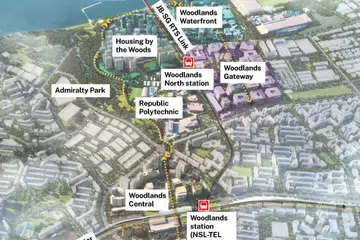
New Woodlands Gateway industrial hub takes shape as RTS Link nears completion

