

South Korea warns against speculation as won slides to 13-year low
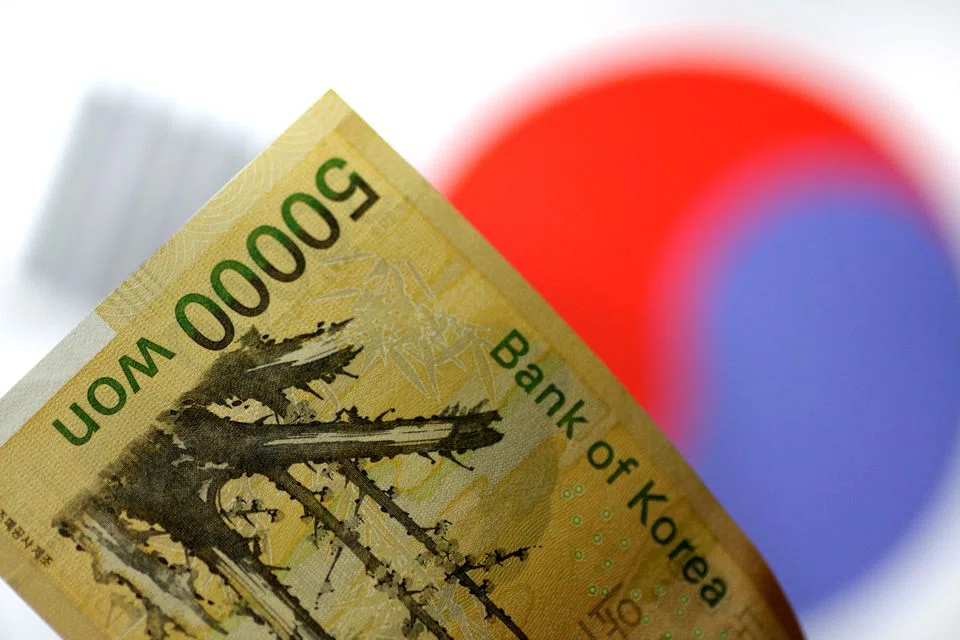
SOUTH KOREA is stepping up surveillance of the won after the currency tumbled to a 13-year low, with the authorities warning that they are watching for any offshore speculative factors.
Officials are monitoring the foreign exchange market with an intent to stem a drop in the won, according to a text message from the nation’s finance ministry. The verbal warning helped the currency rebound from losses before it again slid to trade near an earlier low of 1,345.20 per dollar.
The tone of the latest warning is stronger than a caution issued in June when the authorities said they were paying close attention to the won’s “excessive volatility”. South Korea sold a net US$8.3 billion of its foreign-exchange reserves to prop up the currency in the first 3 months of the year, central bank data showed.
“The won’s drop has slowed after the message from the FX authority, but the currency won’t be spared from the risks stemming from the upcoming Jackson Hole meeting and a stronger greenback,” says Min Gyeong-won, an economist at Woori Bank in Seoul.
Authorities in the region have stepped in to support their currencies, with India, Thailand and Korea seeing their reserves drop by a combined US$115 billion this year as they sold the dollar. A resurgent greenback is exerting pressure as traders brace for US policymakers to reiterate their hawkish stance at a gathering in Jackson Hole this week.
For South Korea, a stable currency is crucial as it relies heavily on outside sources for energy and other materials needed to assemble exports. Food and transportation prices at home have also been under upward pressure from the weakening won, pushing consumer-price growth to the highest level in more than 2 decades.
The amount of reserves sold by South Korea is the most since at least March 2019 when the central bank started to publish the data. Back then, the won’s rapid decline due to the spillover effect from a US-China trade war spurred a series of warnings, culminating in a snap meeting between policymakers.
Policy decision
The verbal intervention may ease the pressure on the Bank of Korea (BOK) to deliver a large rate hike when it meets on Thursday (Aug 25), according to Shinyoung Securities. BOK governor Rhee Chang-yong has signalled that a quarter point increase is likely to be in store, pointing to debt risks building among households from higher rates.

“This more or less helps reduce pressure on the BOK to consider a bigger hike again,” said Cho Yong-gu, a fixed-income strategist at Shinyoung Securities. “It’s true there’s a lot of wariness about the currency, but unless it breaches a shocking level such as 1,400 per dollar, the BOK is unlikely to want to strain itself further.”
The won was down 0.2 per cent to 1341.90 as of 12.00 pm in Seoul. The median forecast in a Bloomberg survey of analysts is for the currency to strengthen to 1,298 by year-end. BLOOMBERG
Decoding Asia newsletter: your guide to navigating Asia in a new global order. Sign up here to get Decoding Asia newsletter. Delivered to your inbox. Free.
Share with us your feedback on BT's products and services
TRENDING NOW
Can a first-time homebuyer couple earning S$18,000 a month afford a new EC unit?

He built the Vingroup empire. Now South-east Asia’s richest man is handing some key roles to his sons

Asia needs new energy security architecture

Chagee, Mixue and Luckin won the market. Sustaining their edge is the harder part

