

South Korea's IPO boom leaves investment banks short-changed
 Add BT as a preferred source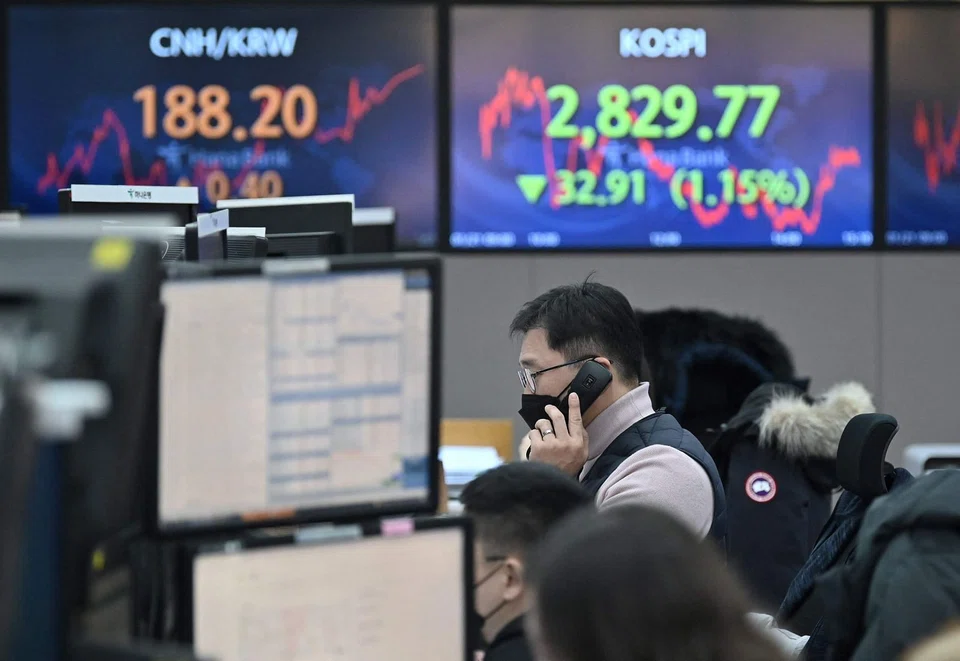
DeeperDive is a beta AI feature. Refer to full articles for the facts.
[SEOUL] South Korea's equity offering boom has created a money spinning opportunity for issuers and investors, but it has brought little cheer to at least one segment of the capital market: investment banks and brokerages working on those transactions.
LG Energy Solution's (LGES) US$10.8 billion initial public offering (IPO), the largest ever in South Korea, netted bankers working on the deal less than 1 per cent of the proceeds, Dealogic data showed.
Such rates make the country one of the lowest fee-paying major equity capital markets (ECM) in the world.
Hong Kong IPOs generally pay fees of 2 per cent, in line with the New York Stock Exchange, while Nasdaq listings net bankers an average of 3.4 per cent, according to Dealogic data. In 2021, the average paid in those markets sat at 3.2 per cent.
The low fee payouts mean South Korea will unlikely emerge as a major income generator for Western banks, even as the country is witnessing a record level of capital market activity and a new equity raising pipeline that is getting busier.
South Korean IPOs have traditionally paid low fees compared with other major markets, said one Hong Kong-based ECM banker with direct knowledge of the matter.
Navigate Asia in
a new global order
Get the insights delivered to your inbox.
"Korea has never paid well, so it doesn't surprise me ...but a few million bucks is still a few million bucks," said the banker, who was not permitted to speak to the media and so declined to be identified.
Eleven investment banks and brokerage firms including Morgan Stanley, Bank of America, Citigroup and Goldman Sachs Group and local brokerage KB Securities worked on the IPO of South Korean battery maker LGES.
They are set to pocket a combined US$75 million, the company's IPO prospectus showed. That payment, as a portion of total funds raised, equates to 0.7 per cent - one of the lowest proportions paid in a major market globally.
The IPO, Asia's largest since Alibaba raised $12.9 billion in its Hong Kong secondary listing in 2019, attracted US$12.8 trillion worth of bids from institutional investors and US$96 billion from retail investors.
LGES is not alone in paying a low fee: KakaoBank Corp , which raised US$2.1 billion via an IPO in July last year, handed bankers a 0.8 per cent base fee, while underwriters for Krafton got 0.5 per cent for their work on a US$3.6 billion deal in the same month, their prospectuses showed.
Local brokerages are, however, not complaining.
"We felt that getting that 0.7 per cent commission was pretty good enough, considering the level of the LGES deal," said a person at a local brokerage with knowledge of the transaction.
"The base fee could seem lower than fees in other major markets like New York or Hong Kong, but the LGES deal was not necessarily too difficult for brokerage firms or banks to handle." Surging deal volume in the country should also offset the impact of the low fee base in the near term.
More than 20 companies went public on the main market last year, raising about 17 trillion won (S$19.1 billion) and beating the previous record of 8.8 trillion won raised in 2010, according to bourse operator Korea Exchange.
Experts said appetite for IPOs in South Korea would likely continue into 2022 as some unicorns and e-commerce firms are seeking to go public this year to take advantage of the IPO market optimism.
REUTERS
Decoding Asia newsletter: your guide to navigating Asia in a new global order. Sign up here to get Decoding Asia newsletter. Delivered to your inbox. Free.
Copyright SPH Media. All rights reserved.
TRENDING NOW
From 1MDB to ‘corporate mafia’: Is Malaysia facing a new governance test?

Higher costs, lower returns: Why are Singaporeans still betting on real estate?
South-east Asian markets account for 8.8% of global capital inflows from 2021 to 2024: report

Richard Eu on how core values, customers keep Singapore’s TCM chain Eu Yan Sang relevant

