

State-owned China Huarong hit by ratings cut on doubts over Beijing support
 Add BT as a preferred source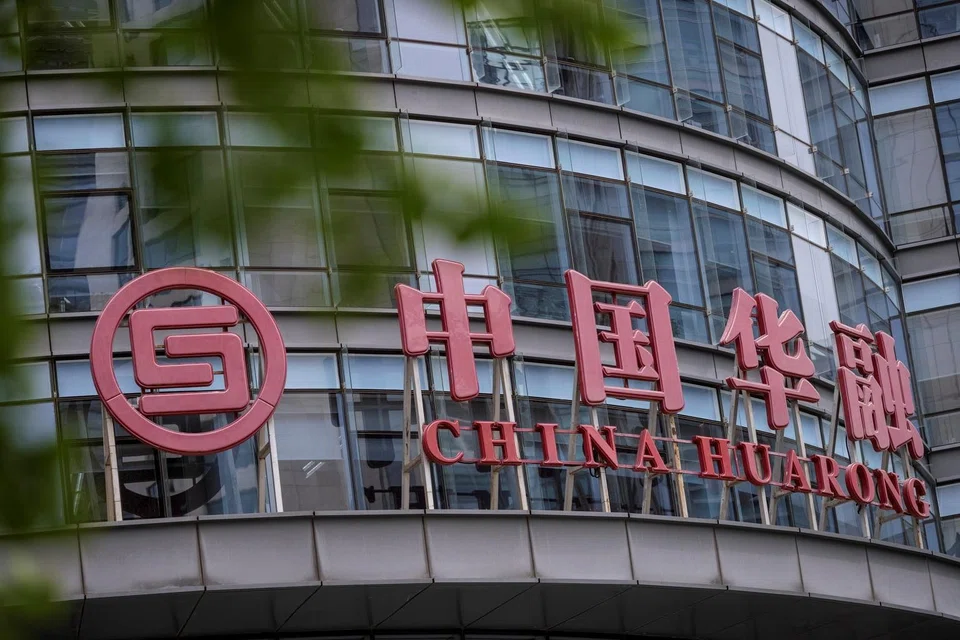
DeeperDive is a beta AI feature. Refer to full articles for the facts.
[HONG KONG] CHINA Huarong Asset Management had its credit rating cut by three levels at Fitch Ratings, which said further downgrades are possible if Chinese authorities continue to withhold indications of government support for the embattled distressed-debt manager.
Fitch dropped Huarong to BBB from A, becoming the first of the big three international ratings firms to downgrade Huarong after the state-owned company missed a deadline to release 2020 results by March 31.
Speculation that Huarong may restructure its debt has jolted credit markets across Asia, with Chinese officials and Huarong itself offering little guidance about the company's fate.
The lack of transparency may hamper Huarong's ability to refinance its debt in offshore markets, Fitch said.
The firm lowered its rating on Huarong's senior unsecured perpetual notes by four notches, to BB+ from A-, and retained a negative outlook on both the perpetual notes and Huarong as a whole.
The cut to junk territory for the perpetuals underscores how quickly perceptions of Huarong have changed.
Navigate Asia in
a new global order
Get the insights delivered to your inbox.
After trading near par for much of the past few years, the company's dollar bonds have plunged this month as investors questioned assumptions about Chinese government backing that have underpinned the creditworthiness of state-owned borrowers for decades.
TOO BIG TO FAIL?
Huarong, which is controlled by China's finance ministry, is among the nation's most systemically important companies outside its state-owned banks.
"The government may continue to have a high incentive to provide extraordinary support, considering China Huarong's policy role and the potential contagion risk for the refinancing of similar policy-driven GREs (government-related entities), but Fitch believes timely indication of support has not yet materialised," the ratings firm said in a statement on Monday.
There is "increasing uncertainty over the company's liquidity, particularly its offshore funding," Fitch added.
Huarong has some US$23.3 billion in outstanding offshore debt, US$4.2 billion of which matures through the end of this year, Bloomberg-compiled data show.
The drama surrounding the company has effectively shut it out from overseas public debt markets and prompted scrutiny over the issuer's maturity schedule as investors search for any possible signs of tightening liquidity at the firm.
On Sunday, Huarong announced it wouldn't publish its 2020 results by the end of this month - missing another deadline from Hong Kong's stock exchange and prompting a fresh selloff in the company's bonds.
The firm released a brief statement in Chinese, mostly reiterating previous statements. There was no indication of when results would be published or if anything has changed since its April 1 filing to the stock exchange, where Huarong shares had been trading before their start-of-month suspension.
Reaction in the offshore bond market was negative on Monday, underscoring concerns among international investors that they're low on China Huarong's priority list.
The bad-debt manager chose to publish the widely anticipated update on an online platform run by China's interbank and foreign exchange trading system, rather than on Hong Kong's exchange as would be typical for a listed company.
Last week, the company's offshore unit said it returned to profit in a statement posted on its WeChat account.
"Bondholders have no leverage over management," said Owen Gallimore, head of trading strategy at Australia & New Zealand Banking Group.
"Initially we were told that it was a simple auditor delay, in-line with many others companies' late filings at the time. Then we were comforted that 'operations normal and liquidity ample' with the annual report out soon. But we are still waiting."
Huarong is also under review for a potential downgrade at Moody's Investors Service and S&P Global Ratings.
Fitch's downgrade is expected to further pressure Huarong's bonds. The company's 3.75 per cent dollar bond due 2022 fell 1.9 cents on the dollar to 79.9 cents while its 4.5 per cent perpetual bond dropped 9.5 cents to 61.2 cents, according to Bloomberg-compiled prices.
STRESSED BONDS
The offhand approach to international investors comes with a cost.
Increased uncertainty boosts volatility in the company's investment-grade debt, making the instruments trade more like stressed bonds. This effectively prevents China Huarong from selling more dollar debt, making it harder for the firm to refinance.
The company has some US$7 billion in local and offshore bonds maturing this year, including S$600 million (US$453 million) and 915 million yuan (US$141 million) notes both due April 27, Bloomberg-compiled data show.
There's a broader impact too as investors become more selective toward Chinese firms. While ultra-safe firms like Bank of China units and Tencent Holdings have raised funds in the offshore bond market this month, only one first-time Chinese dollar-bond issuer has tapped the market.
That's down from a monthly average of about eight deals from debut issuers last year. Spreads on a Bloomberg Barclays index of investment-grade Chinese dollar bonds rose to nine-month highs in mid-April.
The central government may be encouraged by such concerns, provided they don't turn into panic. President Xi Jinping wants to introduce moral hazard to the nation's financial markets so that investors punish companies for poor governance, rather than expecting Beijing to bail them out.
As for China Huarong - its most important shareholder is the state, and public disclosures will likely be dictated by officials more focused on ensuring an outcome that doesn't undermine financial stability.
As China's largest bad loan manager, the company is a key player in the country's US$54 trillion financial industry.
Still, given bond and stockholders are likely to bear some of the cost of a successful resolution to China Huarong's financial issues, greater openness would be welcomed. Because official communication from China Huarong is lacking in frequency and detail, investors have to turn to media reports, where interpreting the news can also be difficult.
China's regulator has asked banks to extend some loans by at least six months, said a Friday REDD report.
The central bank is considering taking on some China Huarong assets, people with knowledge of the matter told Bloomberg News last week. Another report from Reorg Research said a debt restructuring for China Huarong International Holdings was one option under consideration.
While frustrated bondholders can always sell, holders of the Hong Kong shares are stuck in limbo with no resolution in sight.
"Stock investors can't really do anything at the moment," said Jackson Wong, Amber Hill Capital asset management director in Hong Kong. "It's very hard to price the stock. Doing off-market transactions involves complex valuations and high trading costs - only very large institutions could choose to do so if the stock remains suspended for a longer time."
BLOOMBERG
Decoding Asia newsletter: your guide to navigating Asia in a new global order. Sign up here to get Decoding Asia newsletter. Delivered to your inbox. Free.
Share with us your feedback on BT's products and services
TRENDING NOW
Shelving S$5 billion office redevelopment plan proved ‘wise’ as geopolitical risks mount: OCBC chairman

Eurokars Group introduces rental car franchises Enterprise Rent-A-Car, National Car Rental, and Alamo to Singapore
20 photos that show how dramatically Singapore has changed in two decades
Singapore’s key exports up 15.3% in March from electronics surge, exceeding forecasts

