Sterling helped by tax cut U-turn, yen steadies past 145 per US dollar
 Add BT as a preferred source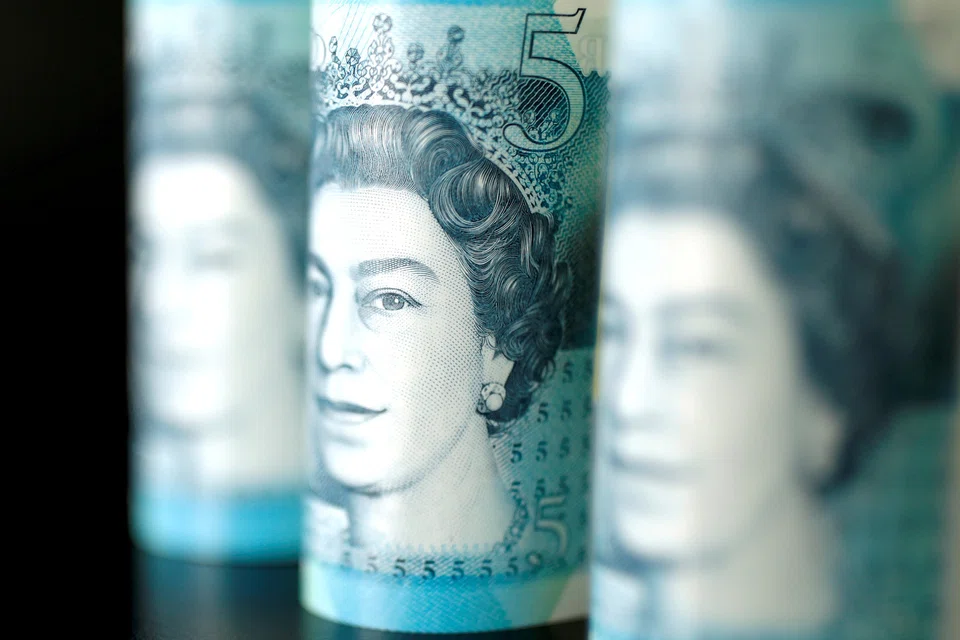
DeeperDive is a beta AI feature. Refer to full articles for the facts.
STERLING rose on Monday (Oct 3) after Britain reversed a plan to cut the highest rate of income tax, while the yen weakened past 145 per US dollar, near the level where Japanese authorities intervened last month.
The pound touched US$1.128 after media reports of the U-turn, its highest level since Sep 22, the day before British Finance Minister Kwasi Kwarteng sent markets tumbling with a new “growth plan” to cut taxes and regulation, funded by vast government borrowing.
Having pared gains, sterling was last up 0.2 per cent at US$1.1188.
“We get it, and we have listened,” Kwarteng said regarding the reversal of a plan to cut the 45 per cent tax band, one contentious part of the package of measures which drove sterling to an all-time low of US$1.0327 and sent gilts spiralling, prompting the Bank of England to step in.
“Clearly sterling has performed better on the news, but there are still a lot of questions, ultimately the 45 pence tax rate was only a small part of the unfunded tax cuts announced,’ Jane Foley, head of FX strategy at Rabobank, said.
“The question remains is this enough? The answer will be clear in a few weeks’ time when the Bank of England measures end. UK assets, the pound and gilts are not out of the woods yet, and the British government has a lot to do to get back credibility.”
Navigate Asia in
a new global order
Get the insights delivered to your inbox.
Elsewhere, the Japanese yen weakened to 145.40 per US dollar in Asia trade, past the 145 mark for the first time since Sep 22 when authorities intervened to prop up the currency.
The US dollar was last up 0.24 per cent at 145.1 yen.
“Each time (US dollar/yen) gets to 145, it gets people excited. But it’s the magnitude of the move that sometimes matters,” Christopher Wong, a currency strategist at OCBC, said.
“That said, we remain watchful and won’t rule out stealth yen intervention if the magnitude of the yen’s decline increases again, perhaps when it breaches 146, using current levels as reference.”
Monday’s fall came as Finance Minister Shunichi Suzuki said Japan stood ready for “decisive” steps in the foreign exchange market if excessive yen moves persisted.
The yen has been weakening due to Japan’s policy of keeping interest rates pinned down at a time when they are rising elsewhere. After much speculation, authorities last month intervened in markets, spending a record of 2.8 trillion yen (S$28 billion) to prop up the currency.
The euro fell 0.2 per cent to US$0.97785, not helped by data that showed manufacturing activity across the eurozone declined further last month.
Reports from Reuters and others that the Opec+ group of oil producers is discussing potential output cuts of more than 1 million barrels per day also weighed on the currency, given Europe’s precarious energy situation.
That news, however, gave a small boost to the Norwegian crown and the Canadian dollar, with the US dollar sliding around 0.5 per cent on each of the commodity currencies.
The Australian and New Zealand dollars gained ground ahead of expected rate hikes by their central banks this week with the Aussie up 0.6 per cent at US$0.645 and the kiwi 1 per cent higher at US$0.5655. REUTERS
Decoding Asia newsletter: your guide to navigating Asia in a new global order. Sign up here to get Decoding Asia newsletter. Delivered to your inbox. Free.
Copyright SPH Media. All rights reserved.