Sterling slides after BOE jumps into gilt market, US dollar marches on
 Add BT as a preferred source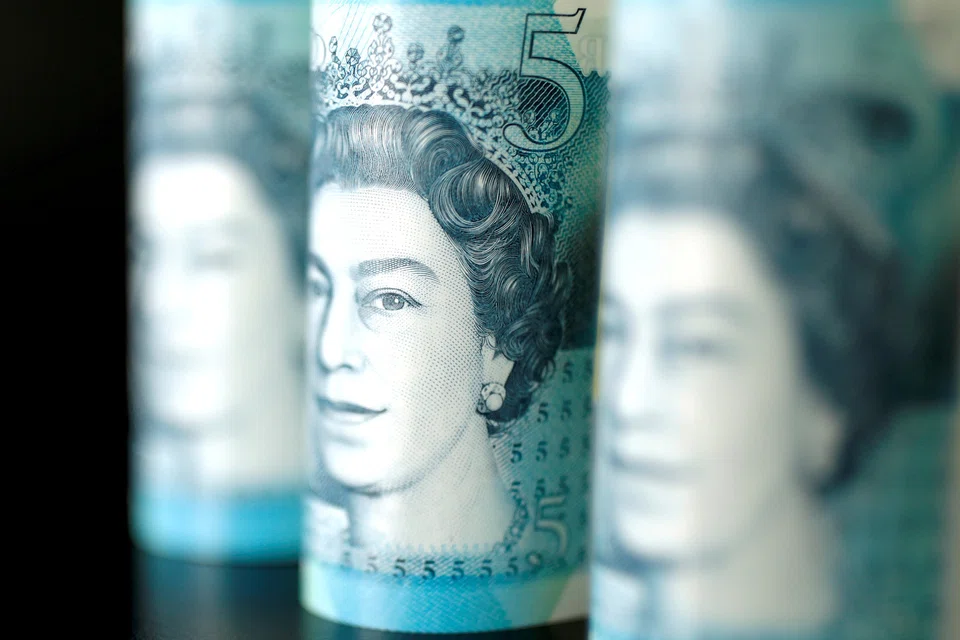
DeeperDive is a beta AI feature. Refer to full articles for the facts.
STERLING tumbled again on Wednesday (Sep 28) after the Bank of England (BOE) said it would step in to prop up the gilt market, the latest sign of nerves in financial markets which helped nudge the US dollar to its latest 2-decade peak.
The BOE said it would buy as many long-dated government bonds as needed between now and Oct 14 to stabilise financial markets, and added that it would postpone next week’s start of its gilt sale programme.
As markets tried to digest what this meant for the pound, the currency whipsawed, jumping as high as US$1.084 then falling, and was last down 1.5 per cent at US$1.0583.
“The pressure on UK rates to rise is breaking financial markets in the UK..., which means (the BOE) had to move,” said John Hardy, head of FX strategy at Saxo Bank.
“As the rest of the world is in tightening mode, this should be sterling negative. We have seen some oddball reactions as the market tried to deal with it, and there was a bit of shift in risk sentiment with people thinking ‘Oh my God, is the Bank of England the canary in the coal mine? Will other central banks have to shift?’, but it’s a bit early for that trade.”
Long-dated British government prices soared after the announcement and the yield on the 30-year gilt slid around 30 basis points.
Navigate Asia in
a new global order
Get the insights delivered to your inbox.
Sterling’s move came against the backdrop of the US dollar resuming its relentless climb.
The US dollar index rose around 0.5 per cent to hit a new high of 114.78, its march higher helped by an equally relentless climb from US treasury yields. Benchmark US 10-year Treasury yields rose to 4 per cent for the first time since 2010, climbing as high as 4.013 per cent before giving back these gains, as did European government bond yields, after the Bank of England’s move.
The US dollar’s gains were broad-based, with the euro down 0.37 per cent to US$0.9557, and the Australian dollar, which is particularly sensitive to swings in investors sentiment, down 0.56 per cent.
“Resistance (to US dollar strength) is futile,” ING analysts headlined a morning note.
“Whether it be US data surprising on the upside, the US Administration showing no concern at all with the strong US dollar, or new chapters in the energy war in Europe, it looks like all systems are go for the US dollar rally.”
“Trying to pick a US dollar top in the current climate is an exercise in futility.”
Elsewhere, the yen was last at 144.7 per US dollar, little changed on the day, but still near its lowest levels in years even after Japan’s intervention to prop up the fragile currency last week.
Elsewhere in Asia, another milestone fell on Wednesday as China’s onshore yuan extended losses to end the domestic session at its lowest level against the US dollar since the global financial crisis. The offshore yuan hit a record low, pressured by expectations of further US rate hikes.
There are signs that Chinese policy makers are becoming concerned. Reuters reported on Tuesday, citing a source, that Chinese monetary authorities are asking local banks to revive a yuan fixing tool it abandoned 2 years ago as they seek to steer and defend the rapidly weakening currency. REUTERS
Decoding Asia newsletter: your guide to navigating Asia in a new global order. Sign up here to get Decoding Asia newsletter. Delivered to your inbox. Free.
Share with us your feedback on BT's products and services