

Swiss National Bank holds interest rate at zero, cuts inflation forecast
The outcome shows the central bank setting a higher bar for moving negative than for a standard rate cut
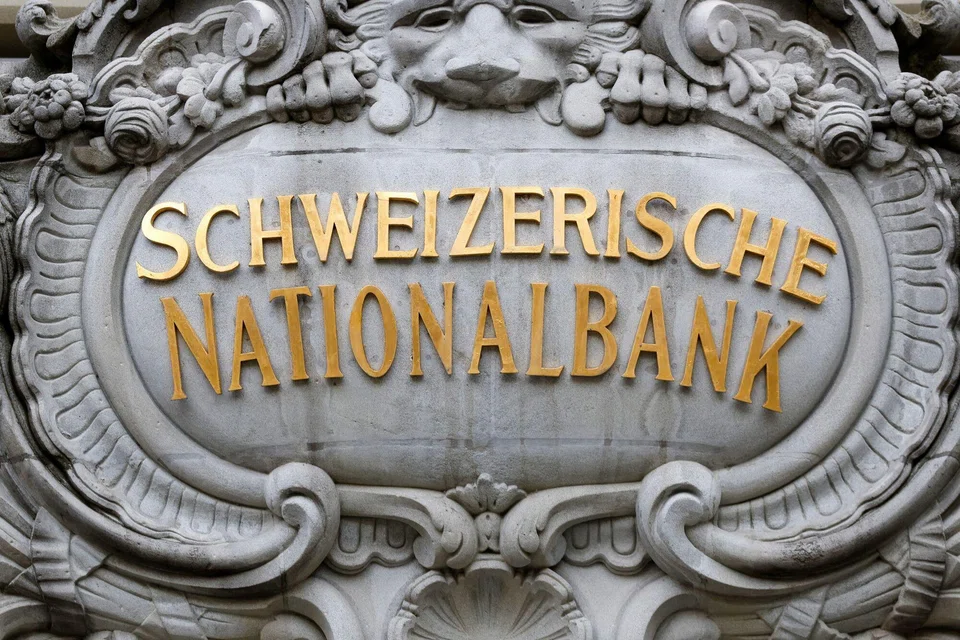
[ZURICH] The Swiss National Bank kept its interest rate at zero, judging that a weakened inflation outlook doesn’t yet justify a return to negative borrowing costs.
The decision on Thursday (Dec 11) marks the second quarterly result with an unchanged benchmark, and matched the forecasts of all 23 economists surveyed by Bloomberg. Markets had also priced in only a very small chance of a cut.
“Inflation in recent months has been slightly lower than expected,” the SNB said in a statement that showed reduced predictions for price growth for the next two years.
“Although the conditional inflation forecast is somewhat lower in the short term than in September, there is only little change in the medium term. The forecast is within the range of price stability.”
The outcome underscores how president Martin Schlegel and his colleagues are applying a higher bar to a move into negative territory than they would for a more conventional rate cut. With the franc touching recent decade-highs against the euro, and inflation at zero, the case for such a reduction under normal circumstances would have been more persuasive.
While the US Federal Reserve’s own quarter-point move on the eve of the SNB decision might have provided another pressure point to consider – given that it will narrow the differential between each country’s borrowing costs – the backdrop of rising global bond yields may have offered some comfort, as will the clouded prospects for US policy next year.
Faced with the trade-off between a feeble price outlook or taking a step of reintroducing the subzero policy that Switzerland had for seven years – a measure acknowledged to have hurt pensions, savers and the financial system – the SNB opted to stay steady this time round.
The Swiss central bank cut its inflation forecast to 0.3 per cent next year and 0.6 per cent in 2027, down from 0.5 per cent and 0.7 per cent, respectively. For this year, the central bank kept its projection of 0.2 per cent unchanged.
Consumer-price growth has now turned out weaker than economists expected for three months in a row. It slowed to zero last month, making a pickup for the current quarter that had been anticipated by the SNB almost certainly unachievable.



One challenge there is the franc. It surged to a decade high against the euro last month before then paring some gains. The currency’s strength weighs on prices by making imports cheaper.
The most recent driver of increases in the franc was the news that Switzerland had finally clinched a trade deal with the US after months of enduring the highest tariffs imposed on any advanced economy.
Given that backdrop, the SNB predicts growth of about 1 per cent next year, compared with “just under” that number, as predicted in September.
Emboldening officials in their tolerance of weak inflation readings, or even negative outcomes, is an inflation target range of between zero and 2 per cent, and the view that their current stance is expansive enough to stoke prices over time. Schlegel has also previously said that the SNB doesn’t have to react to every piece of monthly data.
Policymakers have said that they’re willing to cut rates below zero, though they would rather avoid such a step if they can. Schlegel and his two colleagues may offer further clues on that when they address reporters at 10 am in Bern. BLOOMBERG
Decoding Asia newsletter: your guide to navigating Asia in a new global order. Sign up here to get Decoding Asia newsletter. Delivered to your inbox. Free.
Share with us your feedback on BT's products and services
TRENDING NOW

SoftBank’s Son plans US$50 billion Malaysia tech outlay: Anwar Ibrahim

Singapore expects all parties to honour commitments, says PM Wong after Indonesia cuts gas exports

Gas Supply may pursue remedies if contract breached following Indonesia’s export cuts: Tan See Leng

Why the biggest business decision about AI isn’t which model to choose

