Taiwan spent US$8.25b to hold back currency depreciation in H1
 Add BT as a preferred source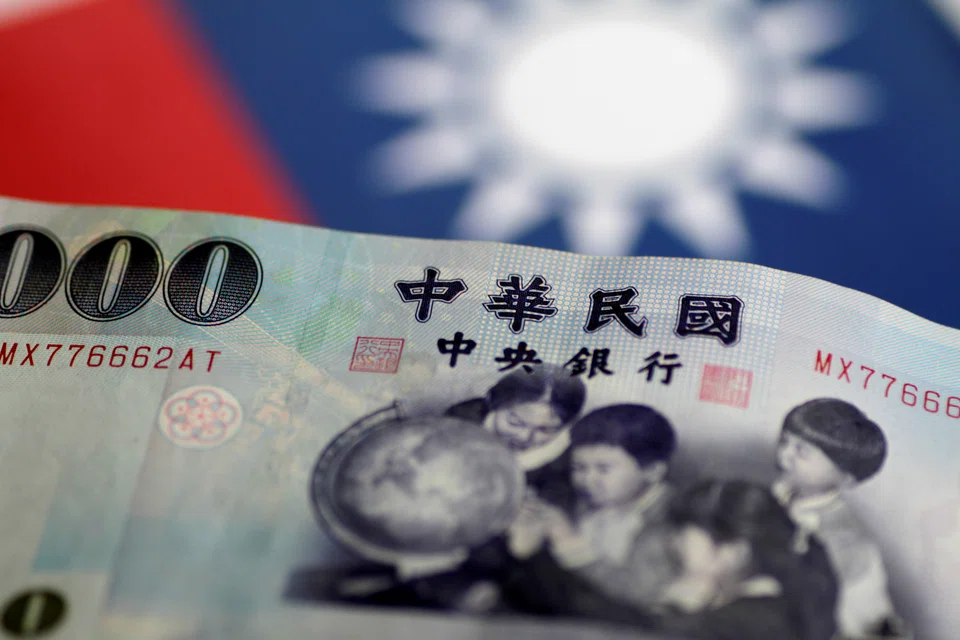
DeeperDive is a beta AI feature. Refer to full articles for the facts.
TAIWAN’S central bank said on Wednesday (Sep 28) that in the first half of this year it sold a net US$8.25 billion to intervene in the foreign exchange market to try and arrest the Taiwan dollar’s devaluation, adding currency stability was a must.
Taiwan’s currency and stock market have tanked in recent weeks due to aggressive interest rate hikes in the United States and US dollar strength, as well as worries over slowing global economic growth.
The Taiwan dollar has depreciated 13 per cent against the greenback so far this year.
In a report to lawmakers ahead of its governor taking questions in Parliament on Thursday, the central bank said Taiwan is a small and open economy with a high degree of trade dependence, and a “thin” foreign exchange market.
“It is necessary to maintain the relative stability of the Taiwan dollar exchange rate,” it said.
By comparison, the central bank bought a net US$9.12 billion for all of last year to intervene in the foreign exchange market when it was trying to prevent the Taiwan dollar appreciating too fast.
Navigate Asia in
a new global order
Get the insights delivered to your inbox.
The bank said that for a long time, “large and frequent international capital movements” have posed a great challenge to the stability of the foreign exchange markets of small and open economies, affecting financial stability and prices.
Short-term cross-border capital movement has become an important factor affecting the Taiwan dollar’s exchange rate, which often fluctuates due to uncertainty about the monetary policy direction of major economies, it added.
While the Taiwan dollar has depreciated against the greenback, it has been relatively stable against other major currencies, the central bank said.
Taiwan has had “good results” from its managed floating exchange rate system, which is conducive to companies’ operations and contributes to domestic financial stability and economic growth, it added.
Taiwan is a major semiconductor manufacturer and has a trade-dependant economy, so the depreciating currency makes its exports cheaper and more competitive.
However, Taiwan is also resource-poor and relies on imports of raw materials and energy, which the depreciation of its currency has made more expensive. REUTERS
Decoding Asia newsletter: your guide to navigating Asia in a new global order. Sign up here to get Decoding Asia newsletter. Delivered to your inbox. Free.
Share with us your feedback on BT's products and services