

Banks pour billions into AI, but most see no ROI. Here’s why
Some banks are applying AI within their private banking units and making revenue gains
THE private banking divisions of banks have long struggled to serve customers other than ultra-high-net-worth individuals. Tasks such as portfolio research, client profiling, and compliance are simply too time-consuming to offer to any but the richest clients.
This constraint has remained despite the rapid expansion of mass affluent households across high-growth markets. In turn, it has created a big opportunity for premium banking services, yet the industry has been unable to tap it.
Artificial intelligence co-pilots have emerged as a solution to this supply and demand mismatch. However, the gap between promise and revenue is wider than most banks want to admit. Here’s why.
Success stories and blockers
Some banks are applying AI within their private banking units and making revenue gains.
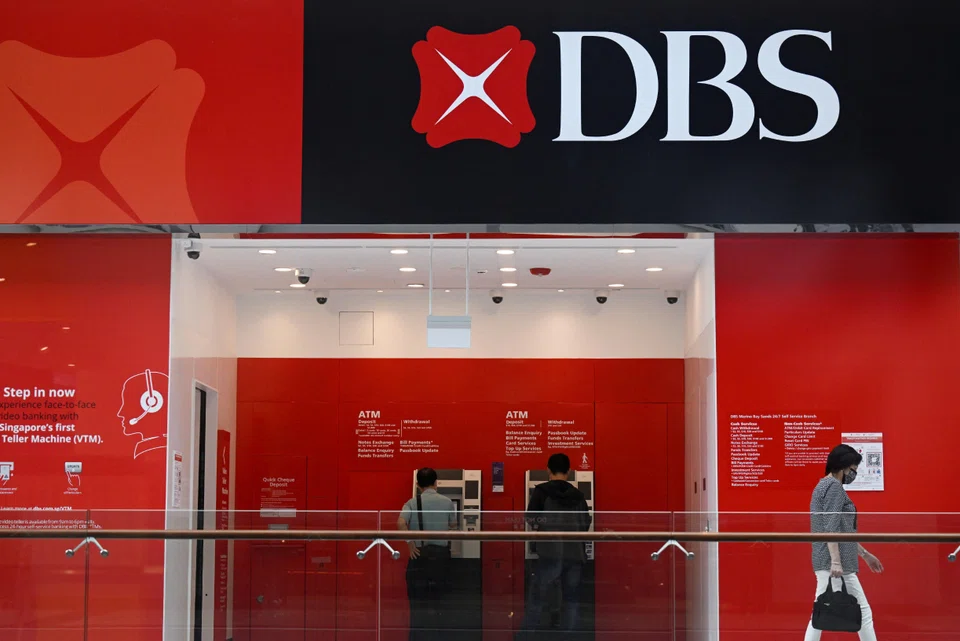
DBS in Singapore, for example, secured S$1 billion (US$786 million) in economic value from its AI initiatives in 2025. That’s up from S$718 million (US$564 million) in 2024, underscoring the compounding impact of AI-augmented financial advice.
To map where AI use in private banking is and is not translating into revenue, a report by Dyna.Ai, GXS Partners, and investment research network Smartkarma draws on executive interviews across South-east Asia, the Middle East, and Latin America.
One unnamed leading multinational bank found that delivering AI-generated portfolio insights during live client conversations – not in pre-meeting briefs – drove higher uptake and satisfaction, according to the report. This approach reduced prep time for relationship managers by 95 per cent and contributed to 20 per cent year-over-year sales growth.
The distinction between using AI for live client interactions and pre-meeting prep is critical in wealth management, where revenue depends on relationship managers influencing client decisions in real time. Results like these remain the exception, though.
Yet the full findings of the report are sobering. A model can be live within three months, but it can take nine months or more before relationship managers trust it enough to act on its recommendations.
The single biggest challenge is when the C-suite does not drive AI adoption. AI deployments must be championed by senior leadership to truly create impact.
Beyond that, there are three key structural blockers to adoption, our research shows.
First, client data in most regional banks remains fragmented across products, divisions, geographies, and security frameworks. This creates blind spots that even the best AI co-pilot cannot see past.
In South-east Asia, where standards vary across countries, this issue is particularly pronounced. As such, AI models validated in one market often need tailoring elsewhere, raising costs and slowing down cross-border rollout.
Second, relationship managers tend to avoid giving AI-generated recommendations that they cannot explain to clients, who often do not trust these suggestions.
When an AI assistant surfaces three different “total assets under management” figures for the same household, the relationship manager spends more time fixing inconsistencies than serving the client. As a result, trust in both the AI tool and the bank drops sharply.
A global banking operations head we interviewed for our report shared that while their bank had an AI model running within three months, it took nine months for relationship managers to trust it enough to actually use it.
Based on our research, AI tools are more likely to be adopted when embedded directly into relationship manager workflows and tied to revenue dashboards, rather than delivered as standalone tools.
Finally, governance requirements for AI-generated investment can slow adoption among banks. When the Commonwealth Bank of Australia’s AI anti-money laundering system failed to flag A$624 million (US$570 million) in suspicious transactions, regulators fined the bank A$700 million. Its CEO also resigned.
Governance does not have to be in the way of AI adoption, however. Banks that are moving fastest treat compliance as something built into the product from day one, not a sign-off process tacked on at the end, per our research.
Risks and dangers
Banks are not the only firms using AI to offer wealth advisory services. Fintech companies and digital challengers are in the game as well, yet how they have fared shows a key hurdle for the wider industry to overcome.
Digital banks may have benefited from high smartphone and app penetration, but many customers still prefer going to physical branches or turning to human advisors for complex products. Pure-play digital banks also struggle to convert downloads into active, high-value usage.
The reason? It’s a matter of trust.
In Hong Kong, for example, 24.1 per cent of respondents have a negative impression of digital banks, while only 31.7 per cent consider digital banks their primary banking provider because of trust gaps, a 2025 study from Echo Asia shows. In addition, global data firm SAS Institute found that only 11 per cent of banks are viewed as having “trustworthy AI”.
If not addressed, this trust gap in how AI-generated advice and tools are used could risk delivering tech that’s impressive only on paper but actually has limited adoption among end users.
Another AI-driven risk for relationship managers is deskilling.
If tools such as agentic AI systems take on more of the analytical work that relationship managers once did themselves, there is a real danger that they would gradually lose the pattern recognition and judgment built over years of client work.
A McKinsey & Company analysis suggests that agentic AI could save wealth advisors up to 30 per cent of their time by automating manual activities. However, time saved is only valuable if it is reinvested in deeper client relationships instead of fostering reliance on systems that may not always get it right.
What actually works
Our research shows that across markets, the banks seeing real returns from AI have taken similar measures.
- Embed AI in live client interactions. The biggest gains come when AI supports relationship managers during conversations, where it can directly influence client decisions and product uptake. Integrating the tools into customer management systems and call interfaces helps.
- Tie AI to revenue, not efficiency. Track AI against conversion rates, cross-sell, and wallet-share. Leading banks take this further by linking AI performance to revenue dashboards and, in some cases, tying vendor contracts to commercial outcomes.
- Fix data fragmentation before scaling. Without a unified client view, AI-generated recommendations lack accuracy and do not build trust. This limits their ability to drive real revenue.
- Build compliance into the workflow. The fastest-moving institutions treat governance as part of the product, not a final checkpoint. This allows them to deploy AI without slowing down frontline teams.
The DBS result is real, but it is not a template that can simply be replicated. Our research is unambiguous on this point: The difference between a successful AI deployment and another stalled pilot is operational.
It comes down to data foundations, workflow integration, and whether governance was built to enable speed or obstruct it. For banks across South-east Asia, the mass affluent opportunity is large, and the competitive pressure is building.
The window to get this right is narrowing. TECH IN ASIA
TRENDING NOW

LTA proposes combining car COE categories, adding rebate-surcharge system

StarHub to acquire MyRepublic’s mobile business amid ongoing telco consolidation

DBS, OCBC, UOB rout lops billions off STI as inflation, rate concerns spook investors

Grab CEO’s wife Chloe Tong on life with Anthony Tan and finding her purpose

