

Temasek, GIC investments flat at US$31 billion even as global peers’ activity rises: report
GIC remains the world’s ‘most prolific’ co-investor, deploying US$44.9 billion since 2018
[SINGAPORE] Investments by GIC and Temasek together were flat on the year in 2025 at US$31 billion, indicated data platform Global SWF.
Global SWF’s annual report, published on Thursday (Jan 1), showed that GIC came in fourth in terms of spending, falling from second place in 2024. Temasek ranked eighth, rising one spot from its placing the year before.
The tracker of more than 400 sovereign wealth and public pension funds noted that the two Singapore funds’ steady spending contrasted with their Gulf and Canadian peers’ rising deployments, with global sovereign investment activity reaching record levels.
The divergence indicated a potentially more selective stance from GIC and Temasek, even as regional economies such as Malaysia sought to reposition themselves to attract long-term state-linked capital.
Despite the Singapore funds’ investments staying flat in 2025, GIC was involved in the second-largest cross-border transaction in 2025, as part of a consortium that included Norway’s Norges Bank Investment Management (NBIM).
Together with NBIM and Dutch pension manager APG, it will invest as much as 9.5 billion euros (S$14.4 billion) in the next four years into TenneT’s German power grid in exchange for a 46 per cent stake.
GIC remained the world’s “most prolific” co-investor, having deployed US$44.9 billion since 2018 – the highest amount for any state-owned investor globally.
Meanwhile, Temasek will launch its biggest overhaul in more than a decade on Apr 1, by splitting its portfolio into three segments: Temasek Global Investments, Temasek Singapore and Temasek Partnership Solutions.
As the Singapore investment company is perceived as having “best practices” globally, other funds may follow similar restructuring, Global SWF said in its report.
SEE ALSO


Temasek and GIC were also the top two funds in terms of deal volume in 2025, clocking in at 60 and 42 deals, respectively.
Singapore well-positioned in data centres
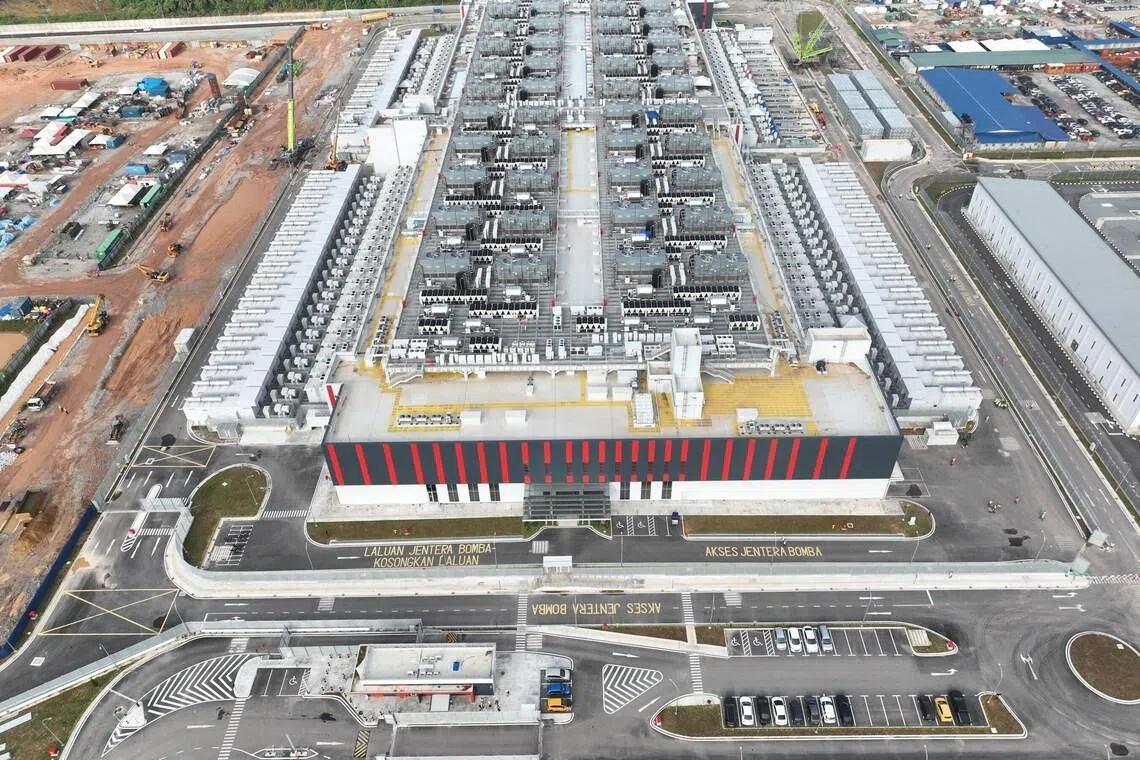
GIC was highlighted as being “well-positioned” in the digital infrastructure and data centre segments, which were part of the report’s digitalisation and artificial intelligence “theme of the year”.
The sovereign wealth fund’s pure AI investments totalled US$2.5 billion in 2025. In September, it announced that it was a “significant investor” in Anthropic as part of a US$13 billion Series F round.
Under the larger digitalisation and AI umbrella, GIC invested US$13.7 billion. Meanwhile, Temasek had US$2.9 billion in pure AI investments, out of the US$3.5 billion that it put into digitalisation and AI.
Rise of the Gulf Seven
State-owned investors across the world hit US$60 trillion in assets under management (AUM) in 2025; US$15 trillion of this came under sovereign wealth funds.
Global SWF said that by 2030, these figures are expected to swell to US$80 trillion and US$22 trillion, respectively.
About US$126 billion of capital was invested by state-owned investors in 2025, marking a record high and a 46 per cent increase from 2024.
The Gulf Seven – the seven largest and most active sovereign wealth funds in the Gulf – spent 43 per cent of that amount.
Saudi Arabia’s PIF led the pack, with US$36.2 billion spent on deals including its acquisition of video game maker Electronic Arts.
Collectively, eight Canadian funds – including CPP, La Caisse, PSP, and OTPP – increased their investments by 66 per cent year on year to US$60 billion in 2025. Global SWF noted that this was one-quarter of all capital by state investors for the year.
While North American and Gulf funds surged, emerging markets such as China, India and Indonesia had a 28 per cent drop in invested capital from 2024, and held only a 15 per cent share of total investments in 2025.
Talent war goes global
Global SWF noted that the “war on talent” went global in 2025, with sovereign wealth funds in the Middle East hiring from top state investors in the Western and Asia-Pacific regions.
From Singapore, Iris Du left her role as a private equity strategist at GIC for a corporate strategy role in Abu Dhabi’s Lunate in 2025. Grace Qiu, who was GIC’s senior vice-president of strategy, took up a director role with the Qatar Investment Authority.
In October, Indonesian sovereign wealth fund Danantara also hired two former GIC investment professionals, Daniel Lim and Weihan Wong, to lead its global private market coverage.
These talent swops followed Temasek life sciences investor Varini Sharma’s 2020 move to take up a director role with Mubadala.
The Abu Dhabi Investment Authority also hired the head of equities at London-based USS Investment Management, as well as a CPP portfolio manager from Toronto, last year.
The Abu Dhabi Investment Council brought on four senior executives from other funds, including Australia’s Future Fund and Canada’s CPP and British Columbia Investment Management.
The Abu Dhabi Pension Fund hired its head of private equity from CPP’s Hong Kong office.
Foreign offices to be consolidated
State-owned investors had 235 offices away from their headquarters as at December 2025. The most popular cities were London, with 40 offices, and New York, with 38. Singapore had 15 branches, coming in ahead of Beijing with 13 and Hong Kong with 10.
Beijing and Tokyo were the most popular among central banks; Singapore and Hong Kong were preferred by sovereign wealth funds and public pension funds.
In 2025, India’s National Investment and Infrastructure Fund hired team members in Singapore; Temasek’s wholly owned asset manager Seviora opened an office in Abu Dhabi.
Global SWF found that the closing of offices is “becoming a more significant trend”, with 31 such closures by state-owned investors in the past six years.
In 2025, Canada’s AIMCo shut down its New York and Singapore offices, two years after opening them. Meanwhile, NBIM and Ontario Teachers’ Pension Plan moved their teams from Tokyo and Hong Kong, respectively, to Singapore.
“Going forward, we expect more funds to consolidate their overseas efforts,” said Global SWF, citing as an example the plans announced by APG in December.
The Dutch asset manager’s CEO said then that the firm could cut 1,200 of its 3,700 staff by 2030, and that its Singapore office, which opened in 2023, “may disappear”.
Malaysia’s post-1MDB turnaround
Global SWF named Malaysia the “region of the year” in its report, as the impact of the 1MDB scandal receded and global investors returned.
It noted that Prime Minister Anwar Ibrahim’s 2023 Madani Economy framework had invited US$30 billion of investments from sovereign investors in five years.
These included GIC and the Abu Dhabi Investment Authority’s US$1.6 billion acquisition of a Johor data centre campus in the Johor-Singapore Special Economic Zone (JS-SEZ).
This helped Malaysia’s international reserves reach an 11-year high in November, at US$124 billion, of which 4 per cent was held in gold.
In addition, flagship sovereign wealth fund Khazanah “seems to be out of the woods now”, said Global SWF, with its portfolio value back to pre-Covid-19 levels and with a 25 per cent return in 2024.
Khazanah has also returned US$2 billion to the government in dividends, it added.
Meanwhile, Global SWF pointed out that state-owned investment company Permodalan Nasional Berhad also had a “commendable” 2024, with a 5 per cent return and an increase in total assets to US$78 billion.
The Employees’ Provident Fund also “enjoyed a strong result” in 2024, with its AUM rising 10 per cent.
Global SWF added that the strong performance of Malaysia’s government-linked investment companies (GLICs) and their portfolio companies is helping to “rebuild the confidence of foreign investors”.
The GLICs held more than 28 per cent of the 20 largest stocks on the Kuala Lumpur stock exchange as at December, with a combined market capitalisation of US$231 billion.
Global SWF noted that the total capital deployed by global sovereign investors in Malaysia was “much lower” than that invested in other Asian markets such as China, India and Singapore.
However, it said the trajectory was “positive”, with the last five years seeing an acceleration of deals involving co-investments between domestic GLICs and foreign state-owned investors.
Decoding Asia newsletter: your guide to navigating Asia in a new global order. Sign up here to get Decoding Asia newsletter. Delivered to your inbox. Free.
Copyright SPH Media. All rights reserved.
TRENDING NOW

Once staunchly pro-China, Malaysian Chinese businesses are now distancing themselves from Beijing

Looking beyond looming CEO succession, should UOB potentially pursue a transformative merger?

Could stablecoins be the future of money?

Grab CEO’s wife Chloe Tong on life with Anthony Tan and finding her purpose

