BT EXPLAINS

Three indicators to identify stress in the banking system, and what they show now

Tan Nai Lun
Published Mon, Nov 13, 2023 · 08:06 PM
    • A high non-performing loan ratio is one indicator of a stressed banking system.
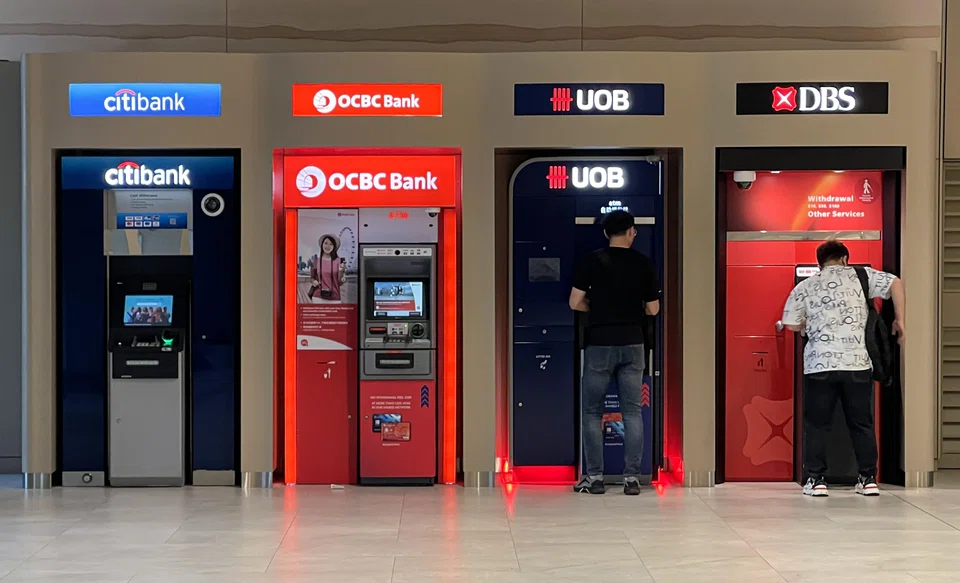
    • A high non-performing loan ratio is one indicator of a stressed banking system. PHOTO: YEN MENG JIIN, BT

    THE banking sector has been grappling with slowing loan growth, rising interest rates and greater macroeconomic uncertainty.

    The trio of Singapore banks have warned that slowing economic growth will likely weigh on results in 2024, although all three reported robust figures during their latest earnings calls for the third quarter ended September.

    While higher-for-longer interest rates may boost net interest margins (NIMs), loan growth will slow as a result, they said, and credit costs are expected to creep up.


    How should investors react? And what indicators should investors monitor?

    The Business Times spoke to analysts and identified three key areas to watch for early signs of stresses in the banking system.

    Non-performing loans 

    The non-performing loans (NPL) ratio is indicative of the asset quality of various sectors in Singapore.

    As the metric measures the ratio of NPLs to gross loans, a lower number is better.

    Monitoring data on NPLs by sectors can help identify the industries that could potentially be stressed, said Ivan Tan, a banking analyst at S&P Global Ratings.

    Recently released statistics from the Monetary Authority of Singapore (MAS) showed that the overall NPL ratio stood at 1.7 per cent as at the second quarter of 2023, down from 1.79 per cent in the first quarter.

    The NPL ratio has been on a decline since the third quarter of 2021. Comparable statistics are not available for earlier periods, following changes in MAS classifications.

    For this year, Tan said, asset quality has held up well despite multiple rate hikes, likely due to supportive credit conditions.

    Downside risks are being mitigated by a robust job market with very low unemployment and the strong financial buffers of corporates, he noted.

    DBS Group Research analyst Lim Rui Wen said, however, that NPL ratios for some sectors have been increasing at a fast pace since 2021, in particular real property and development of land segment, and retail trade.

    The NPL ratio for real property and development of land rose to 1.17 per cent in Q2 2023, from 0.63 per cent in Q2 2022. The NPL ratio for retail trade climbed to 2.12 per cent in Q2 2023, from 1.48 per cent in the same period a year earlier.

    Loans and advances to residents 

    The loans and advances to residents figure shows overall loan growth in Singapore.

    Total loans and advances including bills financing was S$787.7 billion in September 2023, up slightly from S$786.3 billion in August.

    This loan figure has been on a decline since August 2022, though, when total loans stood at S$842.8 billion.

    Certain segments are still seeing a year-on-year increase in loans. These include the agriculture, mining and quarrying sector for loans to businesses, as well as housing and bridging loans and credit cards for consumers.

    Loan growth has been on a steepening decline since December 2022. This is to be expected as the rise in interest rates started to be fully felt by consumers, said Glenn Thum, senior research analyst at Phillip Securities Research.

    Nevertheless, he noted that local banks are still reporting record earnings, as their strong NIMs and net interest income growth more than offset declines in loan growth, while funding costs have also plateaued.

    DBS’ Lim expects loans will continue to contract this year.

    Deposits and balances

    Deposits and balances figures track the growth in deposits and the current and savings account (Casa) ratio.

    Deposits and balances of non-bank customers stood at S$1.8 trillion in September, increasing for the fourth month in a row.

    Phillip’s Thum noted that the Casa ratio has been on a continuous decline since interest rates hit record highs, as customers move their money out of Casa and into fixed deposits.

    The decline has stopped in the last few months, however, and he expects the ratio to stay at these stabilised levels going forward.

    Savings deposits by non-bank customers have been falling since July 2022, standing at S$259.7 billion in September 2023. Fixed deposits by non-bank customers have been on a steady climb, reaching S$905.4 billion in the same month.

    Meanwhile, demand deposits by non-bank customers saw a declining trend, coming in at S$567.1 billion in the same month.