Top Bank of Korea official says it’s time to consider rate hike
The South Korean currency has recently touched its weakest level against the US dollar since the global financial crisis
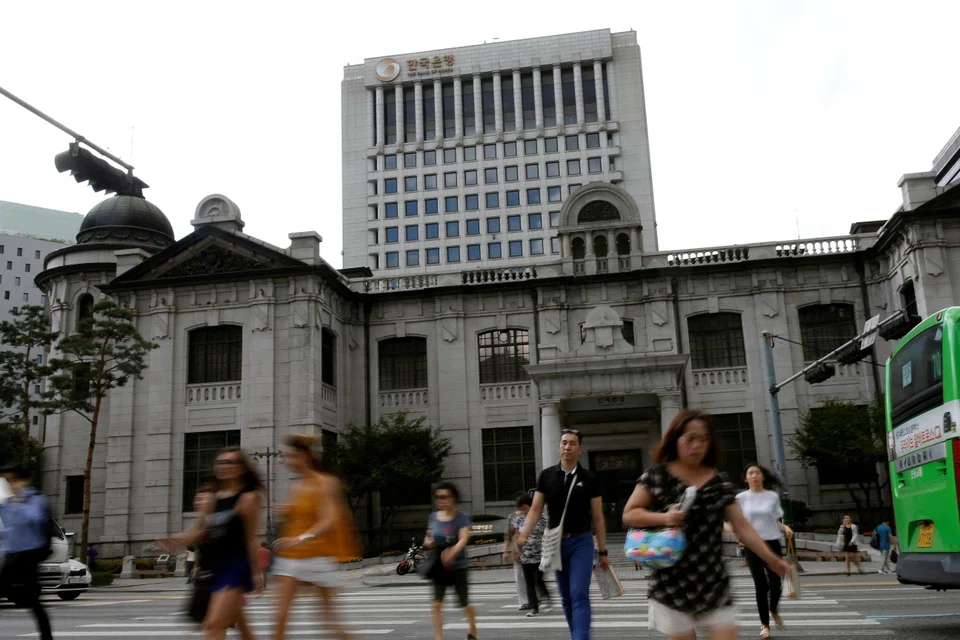
[SEOUL] A senior official at the Bank of Korea (BOK) said that it’s time to consider raising rates, as economic growth appears unlikely to fall much below the bank’s earlier projections, while inflation is likely to exceed its previous forecast.
“It’s time to consider stopping rate cuts, and thinking about increases,” senior deputy governor Ryoo Sangdai told reporters on Sunday (May 3) in Samarkand, where he is attending the annual meeting of the Asian Development Bank.
Ryoo, who also serves on the BOK’s monetary policy board, cited stronger-than-expected economic resilience following the outbreak of war in the Middle East, alongside mounting inflationary pressures. The central bank has kept its benchmark policy rate unchanged since July last year.
In February, the central bank had forecast growth of 2 per cent and inflation of 2.2 per cent for this year. While policymakers initially expected the Iran turmoil to weigh on growth and push prices higher, recent data suggest the growth outlook has not deteriorated as much as feared due to robust semiconductor shipments, while inflation risks have increased.
Prices are facing “significant upward pressure” even after accounting for government measures aimed at stabilising inflation, Ryoo added.
Asked whether the BOK could signal the possibility of rate hikes this year at its upcoming May 28 policy meeting, Ryoo said that “the possibility is open”, while stressing that policymakers will assess incoming data before making a decision.
On South Korea’s currency, Ryoo said that the won remains weaker than in the past when judged against economic fundamentals, although markets do not appear to view the current level as a major concern. The South Korean currency has recently touched its weakest level against the US dollar since the global financial crisis.
Ryoo described the first-quarter’s 1.7 per cent growth rebound as “surprising”, noting that the economy has held up better than expected despite external shocks.
Addressing concerns over the economy’s reliance on semiconductors, Ryoo said that the key risk lies in whether the cycle turns or whether spillover effects fall short of expectations, rather than the sector’s rising share itself.


Still, he added that there’s a growing view that the current chip cycle may last longer than in the past, easing some concerns. BLOOMBERG
Decoding Asia newsletter: your guide to navigating Asia in a new global order. Sign up here to get Decoding Asia newsletter. Delivered to your inbox. Free.
Share with us your feedback on BT's products and services