

Trade war, weak yuan keep foreign money away from China's markets
As the offshore yuan declines 2.9% against the dollar, foreign investors get jittery
 Add BT as a preferred source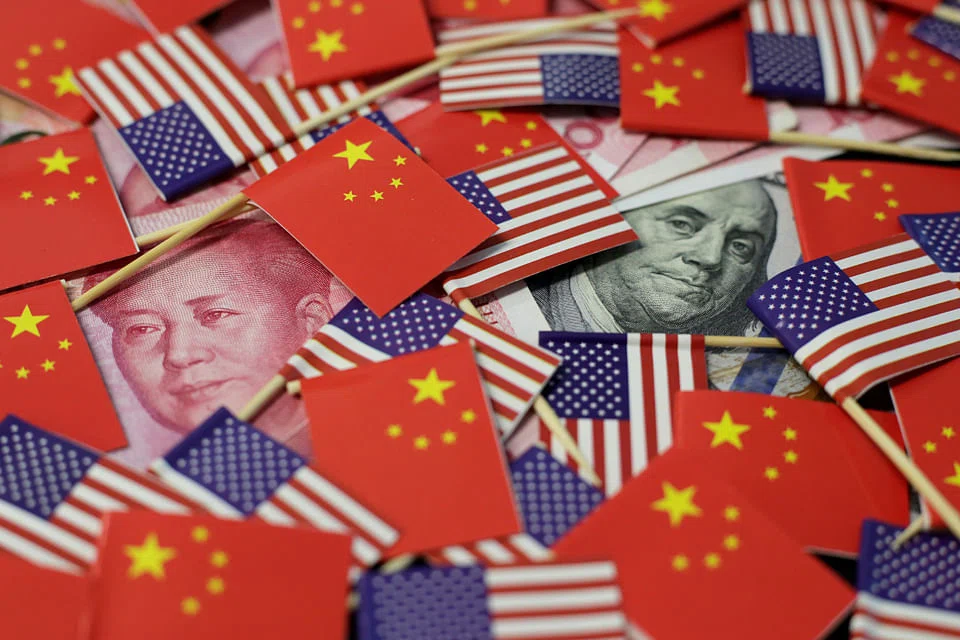
DeeperDive is a beta AI feature. Refer to full articles for the facts.
Singapore/Beijing
EXPECTATIONS that US$200 billion of foreign money would flow into China's capital markets this year are looking nothing short of overly optimistic.
For overseas investors, a weaker currency is the latest factor making yuan-denominated assets less attractive. They've been selling mainland-listed stocks at a record pace and their demand for Chinese bonds has been relatively tepid: monthly inflows have averaged at just 6.8 billion yuan (S$1.36 billion) this year, versus the 44.4 billion yuan seen in 2018, ChinaBond data shows.
What had started as a promising year in China's markets is quickly turning sour as the country's trade standoff with the US takes a toll on sentiment.
The swift correction in stocks and concern that the yuan could tumble to dangerous levels is creating volatility in a market that - for foreign investors - remains difficult to hedge. It also comes at a sensitive time for policymakers, who have been accelerating efforts to open the country's financial sector to the world.
Sydney-based Nader Naeimi, who started selling China equities in April, said he won't be lured back until China's economic data significantly improves or the government announces large fiscal stimulus.
Navigate Asia in
a new global order
Get the insights delivered to your inbox.
"There are a lot of options outside China," said Mr Naeimi, who oversees about US$1 billion at AMP Capital Investors Ltd, adding that foreigners remember last year's rout and the current volatility might keep them away. "It's two years in a row we've seen that - starting well and then a big crash."
The Shanghai Composite Index, which was up more than 30 per cent for the year at its peak in April, has given up about half of those gains. It's now among the world's worst-performing national benchmarks this quarter, and trading volume keeps dwindling. More than 42 billion yuan of A shares have been sold through trading links with Hong Kong in May, more than double the monthly record set in April.
The offshore yuan has declined about 2.9 per cent against the dollar this month and investors are debating whether it will weaken past 7 for the first time since the financial crisis. A breach of that level could result in consequences from financial instability to a deterioration in China's balance of payments and derail efforts to open capital markets, according to Citigroup Inc.
Investors should be cautious about capital outflows given expectations the yuan will fall more, Jianghai Securities said in a note dated on Monday. While risk-off environment in China has helped government debt rebound since April, foreign flows into the nation's bond market are lagging expectations. Overseas investors bought just US$2.7 billion worth of Chinese notes last month even as sovereign debt was included in a major global index for the first time. Inflows would need to pick up significantly to reach Societe Generale SA's forecast of as much as US$100 billion in the 12 months after inclusion.
Foreigners have increasingly opted to buy dollar-denominated Chinese and emerging-market debt rather than onshore bonds, according to Paul Sandhu, BNP Paribas Asset Management's head of multi-asset quantitative solutions for the Asia-Pacific. "The premium of going into China bonds over getting the hard currency outside of China is not enough to outweigh the risks of, for example, currency depreciation," he said.
Tuan Huynh, Deutsche Bank Wealth's chief investment officer for the Asia-Pacific who called the China stocks rally late last year, is also staying put for now. "In the short term, we would rather be more cautious," he said.
The offshore yuan rose 0.07 per cent to 6.9351 a dollar at 2.48pm in Hong Kong after gaining as much as 0.28 per cent earlier. The Shanghai Composite Index added 1.2 per cent. BLOOMBERG
Share with us your feedback on BT's products and services
TRENDING NOW
‘Boring’ is the new black: The stars are aligning for a Singapore stock market revival

Near sell-out launches in March boost developer sales to 1,300 units after four slow months

China pips the US if Asean is forced to choose, but analysts warn against reading it like a sports result

Genting Singapore’s Lim Kok Thay receives S$7.5 million pay package for FY2025

