Fed policymakers lean against October rate hike
This comes as Trump says Fed chair Warsh should have voted against the central bank’s rate hike
[NEW YORK] Two of the US Federal Reserve’s top policymakers this week staked out an unusually clear case for taking in more data before deciding about another interest rate hike, driving investors to largely abandon bets on an interest rate increase at the central bank’s next policy meeting, in late October.
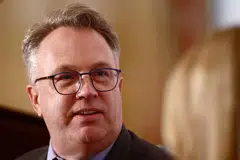
“There is no need for urgency” on changing the current setting of monetary policy, Federal Reserve Bank of New York president John Williams said on Tuesday (Sep 29) at the University at Buffalo.
“One further upward adjustment” in the policy rate may be appropriate late this year, said Williams, who is also vice-chair of the central bank’s rate-setting Federal Open Market Committee (FOMC).
Federal Reserve vice-chair Philip Jefferson on Thursday delivered a similar message.
“Any future adjustments in policy should be determined by carefully examining trends in the data, the evolving outlook, and the balance of risks,” the bank’s second-in-command said at the Darden School of Business at the University of Virginia.
Noting that rising bond market yields since the Fed’s September rate hike show markets are “reassessing” the outlook, Jefferson said, “my colleagues and I will need to come to our own judgment, which may take more time”.
He added: “With more data in hand, such trends may lend themselves to better discernment, as may the appropriate stance of monetary policy.”
Williams’ comments were pivotal for markets and helped wash away expectations that the Fed would raise rates at an Oct 27 to 28 FOMC meeting, even as they cemented the view that the Fed will raise rates in December.
Jefferson’s comments locked in the shift in sentiment.

Traders are now pricing only about a 25 per cent chance of a rate hike this month, versus about 70 per cent earlier in the week.
Also contributing to the shift was Wednesday’s data that showed a 3.4 per cent year-over-year increase in the Personal Consumption Expenditures Price Index in August – still far above the Fed’s 2 per cent goal but no worse than in July.
Global brokerages now largely expect the Fed to hike rates only once more this year, in December rather than in October.
“Unusually clear” guidance
Jefferson “has confirmed the message from NY Fed President Williams: the Fed does not expect to deliver a back-to-back rate hike at its coming October meeting,” said analysts at Evercore ISI.
“We think the joint message from Jefferson and Williams is authoritative” in an environment where Federal Reserve chairman Kevin Warsh is not providing much if any guidance on where interest rates are heading, they said.
“We think Williams needed to be unusually clear because market pricing for rate hikes was running away from the Fed,” SGH Macro chief US economist Tim Duy said after Tuesday’s remarks.
The Fed lifted its interest rate target by a quarter percentage point at its mid-September policy meeting, to between 3.75 and 4 per cent.
Fed policymakers projected one more rate hike this year.
Speaking late on Thursday, Federal Reserve Bank of Dallas president Lorie Logan called last month’s move a “first step” and said that at least another half of a percentage point of rate hikes would be needed to get inflation back on track to the Fed’s 2 per cent goal.
“A few additional increases in the target range would undo the FOMC’s risk management cuts from last fall,” she said.
The Fed cut rates by 75 basis points from September to December last year.
Long-term bond yields have risen sharply in recent weeks on the back of stronger-than-expected economic data and rising oil prices as the seven-month-old US-Israeli war on Iran churns on with no peace deal in sight.
The yield on the 10-year Treasury note on Thursday touched a 24-year high, before easing to around 5.24 per cent.
Logan said the higher yields showed investors expect additional rate hikes.
At the same time, she said, some models suggest part of the rise in yields could be driven by higher term premiums, which “can slow the economy, reducing the need to tighten monetary policy”.
Logan said she would be assessing financial conditions along with economic data to figure out when rates are high enough to bring down inflation.
She did not make the case for any specific rate-hike timing.
Hikes still ahead
Neither did Federal Reserve Bank of Minneapolis president Neel Kashkari, a policy hawk like Logan, who told news agency Reuters in an interview on Thursday, “I don’t have a strong view” as to whether the next hike should happen at month’s end.
Kashkari said his current forecast calls for one more rate hike this year and another one next year.
“If the economy proves to just be incredibly resilient and inflation therefore is probably stickier than I appreciate, then policy could need to go higher yet than I’m anticipating at this moment,” he said.
The next major data point for Fed officials to weigh is the Friday release of the September jobs report.
With recent hiring data showing stability, Fed officials have said they have the space they need to concentrate rate policy on cooling inflation, which makes it unlikely the upcoming hiring data will again rewrite the rate policy outlook.
Trump says Warsh should have voted against Fed’s rate hike
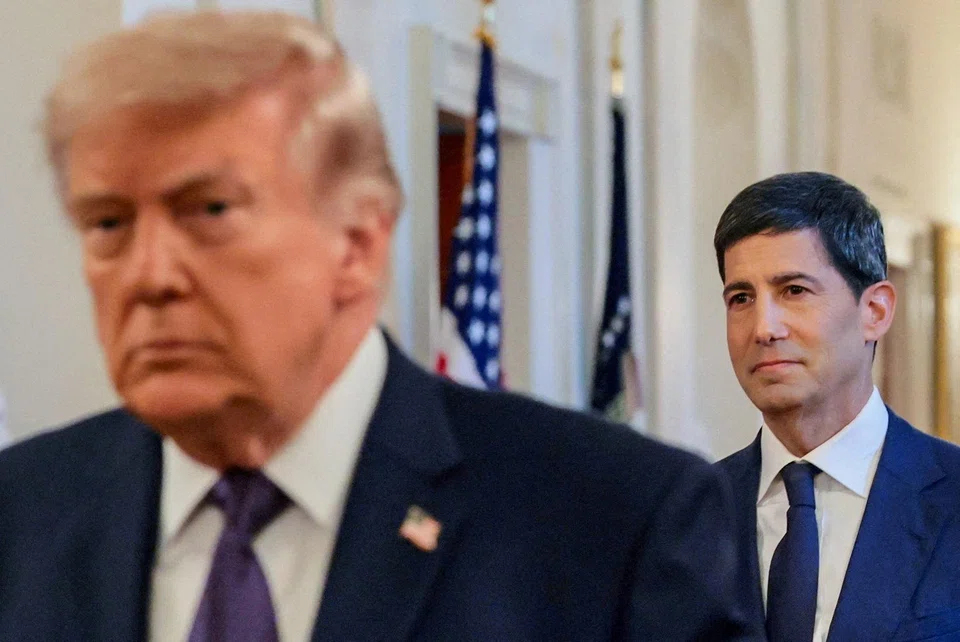
Trump said Warsh should have voted against a move to hike interest rates last month, but said he did not blame him for the central bank’s decision.
“I don’t blame Kevin Warsh. I probably would have voted against the board if I were him,” Trump told Time magazine in an interview published on Thursday (Oct 1).
Asked about his comments later on Thursday, Trump said he wants Warsh to “vote the way he wants.”
Trump has long pressed the Fed to lower borrowing costs, but the central bank last month bucked his pressure, voting to raise interest rates by a quarter percentage point and penciling in an additional hike later this year, steps aimed at containing inflation. The vote was unanimous.
The president on Thursday blamed inflation on his predecessor, Joe Biden, and groused that “the problem is interest rates will hurt our growth.”
While Trump assailed Warsh’s predecessor, Jerome Powell, for not moving more aggressively to lower rates, the president has insisted he retains confidence in his hand-picked chair, instead placing the blame on what he says is a politically motivated board.
“It’s become very political. I don’t blame you, Kevin. I think it’s too bad. Not fair,” Trump said in the interview.
“We have a very hostile board, and the board says, ‘We want to hurt Trump.’ They’re not doing this for you. They’re doing this because they have Trump derangement syndrome,” he added. REUTERS, BLOOMBERG
Decoding Asia newsletter: your guide to navigating Asia in a new global order. Sign up here to get Decoding Asia newsletter. Delivered to your inbox. Free.
Share with us your feedback on BT's products and services