

Trump’s credit card cap will hurt consumers and economy: JPMorgan
It is a surprise move that has blindsided the industry, and has sent financial banking stocks tumbling
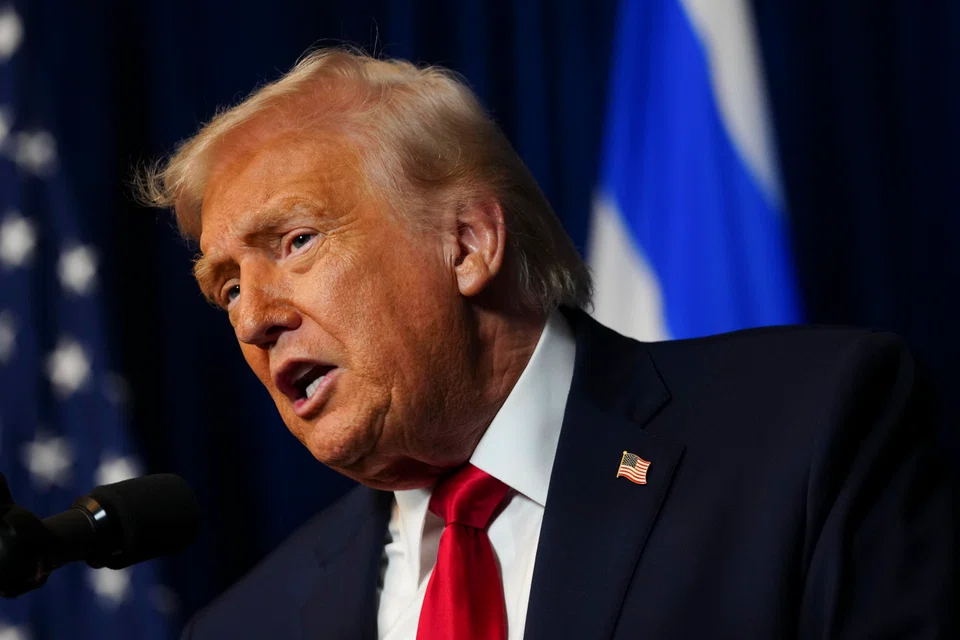
[NEW YORK] Top JPMorgan executives, including chief executive officer Jamie Dimon, warned that US President Donald Trump’s proposed 10 per cent cap on credit card interest rates would severely hurt consumers, adding their voices to growing industry pushback.
Trump, who is under pressure to address voters’ cost of living concerns ahead of this year’s congressional elections, last week on his social media platform Truth Social proposed the cap for one year, starting Jan 20.
This was a surprise move that blindsided the industry, and sent financial banking stocks tumbling.
The industry has been scrambling to rebut the proposal, pushing new data which argues that a cap would result in millions of households losing access to credit.
Though some industry experts dispute their analysis, arguing that the credit cards are highly profitable, and that banks have room to lower their rates.
“It would be very bad for consumers, very bad for the economy,” JPMorgan chief financial officer Jeremy Barnum told reporters during Tuesday’s (Jan 13) earnings call. He added that the bank would have to cut back the amount of credit it offers.
“Our belief is that actually this will have the exact opposite consequence (of) what the administration wants,” said Barnum.
The credit cards generate strong returns for banks, which charge high rates to compensate for the greater risk of default on card loans which are unsecured. The average interest rate in November stood at 20.97 per cent, said the US Federal Reserve.
“Banks are asking us to trust them, that taking their profits away will cause the world to collapse. But if you look at the data, there is a huge amount of profit that could absorb a rate cut,” said Brian Shearer, director of competition and regulatory policy at Vanderbilt Policy Accelerator, a research centre at Vanderbilt University.


A 10 per cent cap would save Americans US$100 billion annually, with only a modest impact on rewards and accounts, the centre found in research published last year.
Industry scramble
Another senior industry executive indicated that Trump’s post also caught some government officials by surprise, and the administration had not engaged with lenders to discuss the proposal as at Monday afternoon.
The executives aim to hold meetings in the coming days with administration officials and lawmakers, to explain the adverse consequences of a cap, this person said.
Several lawmakers in both parties did not support the proposal, and the Senate is not expected to advance a Bill on the issue.
“There’s just so little ... information,” Barnum added on a post-earnings call. “This is happening very quickly in a sort of unconventional way, starting with a social media post.”
When asked in a separate call with reporters if the company would pursue legal action against rate caps, Barnum said: “If you wind up with weakly supported directives to radically change our business that aren’t justified, you have to assume everything is on the table.”
In another jab at the financial industry, Trump overnight also voiced support on Truth Social for lowering card swipe fees.
Analysts said that the growing headwinds for the credit card ecosystem were hurting investor sentiment on financial stocks.
The KBW Bank Index which tracks large-cap lenders was last down 0.9 per cent in morning trading. JPMorgan shares fell 2.7 per cent.
The White House did not respond to a request for comment. US House Speaker Mike Johnson said on Tuesday that Congress should explore the idea of a cap, but warned of “negative secondary effects”.
Some Democrats, including Elizabeth Warren and Bernie Sanders, have pushed such caps, arguing that credit card rates are exploitative.
On Monday, the Electronic Payments Coalition, which represents financial institutions and card networks, said that 82 to 88 per cent of open credit card accounts would be closed or severely restricted, under a 10 per cent cap.
While subprime borrowers would be hit the hardest, a cap would lead to higher annual fees for most borrowers, reductions in credit card rewards, and more monthly account charges, lenders argued.
“You would have to adjust your model for the added risk by this and ongoing price controls,” JPMorgan’s Dimon said in a call with analysts. “It would be dramatic.” REUTERS
Decoding Asia newsletter: your guide to navigating Asia in a new global order. Sign up here to get Decoding Asia newsletter. Delivered to your inbox. Free.
Share with us your feedback on BT's products and services
TRENDING NOW

Once staunchly pro-China, Malaysian Chinese businesses are now distancing themselves from Beijing

Cliff Tan has 7 million followers and a 4-month waitlist. Why won’t he expand his business?

Grab CEO’s wife Chloe Tong on life with Anthony Tan and finding her purpose

Singapore F1 to proceed despite haze; no changes planned to outdoor entertainment

