



UOB Indonesia out to court regional customers who ‘aspire to be wealthier’

Yong Hui Ting
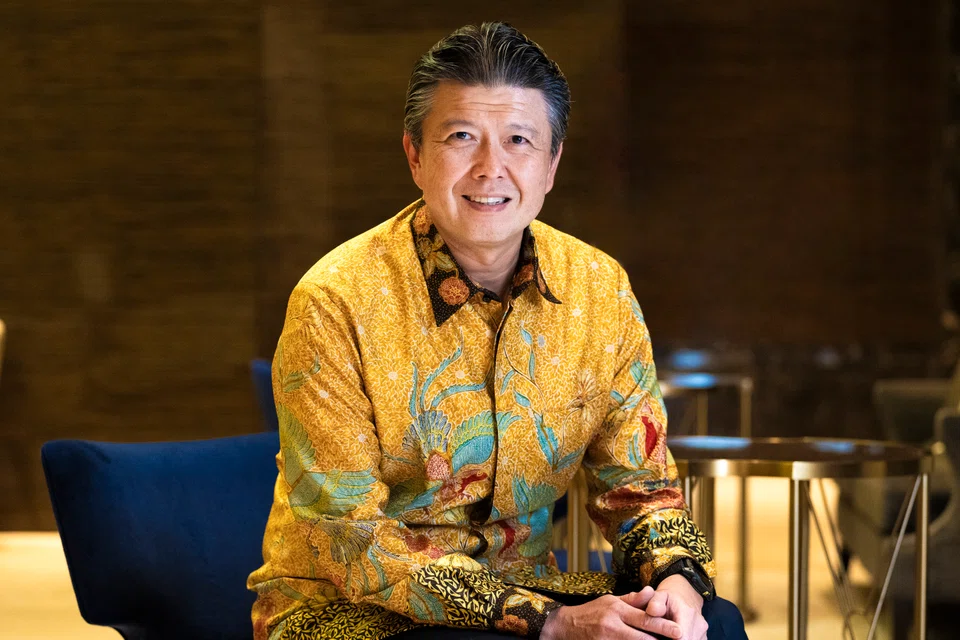
[JAKARTA] While Indonesia is the largest economy in South-east Asia, it is the country that accounts for the smallest slice of UOB’s group operating profit in the region – about 3.6 per cent, according to the bank’s latest financial report.
The aim, said UOB Indonesia’s president-director Hendra Gunawan, is to raise that share to 5 per cent.
He also said that the Indonesia unit is also on track to completes the transition of Citigroup’s consumer banking business by the end of this year. The Singapore-based bank announced in January 2022 that it will acquire Citi’s consumer assets in Indonesia, Malaysia, Thailand and Vietnam for close to S$5 billion.
The acquisition of Citi’s consumer franchises in Thailand and Malaysia was completed last year. Vietnam followed suit in March 2023, and the Indonesia unit will be the last to do by year’s-end.
When complete, the number of retail customers under UOB is expected to double to about 5.3 million. It will also be among the top five card issuers in Indonesia. The group is also targeting a 13 per cent return on equity by 2026 as a result of the acquisition.
During an interview in Jakarta recently, Gunawan stressed that growth should happen in a “controlled manner”, and that size alone is not a definite measure of the bank’s success.
“We never chase growth for growth’s sake. We want to make sure it is sustainable and aligned with the group’s objective,” said Gunawan, an Indonesian citizen who has worked at the bank in various capacities since 2011, including as a managing director in Singapore.
He was speaking to the media on the sidelines of UOB’s annual Gateway to Asean conference, which was held in the Indonesian capital earlier this month.
The competition in Indonesia’s banking scene is heating up, with close to 120 commercial banks and over a thousand rural banks wooing a population of 270 million.
These financial institutions are also competing with a growing number of fintech solutions providers like e-wallets and digital banks, which have become more popular as more of the country’s “un-banked” get banked.
On UOB Indonesia’s part, the lender wants to stay ahead of the competition with a strategy to woo customers who “aspire to be wealthier” through opportunities in the region, said Gunawan, who was previously at Deutsche Bank and DBS before he joined UOB.
“We are (an) Asean bank… Our platform is what differentiates us,” he said. “Customers who aspire to be mobile (within South-east Asia) and affluent are those whom we think will benefit the most from our platform.”
Commenting further on the impact of the Citi deal, Gunawan said that the newly acquired customers will enjoy benefits from UOB’s depth and breadth of coverage in the region.
UOB currently has 122 branches in Indonesia, of which about 40 per cent are in the capital and the greater Jakarta areas.
Gunawan admitted, however, that this presence is small compared with the thousands of physical branches that many of Indonesia’s local banks have throughout the country.
This is why UOB is not looking to compete for business within Indonesia’s largely unbanked community.
“For us to reach out to the unbanked, with our 122 branches… that’s not going to happen. But what we can do is, through our investments in digitalisation, to lower the barrier for all consumers,” said Gunawan.
On the lender’s plans to grow its presence in the digital space, he said one initiative that’s being worked on is to add a new remittance service to its digital banking app. This will allow customers to send money between Singapore and Indonesia without having to visit a physical branch, which is what most of them do at present.
TRENDING NOW

Grab CEO’s wife Chloe Tong on life with Anthony Tan and finding her purpose

US trade chief to consider trade deal tariff caps in excess capacity probe
Bee Cheng Hiang customers’ e-mail addresses exposed in Singapore’s first case of AI-related data breach
DFI Retail to take over Starbucks business in Asia from Maxim’s Caterers

