UOB, OCBC and DBS lead in study of Asean sustainable banking
WWF review of 35 Asean banks finds they're still not acting fast enough against environmental degradation and climate change

Tay Peck Gek
Singapore
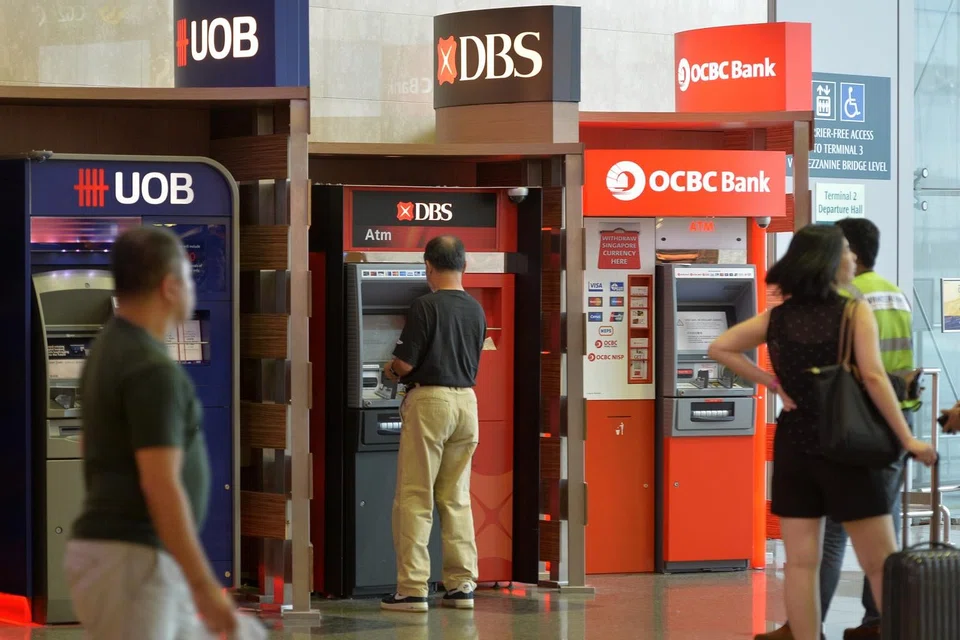
AMONG 35 Asean banks assessed, only the three Singapore banks and a Thai financial institution met at least half the criteria in a survey of their performance in environment, social and governance (ESG) integration.
The study by WWF, an independent conservation organisation, noted that UOB, OCBC and DBS, in particular, demonstrated leadership by prohibiting the financing of new coal-fired power plants and implementing no-deforestation commitments, unlike 91 per cent of their peers.
However, the Sustainable Banking Assessment (Susba) report by the WWF released on Wednesday shows that the 35 banks studied are not responding fast enough to threats such as environmental degradation and climate change, based on a framework of purpose, policies, processes, people, products and portfolio.
Financial instability and social unrest might result if these threats are not tackled in a timely way, WWF said.
In the study, only the Singapore banks and Thailand's Kasikorn Bank satisfied at least half the 70 criteria in the framework; 51 per cent of the banks met less than a quarter of these criteria.
However, nearly three-quarters of the banks (74 per cent) made improvements from last year's performance.
Singapore banks as a whole improved in all but one aspect - responsibilities in ESG.
WWF cited Singapore banks' strengthening of their governance systems and investment in capacity building on ESG issues, shareholders engaging with banks to articulate their expectations, and a supportive regulatory environment as the reasons for the three banks' better showing.
By contrast, only 9 per cent of the banks in the study have developed a strategy to manage climate-related risks or conducted climate-risk assessments, even though regulators are increasingly expecting banks to test the resilience of their loan books to climate risks and to report the results.
WWF commented that Asean banks are leaving money on the table by not actively supporting the urgently needed transition to a low-carbon, sustainable economy. It noted that half the banks (51 per cent) assessed offer green financial products, but have mostly focused on renewable energy; there remains a huge financing gap in other sectors such as infrastructure, energy efficiency, food, agriculture and land use.
The WWF cited the study by United Nations Environment Programme: Finance Initiative and DBS, which estimated that the demand for green investment to be US$3 trillion from 2016 to 2030.
Asean banks are also not adequately managing water-related risks. Only 17 per cent of them do so, but do not require clients to conduct water risk assessments.
However, 57 per cent of the banks have senior management oversight of ESG issues, nearly half of which have additional responsibilities over climate-related risks and responsibilities.
Eric Lim, head of group finance and chairman of the ESG committee at UOB, told The Business Times that the bank's sustainability strategy mirrors its business approach of balancing growth with stability; this entails being progressive and pragmatic as it continues to strengthen the way it addresses the ESG risks and effects of its operations, while actively seeking opportunities to support sustainable projects such as those in renewable energy.
UOB collaborates with industry bodies and across industries to ensure that ESG-related best practices are identified and implemented for the benefit of the bank's stakeholders. It is developing a roadmap toward making more effective climate-related disclosures.
DBS chief sustainability officer Mikkel Larsen said: "As a leading financial services group in Asia, we recognise our role in supporting the transition to a low-carbon economy, and will continue to work with our customers and stakeholders to shape a world that can benefit generations to come."
Vincent Choo, head of group risk management at OCBC - the first Southeast Asian bank to stop all new funding for coal-fired power plants - said that the bank is funding more than 20 solar farms in Malaysia, along with wind projects in Australia and Taiwan.
Mr Choo said: "Our responsible-financing approach integrates ESG considerations into our credit and risk evaluation process for our lending practices and capital markets activities... We assign our borrowers an ESG risk rating that reflects the extent to which they meet our ESG requirements."
He added that the bank may require its borrowers to comply with its ESG requirements, and if they fail to do so, the bank reassesses the relationship and may even turn down transactions with these clients.
"Through these requirements, we seek to positively influence our customers' behaviours by getting them to adopt sustainable practices which meet higher ESG industry expectations."
The Susba tool was launched in 2017.