

US dollar dips as US yields fall; German politics supports euro
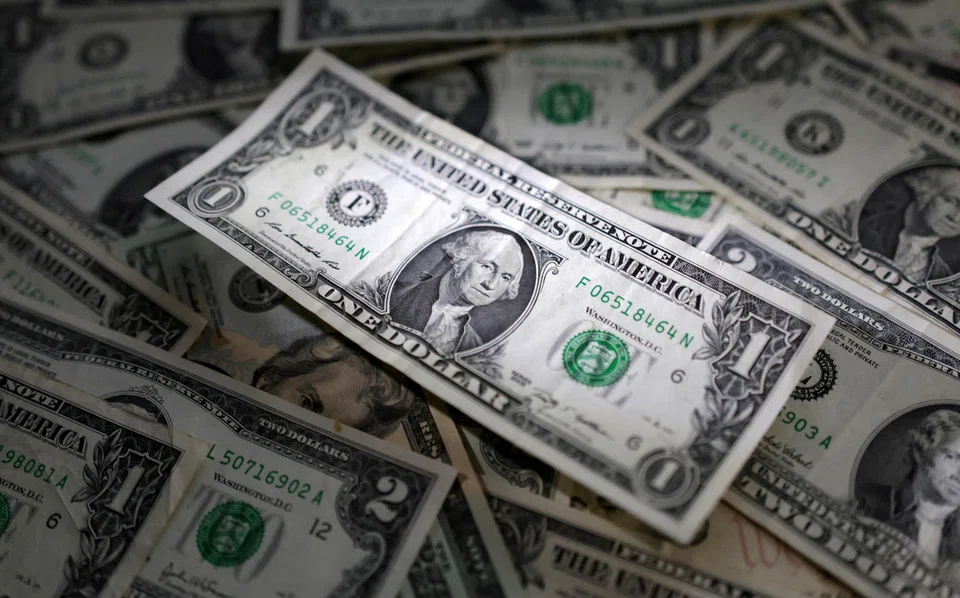
THE US dollar remained under pressure on Tuesday (Feb 25), just off a two-month low against a basket of major currencies, hurt by a drop in US yields at a time when hopes of more spending in Germany are keeping eurozone rates elevated.
That outweighed, at least for now, some US dollar-supportive safe-haven flows seen in Asia trade after US President Donald Trump said that tariffs on Mexico and Canada would proceed as planned, though they were keeping investors on edge.
The euro was last up 0.3 per cent at US$1.0497, and the pound also firmed 0.2 per cent to US$1.2654.
That left the US dollar index down 0.25 per cent at 106.45, just off Monday’s two-month low.
Part of the reason for the softer greenback was a decline in US yields. The benchmark 10-year yield was last down seven basis points (bps) at 4.32 per cent – its lowest since mid-December – building on a move in the previous day, as investors turn more nervous about the health of the US economy.
In contrast, eurozone benchmark 10-year German bond yields were flat at 2.47 per cent. The growing signs that Germany could approve a boost in defence spending before its outgoing parliament steps down, likely requiring more borrowing, were keeping German rates high.
The gap between German and US 10-year yields was last at 185 bps – its widest in the euro’s favour since November.
The developments in Germany also prompted Deutsche Bank’s head of FX research, George Saravelos, to revise on Tuesday his bearish view on the euro against the US dollar to neutral.
He had previously been bearish, despite the rally in Treasuries, because “the outcome of the German election was not conducive to a quick easing of the German fiscal stance”.

“Over the last 24 hours, however, the news flow has changed dramatically,” he said, adding that he now saw potential positives for the euro from a more proactive German fiscal stance.
However, Saravelos said he was only neutral on the currency and that he still saw potential risks from additional disruption from trade and tariffs.
Those were the other factors in the mix on Tuesday after Trump on Monday said that tariffs on Canadian and Mexican imports were “on time and on schedule” despite efforts by the two countries to beef up border security and halt the flow of fentanyl into the US ahead of a Mar 4 deadline.
The market impact was fairly muted – with some analysts suggesting this was because Trump was attempting to improve his negotiating position – though the Canadian dollar did weaken slightly.
The US dollar rose to a one-week high of C$1.428, but was still well off the C$1.4792 per dollar it reached on Feb 3, in the aftermath of Trump’s initial announcement of tariffs on Canada.
Options markets also hiked expectations of the volatility they expect for the Canadian dollar to their most in two weeks, but again levels were well short of those at the start of the month.
“It’s a muted reaction in the Canadian dollar for now, but it’s a start and we see risk premia ramping up towards the end of the week,” said Nick Rees, head of macro research at Monex Europe.
The Japanese yen, which has been boosted by market bets on further rate hikes from the Bank of Japan, was steady at 149.72 per dollar, after reaching 148.5 per dollar on Monday – its strongest since mid-December. REUTERS
Decoding Asia newsletter: your guide to navigating Asia in a new global order. Sign up here to get Decoding Asia newsletter. Delivered to your inbox. Free.
Share with us your feedback on BT's products and services
TRENDING NOW

Simba admits exceeding spectrum limits amid failed M1 deal; full-year profits surge 277%

Temasek’s Wan Chee Foong to helm PIL, Lars Kastrup to be board adviser

He built the Vingroup empire. Now South-east Asia’s richest man is handing some key roles to his sons

One-third of Singapore-listed firms at risk in severe AI downturn: MAS

