

US dollar edges higher, pushing yen to new 32-year low
 Add BT as a preferred source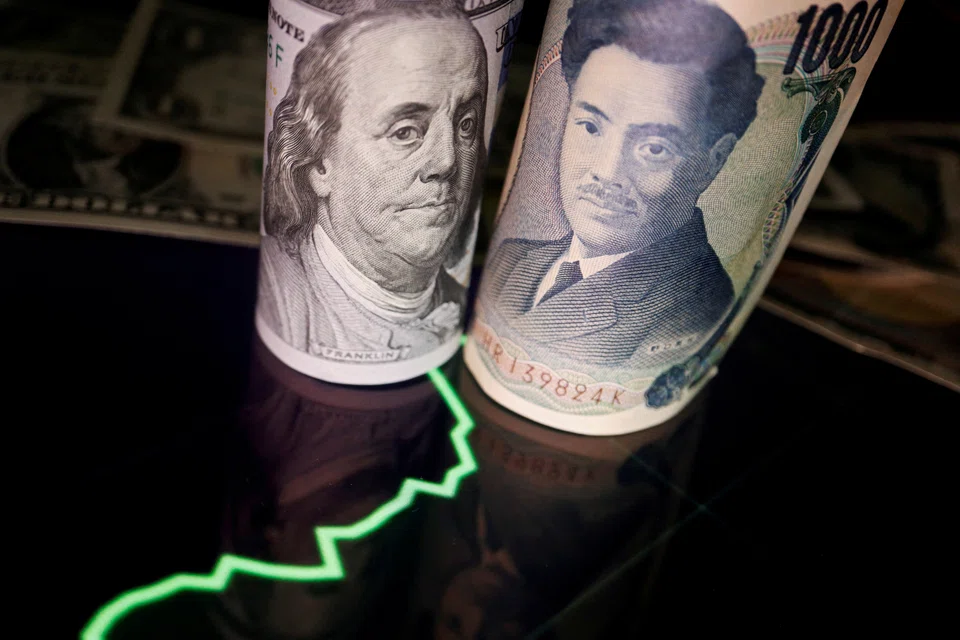
DeeperDive is a beta AI feature. Refer to full articles for the facts.
THE US dollar edged higher on Friday (Oct 14) after dropping the previous day despite US inflation accelerating, helping it hit a 32-year peak against Japan’s yen.
Sterling slipped after a sharp rally on Thursday, as reports said British Prime Minister Liz Truss was preparing to sack her finance minister and carry out a major U-turn on the government’s tax plans.
The US dollar index was last up 0.35 per cent to 112.97, having fallen 0.6 per cent on Thursday as investors seemingly brushed off data that showed US consumer prices increased more than expected in September.
The greenback has been on a tear this year as the Federal Reserve (Fed) has ramped up interest rates in an effort to tame inflation, pulling money back towardss the United States. Fears about the global economy have also boosted the safe haven asset.
Yet, the stronger-than-expected inflation data on Thursday counter-intuitively triggered a rally in global stock markets and a fall in the US dollar. Analysts suggested short-sellers reversing their positions seemed to have driven the bounce in equities, weighing on the US dollar.
“Some of the detail perhaps wasn’t as worrying as the particular core (inflation) print suggested, so when the market started to sell off, people began to cover very quickly,” said James Malcolm, head of foreign exchange strategy at UBS.
Navigate Asia in
a new global order
Get the insights delivered to your inbox.
But Japan’s battered yen remained under pressure despite the brighter global mood.
The US dollar rose to a new 32-year high of 147.785 yen on Friday, and was last up 0.34 per cent to 147.705.
Last month, Japan intervened to buy yen for the first time since 1998. Investors remained on watch for further intervention after Finance Minister Shunichi Suzuki on Thursday reiterated the government’s readiness to take action against excessive currency volatility.
Masayuki Kichikawa, chief macro strategist at Sumitomo Mitsui Asset Management, said he thought the yen could still hit 150 per US dollar in the near future.
“I don’t think the Ministry of Finance is targeting any specific level or line in the sand,” he said. “What they are saying is they are trying to prevent excessive volatility.”
The British pound slipped on Friday, after rallying 2.1 per cent on Thursday on reports the government could cancel many of its plans for unfunded tax cuts. Sterling was last down 0.77 per cent to US$1.1244.
The Times reported that Truss planned to fire Finance Minister Kwasi Kwarteng, whose “mini” budget last month triggered chaos in markets and who cut short his trip to the United States to return to London on Friday. Truss was scheduled to hold a press conference later on Friday.
UBS’s Malcolm said the biggest impact from any U-turn would likely be felt in government bond markets, and backed the pound to recover next year after slumping to a record low last month.
“For the FX market it’s a little bit of a distraction,” he said. “I would be very constructive on a 12 month basis on the pound, and only a little bit negative or cautious through the end of the year.”
Focus now shifts to next month’s Fed meeting where it is expected to deliver a fourth consecutive 75-basis-point rate increase. Traders were also waiting for US retail sales data due at 1230 GMT.
The Australian dollar was up 0.1 per cent versus the greenback at US$0.6301, coming off a two-and-a-half year low it touched in the previous session. REUTERS
Decoding Asia newsletter: your guide to navigating Asia in a new global order. Sign up here to get Decoding Asia newsletter. Delivered to your inbox. Free.
Share with us your feedback on BT's products and services
TRENDING NOW
China pips the US if Asean is forced to choose, but analysts warn against reading it like a sports result

Beijing’s calculated silence on the Iran war

Shelving S$5 billion office redevelopment plan proved ‘wise’ as geopolitical risks mount: OCBC chairman

Vietnam formalises new state leadership, redefining ‘four pillars’ power balance

