US dollar higher on earnings, economy worries as euro slips
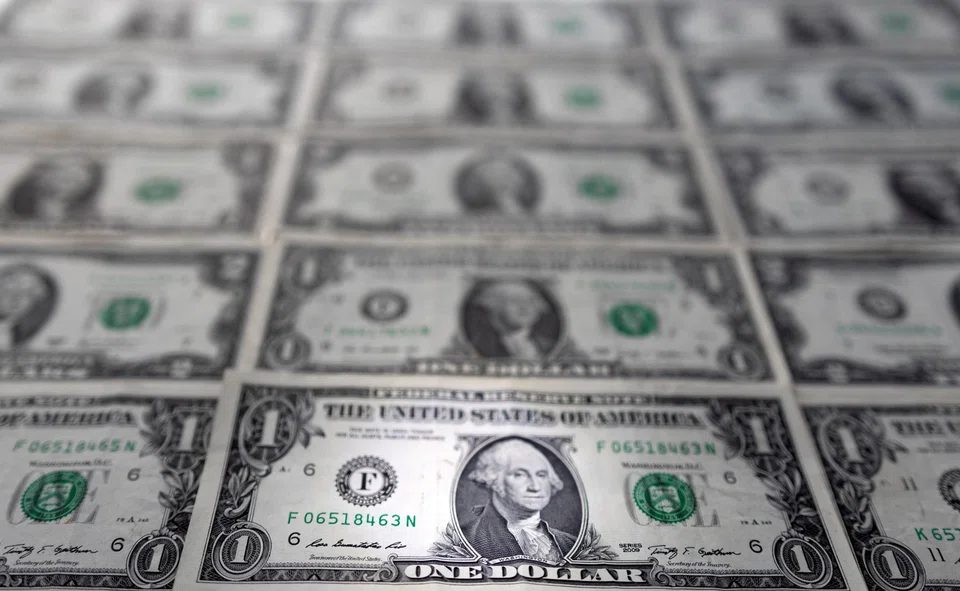
THE US dollar rose on Tuesday (Apr 25) as worries about earnings and the outlook for the global economy deepened, which knocked the euro back from close to a 10-month high.
The US dollar index was last up around 0.2 per cent at 101.37, having dropped over 3.3 per cent since the beginning of March.
News on Monday of plunging deposits at First Republic Bank served as a reminder that stability risks have not entirely died down, while UBS reported a 52 per cent slide in quarterly income.
Central banks around the world, however, are to cut the frequency of their dollar liquidity operations with the US Federal Reserve from May, another sign that March’s financial market volatility is essentially over.
Still, safe-haven currencies – such as Japan’s yen – firmed, even as the Bank of Japan’s (BOJ) new governor Kazuo Ueda signalled he was not in a hurry to shift policy.
This week’s BOJ meeting, which concludes on Friday, is his first in charge.
“You need to respect the guidance that Ueda is giving, that we won’t see any changes on Friday,” said Jens Nærvig Pedersen, director, FX and rates strategy, at Danske Bank. “But I think tightening will come from the BOJ, maybe in June or July, because inflation is well above target.”
“I see a prospect for a stronger yen on the back of monetary tightening in Japan but also because we’re reaching the end of the tightening cycle in the US,” he added.
The yen rose 0.3 per cent to 133.855 per dollar and was up 0.4 per cent to 147.67 per euro, having earlier touched an eight-year low of 148.635.


The euro was down around 0.1 per cent against the dollar but still holding above US$1.10, having risen 1.7 per cent so far in April and over 4 per cent since the beginning of March.
“The euro has performed well against most currencies recently because of the optimism around the outlook for the eurozone economy and the market anticipating more rate hikes from the ECB (European Central Bank),” Danske Bank’s Pedersen said.
ECB board member Isabel Schnabel told Politico that a 50 basis point (bp) rate hike was not off the table and would depend on data – notably inflation figures due two days before May’s meeting.
French ECB policymaker Francois Villeroy de Galhau seemed to have a different view, calling for further hikes to be limited in number and size in an interview with Le Figaro, but markets have focused on the fact that still more hikes are expected.
Futures pricing implies about a two-thirds chance of a 25 bp ECB hike and a one-third chance of a larger 50 bp rise.
The Swiss franc was benefiting from its characterisation as a safe haven, rising 0.1 per cent against the stronger dollar.
According to Electronic Broking Services data stretching back to the early 2000s, the Swiss currency also hit its highest against the yen in two decades at 151.36.
Sterling was down 0.1 per cent at US$1.2473, but was close to a 10-month high of US$1.2545 reached earlier this month.
The Australian dollar was softer at US$0.6654 as traders waited for inflation data due on Wednesday, while the kiwi was at US$0.6152. REUTERS
Decoding Asia newsletter: your guide to navigating Asia in a new global order. Sign up here to get Decoding Asia newsletter. Delivered to your inbox. Free.
Share with us your feedback on BT's products and services