US dollar jumps on safety flows after China data, yuan slips on rate cut
 Add BT as a preferred source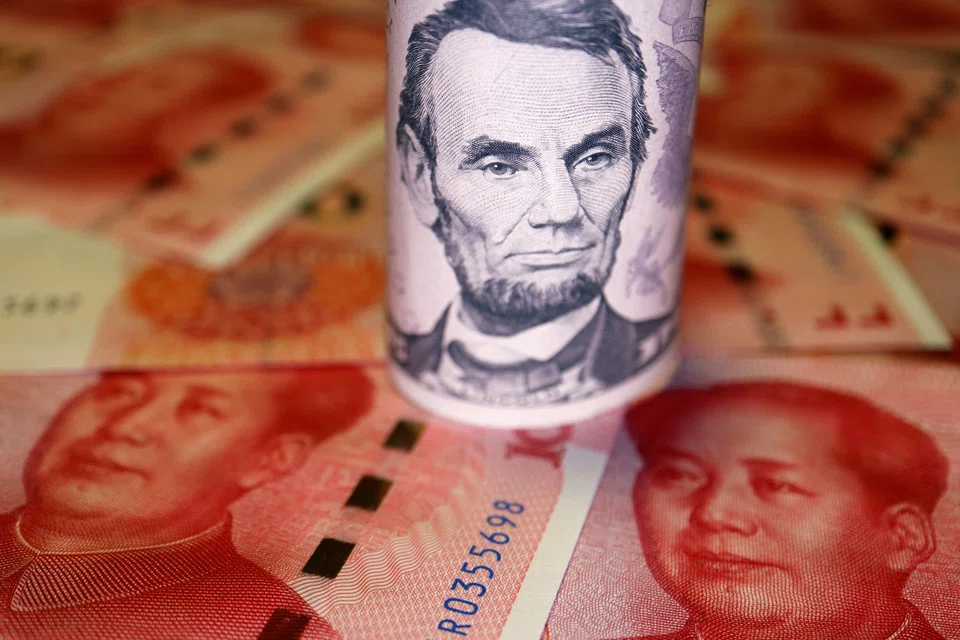
THE safe-haven US dollar rose on Monday (Aug 15) after a new batch of disappointing Chinese data bolstered global recession worries, while the yuan weakened following a surprise key rate cut by the People's Bank of China (PBOC).
Chinese industrial output, retail sales and fixed-asset investment all fell short of analyst estimates in data published on Monday, as a nascent recovery from draconian Covid-19 lockdowns faltered.
"Of course, bad data from China also weighs on recession worries for the rest of the world," said Ipek Ozkardeskaya, market strategist at Swissquote. That pushed down the euro against the greenback, she added.
The US dollar index against 6 peers rose 0.6 per cent to 106.3, consolidating near the middle of its range this month. The euro eased 0.6 per cent against the US dollar to US$1.0191, after touching a 1-week low.
The US dollar was also supported by Federal Reserve (Fed) policymakers' hawkish comments in response to early signs that US inflation may have peaked.
Richmond Fed president Thomas Barkin told CNBC on Friday that he would like to see inflation running at the Fed's 2 per cent target for "some time" before stopping rate hikes.
"The euro is slowly finding its way back down towards parity after the spike last week. It is too early for the Fed to take its foot off the brake, despite the drop in inflation," said Jens Nærvig Pedersen, chief analyst, FX and rates strategy at DanskeBank. He maintained a bullish US dollar view.
The onshore yuan eased to a 2-week low of 6.7719 per US dollar, compared with the previous close of 6.7430, after the People's Bank of China unexpectedly lowered borrowing costs on medium-term policy loans and a short-term liquidity tool for the second time this year.
"Despite the warning of inflation risk and flush liquidity conditions, the dominant downside risks from the Covid spread and property-sector rout prompted the PBOC to cut rates to stimulate demand," said Ken Cheung, chief Asian FX strategist at Mizuho Bank.
The Australian and New Zealand dollars dropped by more than 1 per cent after the data from China, a key trading partner.
Analysts will scour minutes of the Fed's most recent meeting, due to be released on Wednesday, for more clues on policymakers' thinking, while US retail sales data on Friday will give some fresh insight on the economy's health.
Money markets now price 47.5 per cent odds of another 75 basis-point rate hike by the Federal Open Market Committee in September, versus a 52.5 per cent probability of a slowing in the pace of tightening.
Last week, US data fuelled investor hopes for less aggressive Fed tightening as it showed the first decline in import prices for 7 months, following on the heels of statistics showing US consumer and producer prices also cooling.
The euro has also been weighed down by Europe's struggles with the war in Ukraine, the hunt for non-Russian energy sources and a hit to the German economy from scant rainfall.
Another European currency, the British pound also fell 0.55 per cent against the US dollar to US$1.2068. REUTERS
Decoding Asia newsletter: your guide to navigating Asia in a new global order. Sign up here to get Decoding Asia newsletter. Delivered to your inbox. Free.
Share with us your feedback on BT's products and services