US dollar rebounds as global market rally fades
 Add BT as a preferred source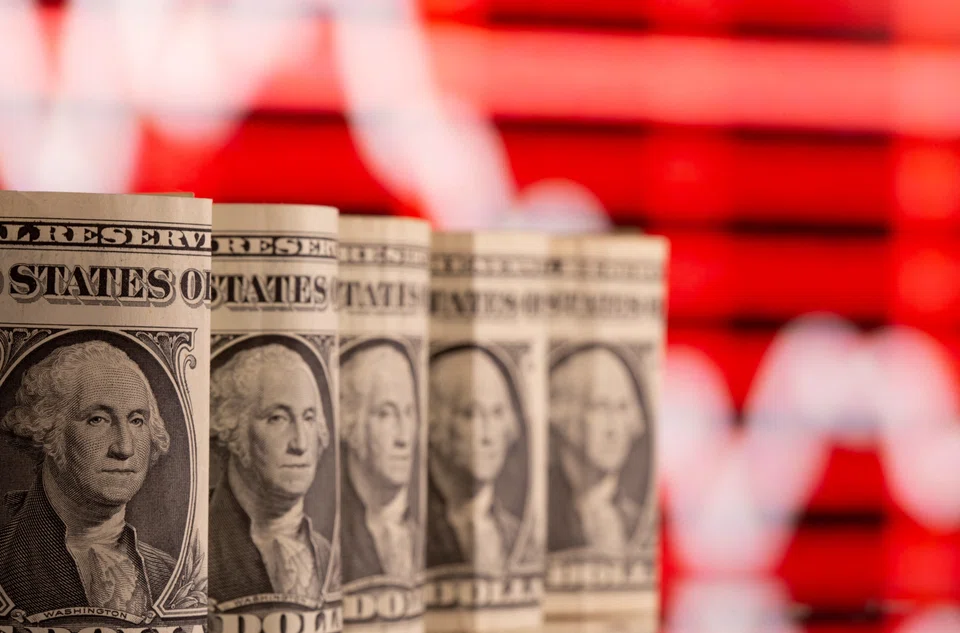
DeeperDive is a beta AI feature. Refer to full articles for the facts.
THE US dollar rose on Wednesday (Oct 5), a day after suffering its biggest one-day drop in more than two years, as the excitement of the previous day’s rally in stocks and risk-friendlier currencies wore off.
The US dollar index was last up 0.64 per cent to 110.87, after tumbling 1.3 per cent on Tuesday. The index, which measures the greenback against a basket of major currencies, has fallen just under 4 per cent since touching a 20-year high of 114.78 last week.
The euro fell 0.67 per cent to US$0.9921 after rising 1.7 per cent on Tuesday.
Sterling was down 1.08 per cent to US$1.1352, after rising for six straight sessions. Its fall extended slightly as UK Prime Minister Liz Truss pledged to bring down debt as a share of national income, just over a week after the government’s plans to slash taxes and ramp up borrowing spooked markets.
Recent gains for most major currencies against the US dollar have been underpinned by hope among investors and traders that the US Federal Reserve will raise interest rates by less than previously expected.
A bigger-than-anticipated fall in the number of job openings in August was the latest evidence that the US economy is gradually slowing. The US benchmark S&P 500 stock index jumped more than 3 per cent on Tuesday.
Navigate Asia in
a new global order
Get the insights delivered to your inbox.
“The data is suggesting a slightly better inflation backdrop,” said Harry Adams, chief executive at foreign exchange company Argentex. “(Fed policymakers) are unlikely to be as aggressive as they have been over the last few months.”
Adams said he expected “a period of at least a quarter of either a flat or slightly downward US dollar”.
However, the investor optimism which drove the US dollar lower appeared to fade somewhat on Wednesday, with stocks and bonds paring their gains.
A fifth consecutive 50-basis-point rate hike from the Reserve Bank of New Zealand on Wednesday reminded investors that inflation remains the main focus of central banks.
Global bond yields, which move inversely to prices, edged up after falling sharply in recent days while US stock futures slipped.
The yield on the key US 10-year Treasury was up 7 basis points to 3.685 per cent, although it remained well below the 12-year high of more than 4 per cent touched last week.
The New Zealand dollar was last down 0.15 per cent to US$0.5724, having leapt as much as 1.3 per cent earlier in the session. The Aussie dollar was 0.6 per cent lower at US$0.6463.
Japan’s yen was 0.14 per cent lower at 144.36 to the US dollar.
Fed governor Philip Jefferson reiterated overnight that inflation was the top target for policymakers and that growth would suffer in efforts to bring it down.
San Francisco Fed president Mary Daly took a softer line and said the impact of the rampant US dollar – which has jumped 17 per cent this year – on other currencies and economies was a concern.
Chris Turner, head of research at ING, said he believed investors were overly optimistic about the Fed slowing down on rate rises, given its stated focus on tackling inflation.
“We are still multi-month if not multi-quarter US dollar bulls,” he said in a note.
Turner said ING does not expect the US dollar index to fall much below 110.
US labour data due on Friday will be the next major indicator of the likely trajectory of the Fed’s monetary policy. REUTERS
Decoding Asia newsletter: your guide to navigating Asia in a new global order. Sign up here to get Decoding Asia newsletter. Delivered to your inbox. Free.
Share with us your feedback on BT's products and services