

US dollar retreats as oil slides on Middle East pause; focus on central banks
It dropped against other major currencies after the US paused its bombing in Iran
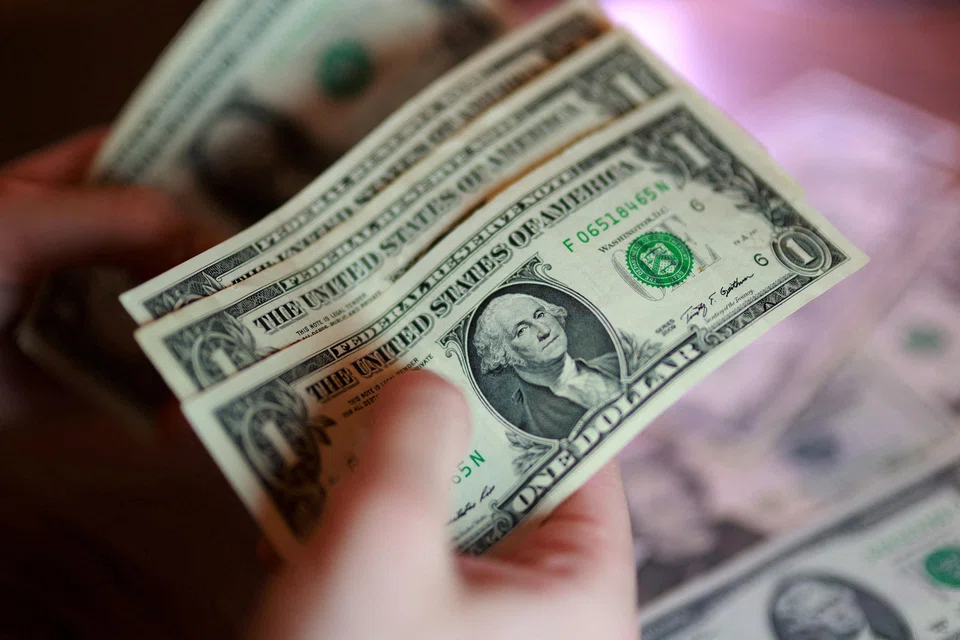
[LONDON] The US dollar dropped against other major currencies on Monday (Jul 27), after the US paused its bombing in Iran, which dragged oil prices lower and lifted investor confidence ahead of a busy week of central bank meetings.
Against the yen, the US dollar was down 0.2 per cent at 163.53 yen, on course for its sharpest daily decline since Jul 10. The euro was up 0.3 per cent at US$1.1404, while the pound rose 0.1 per cent to US$1.333.
Oil prices sank, with Brent crude tumbling 6.5 per cent to US$90.45 per barrel after the US military temporarily halted its two-week-long strikes.
Iran will halt its own attacks as long as the US does the same, a senior Iranian official told Reuters on Sunday, following a China-led push to resume stalled diplomatic efforts in Pakistan to end the war.
The dollar index, which measures the US currency’s strength against a basket of six others, was flat at 101.27 ahead of the Federal Reserve’s Jul 28-29 policy meeting.
With new Fed chair Kevin Warsh offering little guidance on the policy outlook, markets have dramatically recalibrated rate expectations this month, first after a softer-than-expected inflation report and then in response to an escalation in US-Iran hostilities that briefly lifted crude above US$100 a barrel.
Fed funds futures are pricing a one-in-three chance of a 25-basis-point hike on Wednesday, up from a 16 per cent probability a week ago, according to the CME Group’s FedWatch tool.
“It could be that the market is not particularly well-informed after this meeting because Warsh doesn’t like to give forward guidance, and there is so much uncertainty, particularly with respect to how long the Iran war will last,” said Jane Foley, head of FX strategy at Rabobank.
The Bank of England and Bank of Japan are widely expected to keep interest rates unchanged at their meetings on Thursday and Friday, respectively, while maintaining a cautious stance on inflation.
With the yen pinned near last week’s 40-year lows against the dollar, the Bank of Japan is expected to leave the door open to further hikes to arrest the currency’s decline, although policymakers will likely stay ambiguous on the pace and timing of the moves. Verbal efforts to support the Japanese currency have so far yielded muted results.
“There is a sense of walking on eggshells when the Fed and Japan’s authorities are prepared to be less predictable and when there is not a great understanding of what could happen next between the US and Iran,” wrote Paul Mackel, HSBC’s global head of FX research.
“We still side with favouring the dollar.”
Sterling was up for a second day after hitting multi-week lows of US$1.330 against the dollar last week.
The Bank of England also faces renewed inflation risks from higher oil prices, just days after new Prime Minister Andy Burnham and Finance Minister John Healey took office.
The Norwegian crown strengthened 0.4 per cent to 9.567 per dollar. The currency has been among the best-performing majors this month, buoyed by a rebound in oil prices that has improved the outlook for the energy-exporting economy.
In cryptocurrencies, bitcoin was up about 1 per cent at US$65,155.60, while ether climbed 2.7 per cent to its highest since Jun 2 at US$1,963.70. REUTERS
Decoding Asia newsletter: your guide to navigating Asia in a new global order. Sign up here to get Decoding Asia newsletter. Delivered to your inbox. Free.
Share with us your feedback on BT's products and services
TRENDING NOW

Britain’s mansion tax shows the difficulty of targeting wealth

Once staunchly pro-China, Malaysian Chinese businesses are now distancing themselves from Beijing

The only common thing in S-E Asia is that we all eat rice: Cisco’s Asean president

Singapore data centre operator DayOne opts for US IPO at likely US$20 billion valuation

