

US dollar sinks, sterling jumps as market turns to risk assets
 Add BT as a preferred source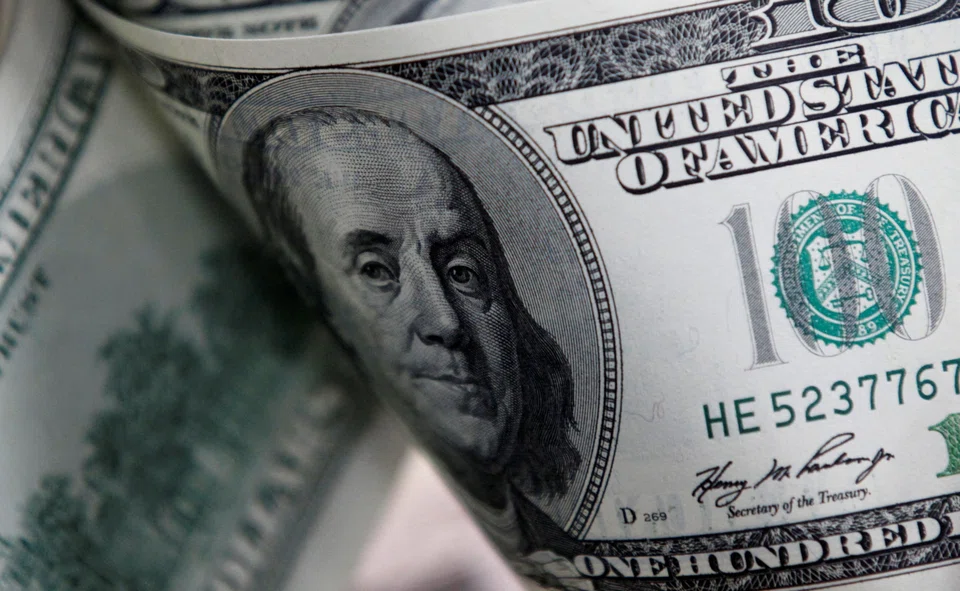
THE US dollar sank on Monday (Nov 7) against the euro and sterling supported by a risk on sentiment and a rally in the European stocks market.
A survey showed on Monday that investor morale in the eurozone improved in November, the first time it rose in three months, reflecting hopes that recent warmer temperatures and falling energy prices will prevent gas rationing on the continent this winter.
In the meantime, the pan European STOXX 600 index rose 0.5 per cent with traders pointing out that investors are still betting China will ease its Covid restrictions, despite officials saying they do not plan an imminent reopening.
Against a basket of currencies, the safe-haven US dollar index fell 0.54 per cent to 110.49. It had lost almost 2 per cent at the end of last week.
Reports that China would make substantial changes to its “dynamic-zero” Covid-19 policy in coming months fuelled a risk assets rally on Friday.
But on Monday the offshore yuan fell 0.8 per cent against the US dollar to 7.2347 after China said over the weekend that it will persevere with its “dynamic-clearing” approach to Covid-19 cases as soon as they emerge, giving little indication it would ease its outlier zero-Covid strategy nearly three years into the pandemic.
Risk-sensitive Australian and New Zealand dollars also fell sharply in Asia trade., but they recovered as European markets opened.
Another risk-sensitive currency, sterling, reversed earlier losses to trade up 0.66 per cent to US$1.1446, while the euro jumped to its highest since Oct 27. It was last up 0.27 per cent to US$0.9986.
“We can question whether the China story has any veracity, but the market is quite happy to give it credence for the moment, despite the big denials,” said Jeremy Stretch, head of G10 FX Strategy at CIBC.
Alvin Tan, head of Asia FX strategy at RBC Capital Markets, said the timing of the reopenings was uncertain.
“People are kind of thinking there’s going to be an eventual opening ... but it’s not obvious to me that there’s an imminent reopening due, and I think it’s kind of premature,” he said.
The economic impact of China’s zero-Covid policy was again highlighted in Chinese trade figures released on Monday, which showed exports and imports unexpectedly contracted in October, the first simultaneous slump since May 2020.
Investors were also assessing Friday’s US jobs report which showed that firms added a more-than-expected 261,000 jobs in October and hourly wages continued to rise, evidence of a still-tight labour market.
But hints of some easing of market conditions, with the unemployment rate rising to 3.7 per cent, fuelled hopes that the much sought after US Federal Reserve (Fed) pivot could be on the horizon, capping the US dollar’s gains.
Four Fed policymakers on Friday also indicated they would still consider a smaller interest rate hike at their next policy meeting.
Fed funds futures now show that markets are pricing in a 69 per cent chance of a 50-basis-point rate hike at the Fed’s December meeting, with the next key data point being Thursday’s US inflation figures. REUTERS
Decoding Asia newsletter: your guide to navigating Asia in a new global order. Sign up here to get Decoding Asia newsletter. Delivered to your inbox. Free.
Share with us your feedback on BT's products and services
TRENDING NOW

Shanda co-founder sells Tanglin Hill bungalow for S$76 million

Yeo’s, Tiger Beer and now Gardenia – flight of food manufacturing from Singapore might be just as planned

Nearly half of Apac’s wealthy expect market crash or correction, plan to rotate to cash: study

Jumbo Seafood to close flagship East Coast Seafood Centre outlet on Sep 30

